Event 1
World War I
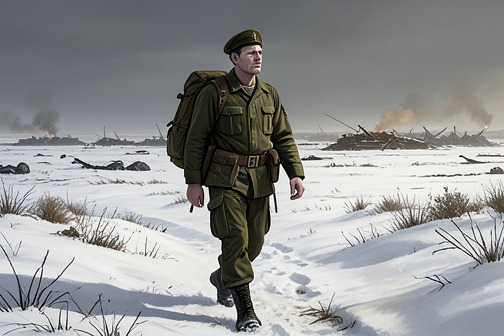
[World War I](entity:event-recall-event-world-war-i-f6ecad7962bb) is the decisive rupture behind the novel’s linked stories of survival, migration, and family life. [Fidelis Waldvogel](entity:character-recall-character-fidelis-waldvogel-8dc9c794e011) returns from the fighting carrying memories he cannot readily share; [Cyprian Lazarre](entity:character-recall-character-cyprian-lazarre-f36f15cc38dd) comes home bearing his own injuries and losses. Their silence does not mean the war has passed. It follows them into the friendships, work, and choices that shape life in [America](entity:location-recall-location-america-c751899c385c), while later generations inherit its political and personal consequences.
## Return and the struggle to survive
[Fidelis](entity:character-recall-character-fidelis-c469e33ba84c) walks home from the war in twelve days and sleeps for thirty-eight hours in his childhood bed. When he wakes in [Germany](entity:location-recall-location-germany-2e3723c2f347) in late November [1918](entity:time-recall-time-1918-aca3c2d2d7dd), the redrawn border has left him only a few centimeters from becoming French. The altered map matters less to him than the prospect of food. His mother’s carefully aired and restuffed eiderdown, still marked by a childhood nosebleed, is a small remnant of home against the deprivation awaiting him. The passage makes demobilization no simple return to safety: even a familiar bed leads back to the urgent question of how to live.
In the years after the armistice, scarcity pushes Fidelis into dangerous economic choices, including entering the black market. His later journey to America grows out of the same pressure. In [1922](entity:time-recall-time-1922-0de9751b5284) he steps from the RMS Mauretania into [New York City](entity:location-recall-location-new-york-city-65df0a129d4c) carrying a suitcase of his father’s smoked sausage. The family has spent its remaining valuables and best clothing to pay for his passage and has kept him from selling his knives; his concealed rifle and carefully saved ammunition had helped him poach the boar used for the sausages. A skill inherited from home, and a commodity made from hard-won resources, become the means by which he can continue west.
Fidelis has little English, but he knows the words necessary to ask for a train. When he has not earned enough for the fare he needs, he chooses a more uncertain route: he buys a ticket into the beginning of the Middle West, boards with the sausages he has left, and sells them to fellow passengers. The move from ocean arrival to train travel turns migration into a practical sequence of improvisations. His passage is financed not by abundance but by the family’s last possessions, his labor, and his ability to make food valuable to strangers.
## Combat and the lives it leaves behind
The novel places the two veterans’ experiences beside one another without making them identical. [Cyprian](entity:character-recall-character-cyprian-167e957eaf33) had enlisted in the U.S. Marine Corps with a cousin and a friend. He survived training and the threat of Spanish flu, fought in the fourth wave at [Belleau Wood](entity:location-recall-location-belleau-wood-0fc0a14d2892), and returned with the effects of fire, chlorine gas, a machine-gun accident, and dysentery. During his recovery he could not vote, despite having served, because as an Ojibwe he was not yet a U.S. citizen. The war’s aftermath thus includes both bodily recovery and a civic exclusion that service had not erased.
Fidelis’s wartime role was that of a German sniper. A later reflection imagines the possibility that Cyprian had once been among the men in his sights, making their eventual friendship carry an unspoken proximity to the violence each had survived. The novel does not resolve that imagined encounter into certainty. Instead, the question sharpens the distance between battlefield roles and the men’s later lives: two former enemies can sit together without knowing exactly how their paths crossed in combat.
Their shared war is rarely discussed. It remains between them like ground once ruined and later covered with grass; memories arrive unpredictably, and each man pauses before carrying on. At the kitchen table, they acknowledge only what can be seen: the scars on Cyprian’s neck and the mark on Fidelis’s chin. They do not turn their experiences into the familiar, polished stories of veteran gatherings. Both have known the war’s horror, but neither finds glory in it or a story that can comfortably contain it. Their restraint is not an absence of memory; it is the form their memory takes in one another’s company.
## Work, migration, and family after the armistice
Fidelis finds work with [Pete Kozka](entity:character-recall-character-pete-kozka-2ab3e66d7b8b), the local butcher, and also travels to nearby towns and farms to butcher animals when called. He initially has no car, but later owns a succession of delivery trucks. His work builds on the sausage-making knowledge his father gave him just before his departure. The principle is exacting: no ingredient is too humble, and the quality of salt, fresh garlic, meat, and casings all matters. In the novel, craft offers a durable practice after wartime destruction, while the growth of the trade shows how an immigrant’s specialized labor can become a livelihood and a foothold in a new place.
Economic pressures continue to shape the household. [Delphine](entity:character-recall-character-delphine-50abed839c4c) develops a sharp sense of what customers can buy and when a price must come down. A weekly grocery drawing brings people into the shop, while careful dealings with both wealthy customers and impoverished neighbors help keep its trade moving. She stocks dried beans and peas, bargains with farms, and expands the range of goods through a wholesaler. These details place the family’s business inside wider hardship: the war is over, but security still depends on labor, trade, and the careful management of limited means.
Later, [Tante](entity:character-recall-character-tante-61557806d00c) persuades Fidelis to let her take the boys to Germany, apart from [Franz](entity:character-recall-character-franz-a77eb1706f2e), who is nearly finished with school. She plans to raise them with their grandmother, who is lonely, and expects the separation to last no more than a year or two, until Fidelis can bring them back. She believes the store will prosper without the daily demands of the children and that the boys will return old enough to help. The proposed journey reverses the direction of Fidelis’s own migration: the family that he brought toward a new life considers sending its children back across the Atlantic, with work and kinship both weighing in the decision.
The decision is contested by the memory of political violence in Germany. Delphine has followed reports of the purge of [1934](entity:time-recall-time-1934-5ecb2ca4e039) and does not share the family’s attention to German prosperity, expanding holdings, and national strength. She fears that the boys’ trip could become a permanent separation as the danger in Europe grows. The novel therefore sets family longing for a homeland against the evidence of a changing political reality, making return neither a simple restoration nor a neutral family arrangement.
## War’s memory, inheritance, and public remembrance
The veterans’ private silence is set against other ways of remembering the conflict. At the 1954 unveiling of a monument to the victims of the bombing of [Ludwigsruhe](entity:location-recall-location-ludwigsruhe-b984c1754f4d), surviving master butchers gather from nearby villages and more distant towns to sing. Fidelis has practiced with the few men left alive. The ceremony gives their voices a public place, but the scene does not turn remembrance into uncomplicated celebration: the dead of the war are now part of the earth, and the ceremony takes place in a town transformed by destruction and rebuilding.
Delphine watches the singers and, as their voices merge into a single sound, thinks of her mother’s indistinct photograph and of the town’s history of burning and marching. The public gathering thus opens onto private and inherited histories rather than closing them. Singing can unite the surviving men in a shared act, yet the same scene evokes those absent from it and the violence the ceremony cannot undo. The contrast echoes the veterans’ earlier restraint: collective sound makes remembrance visible, while the full burden of experience remains difficult to articulate.
The novel also widens its account of wartime history beyond the European front. Its closing note connects the fictional story to the author’s family history: her grandfather fought in the German trenches in World War I, while his sons served on the American side in World War II. It also recalls an oral history of the massacre at [Wounded Knee](entity:location-recall-location-wounded-knee-69c51d4210d7) that says two people from the north, Cree or Ojibwe, died with Bigfoot’s people. These distinct histories are not made interchangeable; their juxtaposition underscores how war and state violence reach across generations and communities, and how remembrance depends on which stories are preserved and who is named.
World War I therefore functions both as a historical event and as a continuing condition of life in the novel. It sends Fidelis back into hunger and then across the Atlantic, places Cyprian’s military service beside his lack of citizenship, and leaves two veterans joined by what they cannot easily tell. Its aftereffects surface in family economies, decisions about where children belong, and ceremonies for the dead. The war ends on the calendar, but its consequences persist in work, movement, silence, and song.
Event 2
贝洛森林战役
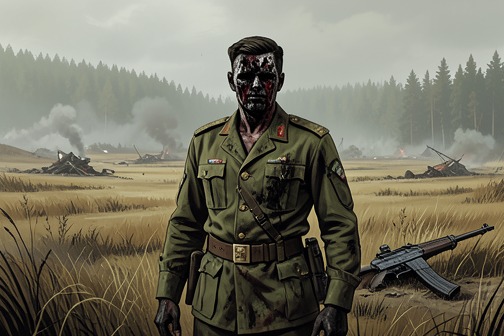
The Battle of [Belleau Wood](entity:location-recall-location-belleau-wood-0fc0a14d2892) marks a decisive wound in [Cyprian Lazarre](entity:character-recall-character-cyprian-lazarre-f36f15cc38dd)’s life and becomes part of the unspoken history binding him to [Fidelis Waldvogel](entity:character-recall-character-fidelis-waldvogel-8dc9c794e011). The novel does not reconstruct the battle as a continuous combat scene. Instead, it gathers its meaning from [Cyprian](entity:character-recall-character-cyprian-167e957eaf33)’s injuries and recollections, from the silence between the two veterans, and from the scars that briefly make their shared past visible.
## Cyprian at Belleau Wood
Cyprian had enlisted in the [United States Marine Corps](entity:organization-recall-organization-united-states-ma-0009a2eac3c2) with a cousin and a friend. After surviving training and the danger of Spanish influenza, he went into the fourth wave at Belleau Wood and was burned in the wheat. The battle is presented through the physical damage and suffering that followed: chlorine gas blinded him, a machine gun with a split barrel nearly took off his hand, and dysentery left him helpless. His sense of humor failed, and he came to regret the zeal with which he had entered the war. He returned home to recover slowly, only then realizing that, as an Ojibwe man, he was not yet a [United States](entity:location-recall-location-5d55e9152db1) citizen and could not vote.
## The Veterans’ Unspoken History
The battle’s afterlife appears not as a full account of combat but as a silence shared by Cyprian and Fidelis Waldvogel. They never spoke about the war they had experienced together, yet it remained between them like the mud of Belgium’s trenches, now covered with grass. Neither man went long without remembering it: a picture, sound, or word could bring the war back, prompting a pause and a private struggle before ordinary conversation resumed. The other man registered the impact without demanding an explanation; a joke or a long draft of beer could help them carry on.
Only once did a fragment of their buried knowledge pass into speech. Sitting together at the kitchen table, [Fidelis](entity:character-recall-character-fidelis-c469e33ba84c) looked critically at the scars radiating from Cyprian’s throat, including a line that ran behind his ear and disappeared into his dark hair, and observed that Cyprian had caught fire. The brief remark makes the bodily evidence of Belleau Wood legible without turning either veteran into a narrator of the battle. Their restraint is itself part of its history: the violence persists in memory and scars, while conversation circles its edges.
## Memory Beyond the Veterans
The battle’s violence also sits within a wider field of histories that the novel leaves unevenly remembered. Years later, as [Delphine Watzka](entity:character-recall-character-delphine-watzka-261d39e0a742) recalls the purge of [1934](entity:time-recall-time-1934-5ecb2ca4e039) and the growing danger in [Germany](entity:location-recall-location-germany-2e3723c2f347), she recognizes how readily Fidelis Waldvogel and [Tante Maria Theresa](entity:character-recall-character-tante-maria-theresa-8426e73a369d) attend to the family’s prosperity while setting aside reports of slaughter and persecution. Her account does not make Belleau Wood the subject of that political dispute; rather, it places the veterans’ silence within a novel where public violence, family memory, and what people choose not to discuss repeatedly overlap.
The same tension shapes [Erich Waldvogel](entity:character-recall-character-erich-waldvogel-fd1eb77f637e)’s later life as a German prisoner of war. Singing helps the prisoners endure their confinement, but his longing for [Ludwigsruhe](entity:location-recall-location-ludwigsruhe-b984c1754f4d) and memories of his grandfather coexist with a fierce commitment to an imagined [German identity](entity:concept-recall-concept-15e59a338a64), formed through purity, loyalty, and hatred of weakness. His story does not explain the battle or equate its combatants with later political forces. It extends the novel’s concern with how war is remembered, suppressed, and remade in the identities that survive it.
## Commemoration and the Limits of Memory
In 1954, Fidelis Waldvogel returned to Ludwigsruhe for the unveiling of a monument to the town’s bombing victims. The surviving master butchers gathered to sing; the war dead, the narrative observes, had all become earth. Their public ceremony offers a contrast to Cyprian and Fidelis’s private silence about their shared war: here, memory takes the form of a monument and collective song, though it does not make the past wholly knowable. Delphine Watzka, isolated among her husband’s German relatives and unable to follow the speeches, sees the butchers’ mouths open and close in unison. The singing turns uncanny in her vision: smoke and ash seem to pour from them as they sing beneath the unveiled statue. The image does not identify the monument with Belleau Wood, but it connects the veterans’ unspoken injuries to a wider landscape of war dead and histories that resist easy commemoration.
The novel’s acknowledgments widen that landscape further by recalling the oral history of the [Wounded Knee](entity:location-recall-location-wounded-knee-69c51d4210d7) massacre, in which two people from the north, Cree or Ojibwe, are said to have died with [Big Foot](entity:character-recall-character-big-foot-634341c6d25b)’s people. This is not a claim that the massacre and Belleau Wood are the same event; it underscores how the book attends to violence whose human costs may survive in fragments, uncertain recollection, and omission. Belleau Wood remains legible through Cyprian’s burned body, his remembered suffering, and the wartime silence he shares with Fidelis, while the monument and the songs show how collective remembrance can give the dead a public place without exhausting what their histories mean.
Event 3
西班牙流感大流行
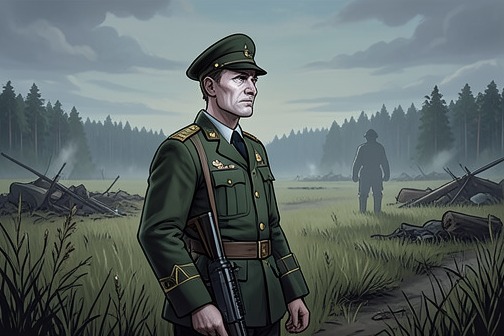
The Spanish flu pandemic appears as one of the dangers [Cyprian](entity:character-recall-character-cyprian-167e957eaf33) survives on his way to the front. Its place in his wartime history is brief but consequential: survival brings him into combat at [Belleau Wood](entity:location-recall-location-belleau-wood-0fc0a14d2892), and eventual return does not end the war’s influence on him or on [Fidelis](entity:character-recall-character-fidelis-c469e33ba84c). Across the novel, sickness and war belong to a wider landscape of loss, remembered privately and commemorated publicly.
## Cyprian’s Wartime Exposure
Cyprian enlisted in the [United States Marine Corps](entity:organization-recall-organization-united-states-ma-0009a2eac3c2) with a cousin and a friend. After training, exposure to Spanish flu became one of the most dangerous parts of his early military experience. He survived and went on to fight at Belleau Wood, where he suffered further wartime hardships. The sequence places the pandemic not as a separate episode but as part of the accumulation of threats that marked his service.
Cyprian returned home during the last year of the First World War. His recovery was slow, and he could not vote during that period. The narrative notes that he had not yet realized that, as an Ojibwe man, he was not a [United States](entity:location-recall-location-5d55e9152db1) citizen. His illness and recovery thus sit alongside a further constraint: military service had not secured him full civic belonging.
## A War That Continues After Return
Cyprian and Fidelis never spoke directly about the war they had shared, yet it remained present between them. Memories surfaced in fragments—a picture, sound, or word—and either man might pause before continuing. The other recognized the interruption and responded with a joke or a long drink of beer. Their practiced silence does not signify that the past has disappeared; it shows how each man accommodates what the other cannot readily say.
The pandemic belongs to the same history of exposure and survival, but the novel gives it no separate aftermath or explicit medical account. Instead, it establishes the scale of danger Cyprian passed through before the battles and memories that later shaped his life. That restrained treatment keeps attention on the lasting human consequences of a wartime experience rather than turning illness into an isolated spectacle.
## Memory, Commemoration, and Loss
In 1954, during a visit to his hometown, Fidelis practiced with the surviving master butchers for the unveiling of a monument to the victims of [Ludwigsruhe](entity:location-recall-location-ludwigsruhe-b984c1754f4d)’s bombing. [Delphine](entity:character-recall-character-delphine-50abed839c4c) walked through cemeteries and streets while the statue remained wrapped and secured for the ceremony. At the gathering, the butchers sang in formation; Delphine’s attention shifted from their voices to the image of her mother and the town’s history of burning and marching. The scene contrasts an organized public tribute with private memories that the ceremony cannot contain.
The novel’s attention to what is remembered and what remains unspoken also extends beyond the European war. Its closing reference to oral history of the [Wounded Knee](entity:location-recall-location-wounded-knee-69c51d4210d7) massacre notes that two people from the north, Cree or Ojibwe, are said to have died with [Big Foot](entity:character-recall-character-big-foot-634341c6d25b)’s people, while their identities remain unknown to the narrator. This uncertainty, like the silence shared by Cyprian and Fidelis, marks the limits of the record. The Spanish flu is one element in a broader story in which survival is real, but neither personal memory nor public commemoration fully accounts for every loss.
Event 4
Fidelis returns home from World War I
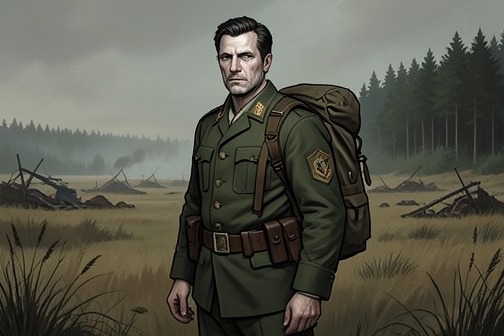
[Fidelis returns home from World War I](entity:event-recall-event-fidelis-ba9dbed287e2) in November [1918](entity:time-recall-time-1918-aca3c2d2d7dd), carrying the losses of the front into a [Germany](entity:location-recall-location-germany-2e3723c2f347) marked by defeat and scarcity. His homecoming is shaped by the death of [Johannes](entity:character-recall-character-johannes-8bd33702cfc6) and the promise [Fidelis](entity:character-recall-character-fidelis-c469e33ba84c) made to him: he will marry [Eva](entity:character-recall-character-eva-a4f4507c5fab) Kalb. That return is not a simple restoration of his former life. It leads from hunger and grief toward marriage, work, emigration, and the attempt to sustain a family in a new country.
## Homecoming and the aftermath of war
Fidelis walks home from the war in twelve days. Once he reaches his childhood bed in Germany, he sleeps for thirty-eight hours. When he wakes in late November 1918, the borders around him have been redrawn, and the possibility that he might now be French matters less to him than the prospect of food. His immediate hopes are modest: perhaps potatoes, soft cheese, even an egg. The contrast between the mapped political upheaval and his urgent attention to eating establishes how the war’s aftermath is experienced at the scale of ordinary survival.
The childhood bed carries a small, persistent trace of an earlier life: a pale stain on its white eiderdown, left by a nosebleed Fidelis had as a boy. His mother has repeatedly scrubbed the cover, but the mark remains. Against the unfamiliar and miserable beds of wartime, this familiar object offers continuity, even as the hunger and disorientation of postwar Germany make clear that home is no longer untouched by history.
## Johannes and the promise to Eva
Fidelis’s return is inseparable from Johannes’s absence. The two had endured the war together, but Johannes is dead. Fidelis goes to the address of Johannes’s fiancée, Eva Kalb, and finds a neglected entrance: papers lie scattered on the walkway, while a leafless rose arbor frames the approach. The disrepair unsettles him because it suggests the possibility of another death. Seeing movement behind a curtain, he composes himself and goes forward to meet the household.
When Eva is brought inside and laid on a faded rose-pink sofa, Fidelis recognizes the obligation he has already accepted. He will marry her, fulfilling the promise he made to Johannes, who died on the walk home from the war. Eva agrees, and their kiss holds both the grief Fidelis carries for his friend and a distinct connection between the two of them. The marriage thus begins within mourning, but it is not presented as only an act of duty: Fidelis also recognizes Eva as someone familiar to him in her own right.
## From postwar scarcity to migration
The hardship that follows the return makes survival depend on practical skill and difficult choices. Fidelis’s family gives up trinkets, cuff links, and its best woolens to pay for his passage to [America](entity:location-recall-location-america-c751899c385c); he also keeps his knives rather than selling them. His stock of bullets and a concealed rifle have helped him poach wild boar, which he turns into the smoked sausages he takes with him. In [1922](entity:time-recall-time-1922-0de9751b5284), he steps off the RMS Mauretania in [New York City](entity:location-recall-location-new-york-city-65df0a129d4c) carrying that sausage in a suitcase. Eva’s child is already three years old. The crossing is therefore not simply an individual departure: the family’s resources and labor have been converted into the means for Fidelis to go ahead and seek a livelihood.
In the crowded arrival hall, Fidelis relies on the stillness that helped him endure the war’s aftermath, including a period when he had to enter the black market. His English is limited to words learned during the voyage and chosen for immediate purposes, including asking for a train. The scene marks a change in circumstance without erasing the qualities the war has strengthened in him: restraint, attention, and the ability to act with little available to him.
## Work, family, and the meaning of return
In [Argus](entity:location-recall-location-argus-09ff0273b5b1), Fidelis finds work with [Pete Kozka](entity:character-recall-character-pete-kozka-2ab3e66d7b8b) and takes butchering jobs in nearby small towns, sometimes working directly on farms when summoned. He initially has no car, but later owns a succession of delivery trucks. His trade grows because he has inherited his father’s talent for sausage-making and learned his father’s methods before leaving Germany. The principle behind that craft is exacting: even humble ingredients must be of the finest quality, from the salt and fresh garlic to the meat and clean, fresh casings. Butchery gives Fidelis a way to turn inherited knowledge into a livelihood in his new home.
His return to family life remains constrained by economics and care. Years later, [Tante](entity:character-recall-character-tante-61557806d00c) persuades him to let her take the boys, except [Franz](entity:character-recall-character-franz-a77eb1706f2e), back to Germany to be raised with their grandmother. She expects the arrangement to last a year or two, until Fidelis can come and bring them back; she also believes that having fewer children to care for will allow the store to flourish. The plan exposes the costs behind the family’s efforts to establish itself: migration and business are inseparable from decisions about where the children can be raised and who will look after them.
The pressures intensify during the Second World War, when the butcher business suddenly receives more orders, including requests for custom kosher work from Jewish synagogues in [Minneapolis](entity:location-recall-location-16f7f12858d7), even as supplies become scarce. A coveted C sticker does not prevent shortages of gasoline for deliveries. Coffee disappears, butter is requisitioned, canned goods deteriorate in availability and quality, and eggs are powdered for soldiers. In a letter, Markus describes powdered eggs as a staple breakfast and says he longs for Clark candy bars and fresh fruit. The return from the First World War therefore opens onto a longer history of dislocation: Fidelis builds a household and business in America, but neither prosperity nor a new home removes the pressures of war, scarcity, and separation.
Event 5
Fidelis and Eva's wedding

[Fidelis and Eva's wedding](entity:event-recall-event-fidelis-eva-97b8d122ac2e) turns a promise to a dead friend into a marriage and a family. [Eva](entity:character-recall-character-eva-a4f4507c5fab) is pregnant with a child conceived during the war, and [Fidelis](entity:character-recall-character-fidelis-c469e33ba84c) enters the union carrying grief for [Johannes](entity:character-recall-character-johannes-8bd33702cfc6) and the weight of his own survival. The wedding is poor and hastily assembled, but it marks a decisive change: Fidelis moves from the emotional isolation of war toward a life in which love and responsibility are possible.
## Background and Promise
After returning from the war, Fidelis brings Eva to her family home and lays her on a faded rose-pink sofa. There he resolves to do what he had already known and promised Johannes, who died on the walk home from the war: he will marry Eva. The decision links the future he chooses to the friend he has lost; Johannes remains present in the marriage not as a rival to Eva, but as the person whose death and promise help shape its beginning.
The proposal is accepted, and Eva kisses Fidelis. In that moment, his feelings hold grief for Johannes alongside a distinct, familiar affection for Eva. The marriage therefore begins with more than one emotional history in view: Fidelis honors a promise to the dead while recognizing his own attachment to the living woman beside him.
## The Wedding and Its Circumstances
Their wedding is a poor, improvised affair. Eva is heavily pregnant with a child conceived in the war’s final, desperate season. The priest knows the circumstances and blesses the couple. The ceremony does not erase the difficult history that precedes it; instead, it gives the couple a way to enter a shared household and meet the coming birth as a family.
On their first night together, they are in Fidelis’s tiny bedroom, where his lead soldiers remain lined along the windowsills. The room’s traces of childhood sit beside the responsibilities of adult marriage. Fidelis is still uncertain what to do with his life, and his earlier emotions on returning from war have ebbed into embarrassment at having survived. Marriage does not instantly settle that uncertainty, but it places intimacy and a future with Eva within reach.
## Change and Significance
The marriage changes how Fidelis understands his survival. He has lived through years of war and learned his own capacity for violence, while the deaths around him have deepened his inward stillness. In becoming Eva’s husband, he encounters the possibility that his life is not defined only by what he endured or did in war. He comes to understand that he is meant to love.
That shift is the wedding’s decisive significance. The union is neither a simple romantic beginning nor a means of forgetting Johannes: it carries grief, obligation, pregnancy, and the uncertainty of life after combat into a new domestic bond. Fidelis’s promise to his dead friend leads him toward Eva, but the marriage becomes meaningful through the living relationship he chooses to build with her.
Event 6
Fidelis emigrates to America
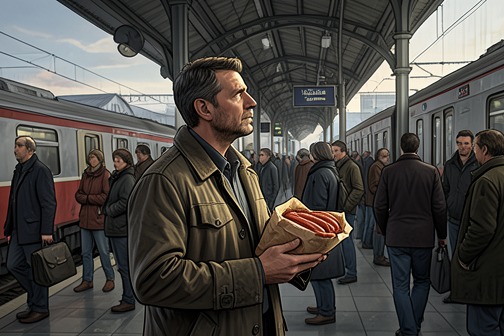
[Fidelis emigrates to America](entity:event-recall-event-fidelis-ec15874d86e4) after a glimpse of machine-sliced bread in [Ludwigsruhe](entity:location-recall-location-ludwigsruhe-b984c1754f4d) turns a distant destination into a practical ambition. He crosses the Atlantic carrying his father’s smoked sausages, sells them to make his way west, and arrives in [Argus](entity:location-recall-location-argus-09ff0273b5b1), [North Dakota](entity:location-recall-location-north-dakota-c4ccad70b1c1), expecting to stay only until he can continue onward. Instead, Argus becomes his home. The journey makes food both his means of travel and a measure of what migration changes: the bread that first drew him toward [America](entity:location-recall-location-america-c751899c385c) later returns as comfort, memory, and a sign of how a life has taken root.
## The bread that points west
Shortly after marrying [Eva](entity:character-recall-character-eva-a4f4507c5fab), [Fidelis](entity:character-recall-character-fidelis-c469e33ba84c) crosses Ludwigsruhe’s public square and sees a neighbor displaying a white, square object. At first he takes it for a picture; it proves to be bread, machine-kneaded, baked, and sliced with a precision he associates with American ingenuity. It has arrived in a package from distant relatives in a far coastal city, offered as an example of what inventive people can do with an ordinary loaf. The encounter gives Fidelis a concrete reason to imagine America: he wants to see where bread of that kind is made.
His interest in food is not a passing curiosity. Fidelis comes from a family for whom butchery is a highly trained craft, demanding knowledge of spices, sausage varieties, and the precise handling of meat. He has learned from his father, whose practiced hands transform an animal into orderly cuts. The trade joins skill to judgment: quality is determined not just by the main ingredient but by every component and each stage of preparation. America’s squared, sliced loaf therefore represents not merely novelty but the possibility of a different kind of production.
## Passage and the family’s stake
In [1922](entity:time-recall-time-1922-0de9751b5284), Fidelis steps off the RMS Mauretania into [New York City](entity:location-recall-location-new-york-city-65df0a129d4c) carrying a suitcase filled with his father’s smoked sausages. Eva’s baby is three years old. His passage has cost the family nearly everything it can spare: trinkets, cuff-links, and their best woolens have paid for the ticket and helped him keep his knives. The sausages themselves are made from wild boar he poached with carefully saved bullets and a hidden rifle. The suitcase is both provisions and working capital, a portable store of family labor and resources.
Fidelis meets the confusion of arrival through quiet attention and a narrow command of English, learned during the voyage. His first earnings come from selling the sausages. As dusk approaches, he realizes he can use the train itself as a market: rather than wait until he has saved all the money he thinks he needs, he can travel as far as he can afford and sell to passengers along the way. He buys a ticket into the beginning of the Middle West, returns to his selling place for one last sausage, and boards with the fare in his inside breast pocket.
## From New York to Argus
The sausages carry Fidelis through [Minneapolis](entity:location-recall-location-16f7f12858d7) and across the prairie into North Dakota. He sells the final link before leaving the train at a small-town platform. The town appears exposed against the flat landscape, its squat buildings seeming temporary beside the broad plains and river. He reads the sign, Argus, aloud and memorizes the name. With thirty-five cents and his father’s suit, he takes stock of a place whose familiar food-making infrastructure is not immediately apparent: he wonders where its bread is baked, where its beer comes from, how milk and butter are kept cold, and where meat is prepared.
At first, Argus is only a pause. Fidelis assumes he will have to work there until he has enough money to continue toward the place he chose for its bread. The narrative’s irony lies in the distance between that provisional intention and the life that follows: he does not know that he will never leave. His movement westward, planned as an affordable stage of a longer journey, instead settles into permanent residence.
## Work, craft, and a new home
Fidelis finds work at once with the local butcher, [Pete Kozka](entity:character-recall-character-pete-kozka-2ab3e66d7b8b), and takes jobs in nearby towns. He also butchers animals at farms when summoned. Though he initially has no car, he later owns a succession of delivery trucks. His arrival brings new expertise into the local trade: business increases as he makes sausage using the techniques and knowledge passed down by his father.
That inheritance is practical and exacting. His father’s rule is to use the finest of everything, including fresh garlic, suitable salt, clean and exceptionally fresh casings, and good meat. Fidelis follows the rule in his first batch. The family’s craft thus gives him a livelihood in America without severing his connection to the place he left; his work carries inherited standards into the new community. Migration changes his setting, but the methods by which he makes a living remain rooted in his family’s knowledge.
## Food, memory, and belonging
Food continues to mark the emotional geography of Fidelis’s journey. During a later northbound train trip, he eats baked beans seasoned with molasses, powdered mustard, and smoked pork fat. The combination is familiar from childhood. Though hungry, he eats slowly and thinks of [Delphine](entity:character-recall-character-delphine-50abed839c4c), wiping the plate with soft white bread. The meal makes distance palpable: American food can carry an old taste, while a simple slice of bread can call a loved one to mind.
Later still, at a camp reached after a long journey through pine forest, a fresh, heavy country-bread sandwich brings a different kind of comfort. It is spread with sweet butter and filled with freshly cut, well-smoked ham, with dill pickles served alongside. Fidelis and Markus eat with gratitude. By then, bread is no longer only the machine-made marvel that first prompted Fidelis to cross an ocean. It belongs to a wider history of skilled work, travel, family memory, and shared meals. His emigration begins with the desire to discover where a loaf is made; its lasting consequence is a life in which food, craft, and belonging are made together.
Event 7
Fidelis reunites with his family in Argus
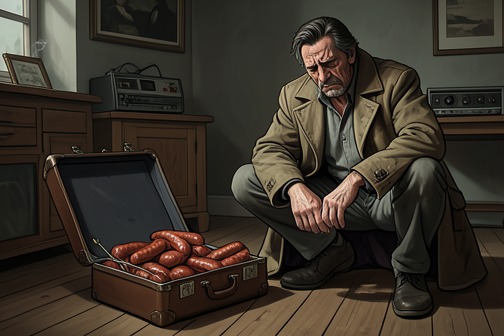
[Fidelis reunites with his family in Argus](entity:event-recall-event-fidelis-argus-4597de87709e) after crossing the Atlantic with his prospects reduced to a suitcase of smoked sausage and the ability to work. The reunion transforms his solitary struggle into a family life: [Eva](entity:character-recall-character-eva-a4f4507c5fab) and young [Franz](entity:character-recall-character-franz-a77eb1706f2e) arrive in a place [Fidelis](entity:character-recall-character-fidelis-c469e33ba84c) has made economically viable, but whose starkness Eva initially finds almost impossible to call a home. Their arrival makes the promise of “everything” both intimate and practical—a declaration of love that must be built out of work, food, and an unfamiliar landscape.
## Building a Life in [Argus](entity:location-recall-location-argus-09ff0273b5b1)
Fidelis had first recognized [America](entity:location-recall-location-america-c751899c385c) as a possible destination through a slice of machine-sliced bread sent from across the ocean to [Ludwigsruhe](entity:location-recall-location-ludwigsruhe-b984c1754f4d). Its exact cut and uniform crust seemed to belong to a place governed by an almost unimaginable order. He kept the name of the distant city on a scrap of paper until a small marvel became a destination. In [1922](entity:time-recall-time-1922-0de9751b5284) he stepped off the RMS Mauretania into [New York City](entity:location-recall-location-new-york-city-65df0a129d4c) carrying his father’s smoked sausage, the product that was to finance his journey west and advertise his skill.
The suitcase represented the remaining wealth of his family. Trinkets, cuff links, and their best woolens had paid for the passage and helped him keep his knives; the sausages came from wild boar he had poached with carefully saved bullets and a concealed rifle. In New York he knew only a few practical English words, including train, west, sausage, work, money, and land. He depended on watchful silence to navigate the crowded arrival and protect the family’s last resources. That quiet competence was not ease: it was a method of carrying risk without letting it overwhelm him.
In Argus, Fidelis found work immediately with [Pete Kozka](entity:character-recall-character-pete-kozka-2ab3e66d7b8b), the local butcher, and also took jobs in nearby towns and at farms where customers fetched him. His father had taught him that quality depended on every ingredient, down to the salt, fresh garlic, clean casings, and the finest available meat. Fidelis put the rule into practice in his first Swedish sausages for the Scandinavian trade, seeking the best local potatoes for the filling. Customers gathered on Thursdays to buy links hot from the kettle, before smoking, and the growing trade helped Pete even as Fidelis established his own reputation.
Fidelis lived frugally while saving for a larger place and for Eva’s passage. He subsisted on sausage ends, bruised fruit, stale cookies, and questionable trimmings, brewed his own beer, and washed his own shirts and aprons. The family’s eventual crossing was therefore not a sudden windfall but the result of sustained labor and careful saving, supplemented by help from his parents. The shop and household belonged to the same effort: the work that fed customers also made it possible to bring his wife and child across the sea.
## The Reunion and Its Unequal Promise
Eva arrived on a wild spring day with Franz, who stepped off the train proudly carrying his mother’s purse. Fidelis had been working two or even three jobs, and exhaustion had begun to blur the boundary between thought and speech. As he met Eva, he murmured “Alles, alles” into her hair. He meant to offer everything he was and could become, but Eva, confronted by the unfamiliar surroundings, wondered what that promise could amount to.
The landscape sharpened the difference between their expectations. On the train west, Eva had watched signs of human presence thin out until the country seemed barren; near dusk she thought she glimpsed wolves among the small trees. Argus’s houses and shops did little at first to dispel her sense of desolation. The reunion that should have been a simple triumph thus carried a strain of disbelief: Fidelis had secured a place for them, but Eva could not yet see what made it worth having.
For Fidelis, seeing Eva again released a love he had not found the courage to explain. He surrendered himself to it, offering her all he was, while she answered with a kiss and a decision of her own: if nothing of interest or value was visible, she would make sure there would be. Her response did not erase the barrenness she saw. It turned the question of what their new life contained into a shared undertaking, one in which her judgment and effort would matter alongside his.
## Family, Work, and the Fragility of Security
The move west began a family economy built from several kinds of labor. Fidelis’s skilled butchery and thrift created the means for the reunion; later, Eva’s practical intelligence and work helped make the business and household durable. When she was no longer alive to sustain that work, [Delphine](entity:character-recall-character-delphine-50abed839c4c) took an increasingly active role in the shop, selling its goods with conviction, judging what customers would buy, and balancing trade with both wealthy residents and people too poor to afford meat. The history of the reunion thus extends beyond the arrival scene: the family’s security repeatedly depended on adapting its labor to changing circumstances.
That security remained vulnerable to pressures the family could not simply work away. During the [Depression](entity:time-recall-time-ce283107ccf3), many Argus residents were broke or unable to buy meat, and Delphine traded carefully with poorer customers while drawing money from the wealthy and making new deals for stock. During the Second World War, demand surged, including requests from Jewish synagogues in [Minneapolis](entity:location-recall-location-16f7f12858d7) for custom kosher work, even as gasoline, butter, coffee, canned goods, and eggs became scarce. Delphine worked around rationing and shortages while sending Markus books and responding to his letters from military service. The shop that had helped make the family’s reunion possible became a place where the consequences of wider economic and wartime pressures were managed day by day.
The later plan for [Tante](entity:character-recall-character-tante-61557806d00c) to take the boys back to [Germany](entity:location-recall-location-germany-2e3723c2f347) shows how precarious the original achievement could remain. Fidelis agreed that she might take the boys, except Franz, for a year or two, partly because the family could not readily afford their clothes and care; the plan followed earlier dangers and mishaps, including Markus’s near burial in the hill. The family’s passage from Germany to Argus did not guarantee that it could keep every child close. Migration offered a future, but economic strain and concern for the boys could make separation seem like a necessary answer.
## Significance
The reunion joins a physical crossing to a more difficult act of making a home. Fidelis reaches America with no broad command of its language and little property beyond his tools, clothes, and sausage, yet his craft gives him a way to earn trust and create a place for his family. Eva’s arrival changes the meaning of that achievement: his solitary endurance becomes an invitation to build a life together, and her skeptical response ensures that the new home cannot be measured only by what he has already secured.
The scene also establishes a recurring tension between promise and material condition. The machine-made bread first makes America appear ordered and abundant; the journey to Argus instead reveals empty distances, hard work, and an uncertain livelihood. Fidelis’s “everything” is emotionally sincere, but its fulfillment depends on years of production, saving, household labor, and adjustment to economic shocks. The family reunion is therefore both a culmination and a beginning: the family is together, while the work of making that togetherness viable is only starting.
Event 8
Founding of the Argus Singing Club
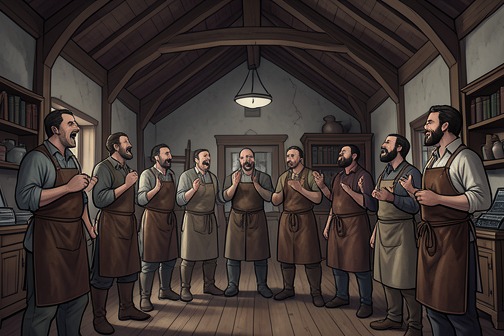
[Fidelis Waldvogel](entity:character-recall-character-fidelis-waldvogel-8dc9c794e011) founds [Argus](entity:location-recall-location-argus-09ff0273b5b1)’s singing club out of homesickness, but its first night quickly becomes more than a substitute for the club he left behind in [Ludwigsruhe](entity:location-recall-location-ludwigsruhe-b984c1754f4d). In the high-ceilinged slaughtering room of [Waldvogel’s Meats](entity:organization-recall-organization-waldvogel-s-meat-83bbccd77f1a), men from across the town drink, share songs, and discover how their different voices can join in harmony. The gathering grows into Argus’s most popular meeting and helps repair the breach between [Fidelis](entity:character-recall-character-fidelis-c469e33ba84c) and [Pete Kozka](entity:character-recall-character-pete-kozka-2ab3e66d7b8b); its warmth, however, does not make the town safe from the deaths and concealed wrongdoing that repeatedly break its quiet.
## Origins and Setting
Fidelis misses the singing club he belonged to in Ludwigsruhe, where membership had been limited to master butchers. After singing with [Doctor Heech](entity:character-recall-character-doctor-heech-d8e1cfca98fe), he realizes that in [America](entity:location-recall-location-america-c751899c385c) a club need not be organized around a single profession. The new gathering is therefore both a continuation of an old attachment and a departure from its boundaries: singing remains the bond, but the circle is open to men whose work and standing in town differ widely.
The club’s first meeting takes place in Waldvogel’s slaughtering room. Its high ceiling and sound-reflecting walls give the voices a gratifying resonance. The setting is practical as well as expressive: Fidelis provides crackers, cheese, and summer sausage, making the room where his trade is carried out a place for fellowship as well as work. The music transforms a business space into a communal one without leaving behind the everyday world of Argus.
## The First Gathering
The first group includes Portland Chavers, a bank employee; Zumbrugge, the banker; Newhall, the bootlegger; [Sheriff Hock](entity:character-recall-character-sheriff-hock-2743e6eeb4ba); Doctor Heech; and [Roy Watzka](entity:character-recall-character-roy-watzka-5624a52010d8), [Delphine Watzka](entity:character-recall-character-delphine-watzka-261d39e0a742)’s father, whom the town knows as its drunk. Beer comes from Newhall, bought by Chavers and Zumbrugge. Sheriff Hock lets the arrangement pass, while Heech, disapproving, keeps watch on how much the men drink. His vigilance slackens when they persuade him to have a few drops himself. Roy, meanwhile, has his fill more than once.
The gathering’s pleasure lies not in a polished performance but in the men’s willingness to give one another songs. They sing favorites, teach each other the words, and move from individual voices into fervent unison by the second chorus. Familiar melodies draw out instinctive harmonies. The contrasts among the singers become part of the evening’s character: Hock has a heartrending falsetto; Zumbrugge’s baritone has a cello-like depth that surprises in a banker known for heartless foreclosures; and Roy can sing every part with equal conviction when he has schnapps in hand. Because Roy’s voice resembles Chavers’s, the two sometimes duel instead of harmonizing. Their mismatches do not dissolve the gathering; they make its communal music something achieved among distinct voices, not imposed uniformity.
Fidelis supplies the food and good humor, and singing makes him appear weightless, all music and without heaviness. The men drink and sing until dawn. [Eva Waldvogel](entity:character-recall-character-eva-waldvogel-964135ffc394) falls asleep to their voices, as she will once a week from then on, linking the club’s first night to a recurring rhythm of household life. The music is heard not only by its participants but by someone at home, where it becomes a familiar part of the week.
## Growth and Inclusion
The club soon becomes the most popular meeting in town. Its audience expands beyond the core group to include listeners with ragged or pitchless voices, who sit at the edges rather than join the singing. That detail defines the gathering’s inclusiveness in practice: participation need not mean having a good voice. The singers make room for people who come simply to listen, while the core continues to sing together.
The club’s social reach also crosses boundaries that otherwise organize Argus. Its membership brings together people associated with the bank, bootlegging, law enforcement, medicine, and the town’s drinking life. The first meeting’s beer, food, and shared repertoire make a temporary common ground from a town divided by profession, reputation, and personal grievance. What holds the men together is not a formal civic program, but the act of singing songs to one another and learning them together.
## Reconciliation and Limits
The club matters especially to Pete Kozka, whose own passion for song makes his exclusion painful. He tells [Fritzie Kozka](entity:character-recall-character-fritzie-kozka-112861a4893d) that he would start a club of his own, except that Fidelis has already gathered all the town’s men with good voices. The complaint exposes an unexpected consequence of the club’s success: a gathering that opens across professions can still leave out someone who longs to belong.
Eventually Pete cannot bear being excluded and turns up one night as though nothing has happened. Fidelis makes no display of the earlier dispute. Once the two butchers sing together, their damaged friendship is nearly set to rest. Their return to shared song helps end the rancor between them, even as townspeople continue talking in an effort to keep the rivalry alive. Gradually it becomes an old topic, displaced by newer causes of absurdity or distress.
The club’s fellowship does not amount to protection from the town’s darker realities. Argus repeatedly falls into a false assurance that prayer has worked or evil has been kept at bay; even street dances, parades, and other energetic celebrations can precede a new shock. Death and wrongdoing recur in forms that unsettle the community, and [Strub’s Funerary](entity:organization-recall-organization-strub-s-funerary-a6727e13b665) stands as a reminder that death claims Argus as readily as anywhere else. Against that pattern, the singing club offers neither a cure nor a guarantee. Its significance is more modest and more durable: for a night, men with different voices and histories can find a common chorus, and a divided town can gather without becoming innocent of what surrounds it.
Event 9
Delphine discovers Cyprian's relationship with a man
[Delphine discovers Cyprian's relationship with a man](entity:event-recall-event-delphine-cyprian-3077498585c2) during a night by the river, but the revelation does not produce an immediate break between them. After finding [Cyprian](entity:character-recall-character-cyprian-167e957eaf33) with another man, she masks her shock with composed small talk and walks back with him. In bed, she asks how he balances his desires; when his answer leaves their future unresolved, she says she may leave, and he asks her not to. The encounter changes their partnership by making its unspoken limits visible without providing an easy way past them.
## The discovery
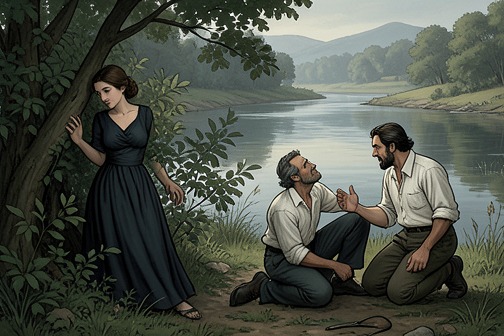
Two days after Cyprian has left her alone following their performance, [Delphine](entity:character-recall-character-delphine-50abed839c4c) goes to sit by the river. She chooses the town’s one point of interest for a solitary walk, watching the current carry sticks, dirt, leaves, and fish north. When voices and footsteps approach, she slips into the brush beside the bench, hoping to avoid conversation and reclaim her quiet place.
Two men arrive. One sits on the bench while the other kneels before him. Delphine is intrigued but cannot make out everything from her hiding place. As the men move and change position, she recognizes Cyprian by the bright white shirt he has taken off. Until this moment, she has not known that men could be together in this way. The recognition turns a private scene into a sudden disclosure of a part of Cyprian’s life she had not understood.
Delphine comes out of the bushes and says hello. The men move apart in alarm. She takes a seat on the bench, lights a cigarette, and begins asking neutral questions instead of naming what she has witnessed. Her small talk becomes a way to manage the encounter: she makes a joke, the three of them laugh, and the group leaves the riverbank. The other man and Cyprian part ways, while Delphine and Cyprian walk back to their room side by side.
## The silence after the scene
On the way back, Delphine imagines that having the discovery out in the open might allow her and Cyprian to become true lovers. At the same time, she recognizes that this hope may be naive. Once they reach their room, neither tries to turn the encounter into an argument or a declaration. They undress to their underwear, get beneath the covers, and hold hands, alert and unable to speak.
The night’s quiet does not mean that Delphine has put the discovery aside. She wakes Cyprian and prepares to ask whether he remembers the intensity they had shared by looking into each other’s eyes. She also means to confront him for not telling her about his attraction to men. But just before she speaks, she asks a different question: “How do you balance?” The shift from accusation to inquiry does not erase the hurt or confusion; it gives Delphine a way to seek an answer before deciding what the revelation means for them.
## An answer without resolution
Cyprian is awake too and has not really been sleeping. His response is difficult for him to find. When Delphine asks what happens when he falls, he describes the need to forget that one exists and to strike the ground like a shadow. The image offers a glimpse of how he understands surrender, but it does not supply a practical explanation for how he reconciles his relationship with Delphine and his desire for men.
Delphine says, “I think I’ll leave you.” Cyprian answers, “Please don’t leave me.” The exchange leaves both separation and continued attachment in the room: Delphine voices the possibility of leaving, while Cyprian directly asks her to stay. They end the night lying together on the bed, still connected but without a settled account of what their relationship can become.
## What the discovery changes
The event is not narrated as a simple exposure followed by an immediate decision. Delphine first encounters what she does not understand from concealment, then chooses to step into the scene without forcing it into a confrontation. Later, she brings the question into the private space they share. This sequence distinguishes what she sees from what she can know: the riverbank makes Cyprian’s relationship with another man visible, while the conversation in their room leaves the meaning of that fact unresolved.
Delphine’s question gives her a position of active inquiry rather than making her merely the recipient of a confession. Cyprian, for his part, tries to answer despite his difficulty speaking about the matter. Their conversation makes room for attachment and difference at once: he asks her not to go, but neither his plea nor his image of falling settles the conflict. The encounter therefore marks a change in their intimacy while preserving the uncertainty that follows from it.
Event 10
Watzka cellar tragedy
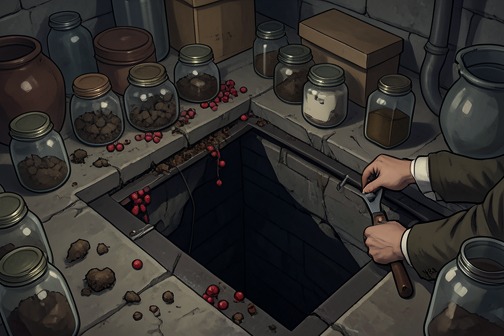
The [Watzka cellar tragedy](entity:event-recall-event-watzka-5d9d5d388713) begins when [Delphine](entity:character-recall-character-delphine-50abed839c4c) and [Cyprian](entity:character-recall-character-cyprian-167e957eaf33) break through a floor hatch sealed beneath shattered jars of canned peaches, dog waste, and red beads set in dried peach juice. What they uncover is not merely a hidden crime scene but the concealed remains of [the Chavers family](entity:character-recall-character-chavers-0531deb01d3c): Doris, Portland “Porky” Chavers, and their child Ruthie, their bodies grotesquely altered by time and decay. Roy’s partial, drunken recollection connects their presence in the cellar to a funeral party he hosted, but cannot establish exactly how they died or whether he shut them in. The event makes the cellar a physical repository for a past Roy cannot fully remember and forces Delphine to choose between protecting her father and bringing the deaths to the sheriff.
## Background and the Sealed Cellar
Delphine and Cyprian decide that the cellar needs cleaning, a domestic task that becomes the threshold to the tragedy. To reach its ring, they chip away the makeshift seal: broken preserving jars, the excrement of a stray dog that had been locked inside, and handfuls of red beads fused into peach juice. The odd mixture has covered the hatch and kept what lies below out of sight. As evening falls, they stop to fetch a lantern and fill it with kerosene; Cyprian trims the wick before they resume, now committed to opening what they have started.
They work the hatch with a crowbar and a can opener. The first terrible odor they had been fighting proves only an “olfactory shadow” of the true source beneath the floor. The smell is so overpowering that both flee through the back door and roll in the backyard grass. Even after they reach the beer crates and light cigarettes, they cannot clearly recall whether they actually lifted the hatch. The sequence delays the revelation: before the cellar’s contents can be seen, the body’s immediate, involuntary response to the concealed dead has already driven them outdoors.
## Discovery of the Dead
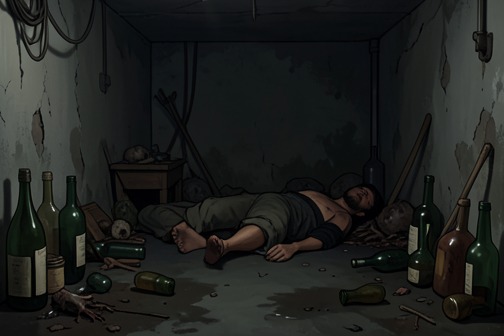
Delphine concludes that someone is below. When Cyprian asks who, she answers, “Someone dead.” They make themselves go back inside, holding their breath as they retrieve the lantern and lean over the open hatch. Their glimpse is brief; they bolt outside again and stop at a distance to gasp. Asked whether he saw a person, Cyprian answers, “Monsters.” The word captures the shock of the sight, not the identity of the dead: the bodies are swollen, green, fungus-bright, with protruding eyes and tongues, and are so changed that the living seem to encounter them first as grotesque forms rather than recognizable people. They are propped upright in the cellar amid many empty bottles.
The physical arrangement makes the cellar more than a place where bodies happen to be found. The hatch had been sealed beneath debris, and the people below had remained hidden while the house above continued to be lived in. Once the seal is broken, the concealed space forces a past event into the present without offering a clear explanation. Delphine’s immediate panic is practical as well as emotional: she asks whether it is time to burn the house, while the question of what Roy did turns the discovery into a possible matter of criminal responsibility.
## Roy’s Recognition and the Funeral Party
Roy’s response first appears as a sudden struggle for whiskey. He snatches the bottle from Cyprian and drinks before Delphine and Cyprian can wrest it away. Then, in a burst of recognition, he identifies the dead as “Doris and Porky and their little kid, too!” Delphine shakes him, demanding an explanation. She knows the Chavers family, though not well, and recalls that her friend [Clarisse](entity:character-recall-character-clarisse-58e0a7741d25) was related to them and had told her troubling things about Portland “Porky” Chavers. The revelation therefore joins the bodies in the cellar to people from the town’s social world, rather than leaving them anonymous victims.
Roy says the Chaverses had been guests at a funeral party. It was a gathering for Clarisse’s father, a Strub who wanted a party rather than conventional funeral proceedings; Roy claims he was the only one willing to arrange it. He describes his decision as an act of “corporeal mercy.” That explanation supplies the occasion on which the Chaverses came to his house, but not the circumstances of their deaths. His account is interrupted by drinking, confusion, and the limits of his memory, so the apparently definite identification does not become a complete confession.
## Investigation and Unresolved Responsibility
Cyprian insists that they go to the sheriff. Roy asks whether his father will be arrested, and Cyprian frames the urgent question narrowly: whether Roy locked the Chaverses in the cellar. The scene establishes the central uncertainty without resolving it. Discovering the dead, identifying them, and knowing that they attended Roy’s party are not the same as knowing how they became trapped or died.
[Sheriff Hock](entity:character-recall-character-sheriff-hock-2743e6eeb4ba) arrives and examines the house wearing a quarantine mask. He opens the hatch, makes cursory notes, and steps into the yard, where he remains for a long time before speaking. He tells Roy that he cannot allow him to reinhabit the house until he has interviewed the other guests who attended on the fatal night. He also tells Delphine and Cyprian that, because they have probably seen and destroyed evidence of foul play, they must remain in town as potential witnesses. His words make their impulsive entry into the cellar consequential: they are no longer only family members and discoverers, but participants in an official inquiry whose evidence may already have been compromised.
Roy walks to the river for solitude after the sheriff leaves. Delphine signals to Cyprian that Roy habitually hides a bottle among the tree roots there. She and Cyprian unload their DeSoto and pitch a tent as far upwind and as far from the house as possible; Delphine sends Cyprian to watch Roy and keep him from going swimming while drunk, while she drives into town for supplies. The house is quarantined in practice as well as by the sheriff’s restriction: the discovery displaces its occupants and reorganizes their movements around the cellar and Roy’s drinking.
## Later Recollection and the Tragedy’s Meaning
Much later, Roy’s account still cannot settle what happened. He wonders who knew that the wife and child had gone down with Porky, then says he cannot remember the moment clearly and that he may have shut the hatch. He does, however, remember calling down to Porky during singing-club practice: “Hey, Chavers, you can come up again after you quit singing over me in practice!” Roy recalls an ongoing rivalry in which Porky puffed out his chest and edged forward, singing over him. The remembered taunt turns an ordinary conflict over singing into a possible clue to the cellar’s closure, but Roy’s uncertainty prevents it from serving as a definitive account of intent.
The cellar tragedy is thus defined by a split between what can be established and what remains inaccessible. The dead are identified; their presence at Roy’s funeral party is recalled; Roy remembers a specific exchange with Porky and suspects he may have shut the hatch. Yet his memory is fragmentary, and the surviving evidence does not clarify whether he closed it knowingly, whether the Chaverses were already below, or precisely how they died. The cellar holds the consequence, while the story withholds a clean verdict. Its horror comes not only from the grotesque bodies but from the gap between a devastating result and the uncertain recollection of the man who may have caused it.
Event 11
The Chavers cellar deaths
[The Chavers cellar deaths](entity:event-recall-event-the-chavers-cellar-deat-33031e42e790) are a family tragedy in which a hidden cellar becomes both the physical setting of the deaths and the source of a mystery that cannot be resolved cleanly. The Chavers family were trapped below [Roy Watzka](entity:character-recall-character-roy-watzka-5624a52010d8)’s house; after their bodies were discovered, suspicion settled on Roy, while the eventual revelation that he may have shut the hatch links the catastrophe to his drinking and to an old rivalry. The novel preserves uncertainty about the exact moment of entrapment, but makes the cellar’s confinement—and the living characters’ burden of remembering it—inescapable.
## Background and Discovery
The deaths emerge through the investigation of the cellar beneath Roy’s house. When [Sheriff Hock](entity:character-recall-character-sheriff-hock-2743e6eeb4ba) questions [Delphine](entity:character-recall-character-delphine-50abed839c4c) about her father’s supply of bottles, he suggests that the empty bottles littering the cellar might explain the tragedy. Delphine first says she does not know what Roy kept there, then offers a possible explanation: he may have saved bottles for [Step-and-a-Half](entity:character-recall-character-step-and-a-half-676d0500a451) to resell for home brew. The exchange establishes a material clue without settling what it proves. Bottles point toward Roy’s alcoholism, but do not by themselves establish how the Chavers became trapped.
The space itself is revealed with visceral force. When Delphine and [Cyprian](entity:character-recall-character-cyprian-167e957eaf33) pry up the cellar hatch, the smell that escapes overwhelms them. They dive through the back door and roll in the yard, their hands still rubbery when they reach the beer crates and light cigarettes. They cannot even remember for certain whether they lifted the hatch. The grotesque seal above the ring—shattered jars of canned peaches, dog droppings, and spilled red beads mortared together in peach juice—makes the threshold seem less like an ordinary household door than a barrier that has accumulated refuse and time. The bodies are not described in this moment; instead, smell and the characters’ physical recoil make the hidden space’s horror arrive before explanation.
## Roy’s Connection to the Chavers
Delphine confirms that Roy had been a friend of the Chavers. Asked whether he was horrified when he learned who had died, she recalls him pulling the last tufts of hair from his head and rolling on the floor like a baby. He howled that he had believed the family had gone to Arizona for the winter. Delphine had accepted that explanation too. The sheriff’s reminder that winter was nearly over when the family were locked in turns the seasonal excuse into evidence of how long their disappearance went unrecognized.
Her account does not present Roy as knowingly indifferent to the deaths. She remembers him as devastated once he learned the Chavers’ identities, and says he seemed bewildered by the dead and unable to offer useful information. At the same time, she fears he may have done something that set the deaths in motion. That tension—an apparently genuine grief alongside the possibility of culpability—shapes the mystery more than a straightforward accusation would. Delphine has already answered questions about the red beads and asked her father everything she could think of, yet his confusion leaves her without a clear account.
## Suspicion and the Unclosed Case
Sheriff Hock has practical reasons to consider Roy a suspect: the cellar’s empty bottles, Roy’s deafness to noises beneath his house, and the possibility that the family had been shut in. Yet Hock’s private judgment resists the town’s certainty. He considers Roy honest, if frequently drunk, and basically harmless, as Delphine insists. He wants to call the deaths a terrible mistake, since people can be locked in cellars, but the gruesome hatch seal and the unexplained details keep the case from settling into that account. The peach juice, beads, and dog droppings remain stubbornly strange clues rather than a finished explanation.
The case also touches Hock’s unresolved fixation on [Clarisse](entity:character-recall-character-clarisse-58e0a7741d25). Seeing the red beads recalls his humiliation and Delphine’s contempt for his pain; even when he tries to divert his thoughts, they return to Clarisse. He privately imagines locking her in a closet, tenderly kissing her, and turning the key. His obsession does not solve the cellar deaths, but it complicates the investigation by showing that the sheriff’s attention is entangled with a separate personal history. He senses that information is missing and keeps the file open, uncertain whether the missing piece concerns Roy at all.
## Roy’s Confession and the Limits of Certainty
Much later, Roy’s recollection gives the mystery its most consequential possible answer. Speaking with his eyes shut, he asks who knew that the Chavers’ wife and child had gone down into the cellar with the man. He then names the child as Ruthie and admits that he cannot remember exactly what happened. It could be, he says, that he shut the hatch. His uncertainty matters: the confession is not a complete reconstruction, but it places Roy’s own act at the center of the family’s entrapment.
Roy remembers what he shouted down to Chavers: “Hey, Chavers, you can come up again after you quit singing over me in practice!” The words expose a petty musical rivalry beneath the catastrophe. Chavers had puffed out his chest and edged forward, singing over Roy during practice; the taunt suggests that Roy’s act, if he did close the hatch, arose in the immediate heat of that antagonism. It does not establish whether Roy knew the wife and child were below, or whether he understood the danger. Delphine reminds him that he had gone away on a three-week drunk. Her face stiffens as disbelief overwhelms her, and the confession transforms her fear of his possible involvement into a painful, still incomplete account.
## Aftermath and Narrative Significance
The cellar’s hold extends beyond the moment the bodies are found. It is a sealed domestic space whose contents—bottles, peach residue, beads, and dog waste—preserve traces without yielding a simple verdict. Its hiddenness also structures the story’s delayed knowledge: Delphine and Cyprian encounter the hatch through a noxious blast; Sheriff Hock assembles suspicions from physical clues and testimony; Roy eventually supplies a memory that remains uncertain even as it implicates him.
The episode’s force lies in the gap between accidental imprisonment and deliberate action. The Chavers family were locked in, but Roy’s possible role is recalled through a drunken absence, a moment of resentment, and a shouted joke rather than a clear account of intention. That uncertainty does not lessen the consequences. It binds the deaths to Roy’s alcoholism, to Delphine’s loyalty and dread, and to the town’s unresolved need to explain what happened beneath an ordinary house.
Event 12
Eva's cancer diagnosis and treatment
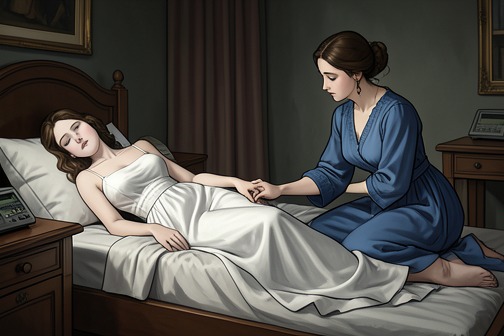
[Eva's cancer diagnosis and treatment](entity:event-recall-event-eva-s-cancer-diagnosis-87bb21111fe1) mark the beginning of a final illness that medicine can temporarily address but cannot cure. The crisis first enters the household in ordinary language: [Eva](entity:character-recall-character-eva-a4f4507c5fab) says she is not well, then repeats herself, and finally asks [Delphine](entity:character-recall-character-delphine-50abed839c4c) to take her to a doctor. The diagnosis turns that understated request into an emergency, and the ensuing treatments make Delphine's friendship with Eva a sustained practice of care and witness.
## The Diagnosis and Immediate Response
The warning comes during a sweltering morning. Delphine is in the kitchen after waxing the floor, pleased that Eva has praised its renewed appearance. Eva, who has been awake much of the night baking, says she is not well. Delphine initially answers sympathetically without taking in the seriousness of the words. When Eva repeats the same statement, her quietness and fixed attention to her coffee make Delphine watch more carefully. Before Delphine can return to polishing the floor, Eva touches her hand and asks to be taken to a doctor.
Eva then lies down and does not move. [Fidelis Waldvogel](entity:character-recall-character-fidelis-waldvogel-8dc9c794e011) is away checking livestock with a farmer, and Delphine cannot find him after visiting [Doctor Heech](entity:character-recall-character-doctor-heech-d8e1cfca98fe). She instead acts at once: Eva is in the back seat of the delivery car, sedated with morphine, while Delphine carries the doctor's written instructions. Doctor Heech contacts a surgeon and reports that Eva has a tumor pressing on her vital organs. Without removal, he says, it will cause her death within days. The doctor sends Eva toward treatment, but the diagnosis establishes how little time the family may have and how uncertain the prospect of a cure is.
## Treatment and Its Limits
The initial treatment follows surgery. In the hospital, hollow metal tubes containing radium are inserted into Eva's uterus; over the weeks, they are removed, refilled, and inserted again. After Eva returns home, the treatment has left her physically unwell, and the cancer continues to spread. She asks Delphine to get lilac water because she feels she smells burned. Delphine buys a large bottle of flower water and washes her with it, but it does not relieve the effects of the treatment.
Doctor Heech next administers monthly radium treatments for the new tumor. He uses long gold needles tipped with iridium, inserting them with forceps. Eva is strapped to a table and given ether for the procedure; after she wakes, she receives morphine. The needles must remain in place for six hours, their black waxed threads arranged across her abdomen. Doctor Heech fears that the procedures are useless and leaves the room angry with himself, an acknowledgment that treatment continues without a credible expectation of recovery. The repeated interventions are therefore both efforts to fight the cancer and reminders of its advance.
## Delphine as Caregiver and Witness
Delphine stays with Eva through the long treatments, reading, dozing, or knitting when she can. Her care extends beyond accompanying Eva to the doctor: she carries out the medical instructions, tends to her at home, and remains present while treatment and illness wear her down. Eva's suffering also produces bodily distress in Delphine. She experiences stomach pains as the needles are inserted and a sympathetic sweat, while Eva's illness weighs on her with an exhaustion that makes her want to give up. Delphine nevertheless continues the work and hides her own pain.
This is not her first experience of being unable to stop another person's suffering. Delphine recognizes a recurrence of the helplessness she knew among drunks and in her childhood neighborhood: she can remain beside the afflicted, but cannot make the suffering end. Her response is not a claim that she can save Eva. It is the more limited, repeated decision to stay. That distinction gives the care its force: Delphine's actions are practical, but they do not erase the limits of what practical action can accomplish.
## Faith, Care, and the Aftermath
Delphine's way of confronting the illness also differs from the religious attention surrounding Eva. As Eva weakens, [Tante](entity:character-recall-character-tante-61557806d00c) gathers Lutheran women to pray at her bedside. Delphine, a Catholic and socially less powerful in Tante's household, struggles to keep them from crowding around Eva. She turns instead to deflection and hospitality, baking a sugar cake so that the visitors will leave to eat. Delphine's irreverent private curse, “[Spit in your eye](entity:expression-recall-expression-spit-in-your-eye-77e3b36147dd),” expresses her refusal to pretend that prayer answers what she is witnessing. The contrast is not between care and indifference: Delphine's skepticism accompanies close, persistent care, while the prayer circle threatens to overwhelm Eva when she is too weak to send it away herself.
The illness also alters Delphine's understanding of her own life. After Eva's death, she tells her that their friendship changed the direction of her ambitions: she feels that Eva took those ambitions and left her with Eva's life, which she continued to manage. At Eva's grave, Delphine imagines where Eva might lie in relation to [Fidelis](entity:character-recall-character-fidelis-c469e33ba84c) and herself, and recognizes that her childhood loss of her mother remains present even as she approaches middle age. Eva's illness thus joins present caregiving to Delphine's older experience of maternal absence. Its consequence is not a cure or a simple consolation, but an enduring bond shaped by care, grief, and the knowledge that love cannot prevent death.
## Narrative Significance
The diagnosis is introduced not through dramatic symptoms but through Eva's repeated, understated admission and the everyday scene of coffee, floor-waxing, and baking. That quiet beginning makes the change in stakes especially stark: a household routine becomes a rush to medical care, followed by weeks of hospital treatment and recurring procedures. The episode also develops a central distinction between action and control. Delphine can transport Eva, follow instructions, wash and sit with her, and shield her from unwanted visitors; neither her devotion nor the available treatment can stop the cancer. The story makes care consequential without presenting it as a cure, and gives Delphine's continued presence meaning precisely because the outcome cannot be changed.
Event 13
Eva's flight with Franz

[Franz](entity:character-recall-character-franz-a77eb1706f2e)’s flight with [Eva Waldvogel](entity:character-recall-character-eva-waldvogel-964135ffc394) is at once a forbidden airplane ride, an act of filial devotion, and one of [Eva](entity:character-recall-character-eva-a4f4507c5fab)’s last moments of exhilaration. Arranged in secret with the barnstorming pilot [Pouty Mannheim](entity:character-recall-character-pouty-mannheim-8a5ba7d1506f), it briefly lifts the dying woman out of the confines of illness and gives her a language for imagining death as part of a design larger than any single life.
## Background and Decision
Franz’s fascination with aircraft had become a private world he shared most fully with his mother. After Pouty flew away, Franz would steady himself before facing other people; Eva was the one person he felt could understand what flight meant to him. He talked with her about aircraft designs and their advantages, drawing on newspapers and magazines, and read aloud about barnstormers when she was restless. His room displayed airplane pictures and his drawings, while a scrapbook Eva had given him collected newspaper photographs and handbills about stunt fliers. Aviation was therefore not a sudden diversion for Franz but a subject already binding mother and son through conversation and shared attention.
One afternoon Eva asked what it was like above the clouds. Franz answered by imagining that a person might step onto them and bounce. Her skeptical but proud response made him realize that he wanted to take her flying. He announced the plan, and her wondering pleasure turned his thought into a commitment: she had to go into the sky, and he had to accompany her. Though [Fidelis](entity:character-recall-character-fidelis-c469e33ba84c) had forbidden Pouty to take Franz on his flights, Franz decided this was different—a ride for a noble purpose. He could not yet explain how he would defend it to his father; he knew only that it had to happen.
Franz acted with urgency rather than waiting for a more convenient time. Pouty kept his plane in a barn north of town, so Franz borrowed [Mazarine Shimek](entity:character-recall-character-mazarine-shimek-8ebff8554fac)’s bicycle and rode there to find him. He pleaded and harassed the pilot while Pouty fetched a tool. Pouty’s first objection was that Eva was sick; he also pointed out that Fidelis would not allow the ride. Franz answered that this was precisely why Pouty must not tell him. Although Pouty was generally self-absorbed and had little experience of affection for his own mother, Franz’s behavior impressed him. After checking the controls and equipment and touching up the plane’s paint, he agreed.
## The Secret Departure and Flight
Pouty landed behind the shop early on a delivery day, when the weather was warm and the sky clear. Eva had dressed for the outing in a gauzy white housedress printed with roses. Her hair had been damaged by treatment, and she was weak, but she had put on lipstick and used lilac water to gargle. She disliked the foul breath that her illness sometimes brought and took pains to keep herself clean. The signs of her fragility made the preparations more than a change of scenery: the flight had to be carried out while she could still make the journey.
When Eva asked Franz to help her, he steadied her as she sat up and rose. [Delphine](entity:character-recall-character-delphine-50abed839c4c) had been let in on the plan and was distracting the other boys at the front of the store. As Eva tried to walk across the side yard, Franz swept her up in his arms and carried her into the field. She laughed in surprise and put an arm around his neck. At the airplane, he carefully settled her into the seat behind the pilot. In that vulnerable moment she thought of [Johannes](entity:character-recall-character-johannes-8bd33702cfc6), who had been not much older than Franz when she knew him, and reflected on how much had happened since his death. She wondered whether Johannes and the other dead would meet her in heaven, how old he would be, and what would happen when Fidelis eventually arrived there too. Her anticipation of flight was already entwined with questions about death, memory, and the people she had loved.
Pouty climbed into the front while Eva turned her face toward the sun. Franz spun the propeller until the engine caught and the plane shuddered. He jumped into the space behind her seat and wrapped his arms around her waist. Pouty shouted to ask whether he was holding her in; Franz yelled back that he had her. The aircraft lurched forward, gathered speed, and bounded into the air. For the first time Franz flew, holding on to his mother.
The climb seemed impossibly steep before Pouty leveled off and headed west with the sun behind them. He followed the river, hoping to show Eva herons and fish hawks, and flew over an oxbow and low across a farm whose occupants he knew. From above, the river became a gleaming gray line, the trees dusty-green puffs, and the roads dark threads in drought-stricken fields. They bounced over hot currents of air and stayed aloft until Pouty called out that he was low on fuel and had to return. The journey was limited by the plane’s fuel, but it carried Eva through a landscape transformed by height and motion.
## Joy, Pain, and Eva’s Vision
Pouty had come to imagine that flying might do more than cheer Eva: he believed it could even cure her. The outcome is more complex. Eva had hoped that the thrill would make her pain disappear; it did not. In some ways the pain intensified, but so did the joy—not only the physical pleasure of being in the sky, but the mental exhilaration she later described to Delphine. The ride offers no medical reversal. Its consequence is instead a brief expansion of experience, felt alongside rather than in place of suffering.
After they returned, Franz carried Eva back to bed. Propped among pillows and sipping water, she was shuddering with happiness and pain. She told Delphine that in the sky her mind had been gulping new air, thinking with extraordinary speed, and seeing things. What she had seen was not a literal explanation of the afterlife but a conviction that a vast plan exceeded the rules people lived by. She compared it to something larger than church candles, confession, or the Sacred Host, while admitting that she did not know what the plan was.
Eva then had Delphine call her sons into the room. She told them not to take religious observances as the whole measure of existence: they could practice them if they needed to, but the plan was greater. Raising her pinkie as a concrete emblem of its smallest scale, she said that the design accounted both for the immense and for a little fingernail. If she died, she urged her sons not to take it too hard. Death, she said, belonged to things larger than they could imagine; humanity was only beginning to learn what it could do, as the new possibility of flight showed. She would remain part of the pattern, made of things and continuing in what things were made of.
Her face flushed with the rosy color Pouty had imagined the flight would give her. She drank water, coughed, and abruptly closed her eyes. Franz feared she might have died and touched her face, but he concluded that she was sleeping. He gently sent his younger brothers out. From the doorway, Delphine considered how dramatically Eva’s death would have followed the flight, but the scene does not establish that Eva died then: she recovered enough to sit up later. The moment’s force rests on the uncertainty of her condition and on the family’s awareness that a temporary sleep could be mistaken for an ending.
## Significance
The ride turns Franz’s love into action. He takes a risk with his father’s rule, recruits Pouty by force of insistence, and physically carries Eva from her room to the plane and back again. His arms around her waist make his participation literal: he is not merely arranging a spectacle for his mother but holding her secure through the first flight of his own life. The secret plan’s success creates a brief space in which their private understanding of aviation can become shared experience.
The flight also separates exhilaration from cure. Pouty hopes that the airplane may restore Eva, and Eva herself wishes the thrill would silence her pain, yet neither expectation is fulfilled in a straightforward way. Instead, pleasure and pain intensify together. The episode’s emotional reversal is not that illness disappears, but that Eva gains a moment in which suffering does not monopolize what she can feel or think.
Finally, Eva’s account links the airplane’s new technology to an older, more expansive idea of continuity. She does not claim to know the design’s full nature; her assurance lies in being included in it. Flight becomes both a real physical experience and an image for human possibility, while her pinkie makes her argument intimate and exact: the vast plan includes the smallest part as well as the whole. In this scene, Franz’s gift is not a cure or an answer to death. It gives Eva a lived occasion for wonder, and gives her sons a final reassurance that her death will not remove her from the pattern of life.
Event 14
The morphine crisis in Eva's sickroom
[The morphine crisis in Eva's sickroom](entity:event-recall-event-the-morphine-crisis-in-acf3dffd5e4d) turns a painful medical emergency into a contest over who gets to decide what care [Eva](entity:character-recall-character-eva-a4f4507c5fab) may receive. When [Tante](entity:character-recall-character-tante-61557806d00c) secretly removes the medicine on the belief that Eva is addicted, [Delphine](entity:character-recall-character-delphine-50abed839c4c) must face not only the scarcity of morphine but also the peril of having another person’s judgment imposed on a woman in agony. Roy’s illegal recovery of a replacement dose reverses the immediate danger: the father Delphine has long associated with alcohol becomes the person who brings the medicine that may quiet Eva’s suffering.
## The medicine disappears
The crisis unfolds during a [Fourth of July](entity:time-recall-time-d563e7dfc3db) gathering at the Waldvogel home. The men have been drinking and singing—German drinking songs alongside “Jimmy Crack Corn,” “The Wabash Cannonball,” and “I’m Forever Blowing Bubbles”—while [Fidelis](entity:character-recall-character-fidelis-c469e33ba84c) entertains them by lifting [Sheriff Hock](entity:character-recall-character-sheriff-hock-2743e6eeb4ba) by the belt loop with his teeth. Delphine sees the effort as an attempt to distract Eva from her illness, a gesture of fierce devotion that also exposes how helpless Fidelis is against her sickness.
When Delphine goes to fetch Eva’s medicine, she searches the icebox and finds that the morphine is gone. Fidelis had labored to pay for it, and Delphine had guarded it carefully; now the vial, powder, and other syringe are missing. Eva is already restless. Delphine tells Fidelis someone has stolen the medicine, then gives Eva the remaining opium wine. Eva vomits it back up and struggles to contain her pain, asking for a rolled washcloth to bite as she gasps and arches off the bed.
## Delphine confronts Tante
There is no quick replacement. It will take hours to obtain another batch through [Doctor Heech](entity:character-recall-character-doctor-heech-d8e1cfca98fe) and then locate the pharmacist, and Delphine fears the wait while Eva’s suffering intensifies. She drives not to the doctor first but to Tante’s house, two blocks from the Lutheran church. Delphine recalls Tante’s quiet discussions with her prayer companions about Eva’s dose, and reads the older woman’s expression at the door as confirmation that she has guessed correctly.
Tante pretends not to understand Delphine’s question about the medicine. Delphine pushes past her and searches the refrigerator; on a table she spots a long object wrapped in a handkerchief. It is the missing hypodermic. Holding the needle, she confronts Tante, accusing her of secretly using drugs herself. The accusation comes amid a desperate effort to recover the medicine, not as a settled account of Tante’s habits.
Tante says that Doctor Heech does not really know Eva as she does, claims that Eva is addicted, and invokes her friend Mrs. Orlen Sorven as confirmation. Then she says she has thrown the medicine down the sinkhole. The sight of a clean-washed vial and the morphine bottle drying beside Tante’s porcelain sink shows Delphine that the medicine has been deliberately disposed of. Delphine grabs Tante by the bodice, tells her to come and nurse Eva through what follows, and drags her to the car. She takes Tante back to the house and leaves her there with Eva before driving away to seek a replacement.
## The search and Roy’s return
Delphine spends hours trying to find Doctor Heech and Sal Birdy, the drugstore keeper, but neither is available. Fidelis is searching too, though Delphine does not encounter him. Her repeated failure to secure medicine leaves her returning toward home empty-handed, furious and in tears. Along the road she sees Roy, disheveled and stumbling, and briefly imagines running him over. She then recognizes that his eyes are clear and that he is headed toward the butcher shop.
Roy is carrying a brown, square-shouldered bottle labeled sulphate of morphia, not the liquor Delphine expects. He has broken into the drugstore and sawed through the lock on the cabinet where Sal keeps the drugs that must be secured by law. His theft is illegal, but in this emergency it supplies the medicine Delphine has been unable to obtain. The bottle changes Delphine’s immediate expectation: the father she despises and fears may fail her has returned with the precise thing Eva needs.
## Eva’s agony and the medicine’s arrival
As Delphine brakes, jumps from the truck, and hurries into the house with Roy’s bottle, she hears Eva’s high, keening cry. Inside, smashed canning litters the kitchen. Tante is slumped on the floor, white and shocked; [Franz](entity:character-recall-character-franz-a77eb1706f2e) and Markus are crying and holding on to their mother as Eva rummages in a drawer for a knife. Her attention has narrowed to the necessity of ending her agony, and even Franz cannot restrain her.
Delphine enters with the bottle and responds with the practiced competence she has summoned in other scenes of mayhem. She takes the knife away and tells Eva not now, urging her not to leave her boys. The immediate crisis is not a cure for Eva’s illness: it is a struggle to get her through a wave of pain without letting that pain claim her before the medicine can be prepared.
Delphine gives the children concrete tasks. She asks Franz for a blanket and pillow, then tells Markus to hold Eva’s hand and keep telling her that the medicine is being made and will come soon. Franz’s tears dry as he gains something to do. The scene shifts from the helpless spectacle of Eva’s suffering to a fragile, shared act of care: Delphine prepares the medicine while the boys stay physically and verbally close to their mother.
## Care, authority, and reversal
The crisis places competing ideas of care in direct opposition. Tante presents withholding the drug as protection from addiction and claims personal knowledge of Eva that the doctor supposedly lacks. Delphine’s response is grounded in the visible emergency before her: the prescribed medicine is gone, the opium wine cannot stay down, and Eva is in such pain that she reaches for a knife. Tante’s intervention does not relieve that suffering; it forces Delphine to spend crucial hours trying to replace what has been destroyed.
The episode also reverses the family roles Delphine expects. Fidelis’s performance for the men briefly makes him look physically powerful, but Delphine recognizes that his strength cannot touch Eva’s disease. Roy, by contrast, appears at first as the familiar drunk whose presence provokes Delphine’s anger; then his clear eyes and the stolen morphine bottle reveal an urgent act that helps preserve Eva’s immediate safety. The medicine moves through a sequence of loss, confrontation, and illicit recovery, while care itself passes among Delphine, Roy, and the children. Delphine remains the person who must turn those separate actions into practical help: she finds the vial, searches for a lawful supply, brings Roy’s bottle inside, removes the knife, and gives each boy a way to stay with Eva.
Event 15
Roy's sobriety after Eva's death

[Roy Watzka](entity:character-recall-character-roy-watzka-5624a52010d8)’s sobriety after [Eva](entity:character-recall-character-eva-a4f4507c5fab)’s death is a sharp reversal in his life: the man once defined by drinking and by handing his responsibilities to others becomes a quiet, capable presence in [Delphine](entity:character-recall-character-delphine-50abed839c4c)’s household. The change begins in grief and fear, as Eva’s death makes the haunting of [the Chavers family](entity:character-recall-character-chavers-0531deb01d3c) unbearable, but it takes material form in repaired rooms, fresh food, and sustained care. The cellar’s dead remain part of the story; Roy’s new domestic steadiness is an answer to their return, not proof that the past has been laid to rest.
## The shock that makes sobriety possible
Roy passes into an unprecedented period of sobriety after Eva dies. The narration connects his ability to stay dry directly to the starkness of that loss: days become weeks, and a decisive change follows an event that has made ordinary escape impossible. Eva’s death is not the only pressure. The deaths in the cellar have returned to haunt him, and his periodic delirium gives that haunting a grotesque, bodily form.
In Roy’s visions, the Chavers family comes for him with beetles snapping from their bodies and grave moss sprouting over them. Their hands reach toward him in maddened stroking motions, drawing him toward what the passage calls their cozy wormhole in the earth. The image makes the cellar’s buried dead feel active rather than past. Roy has been plagued by these visions since the Chavers were discovered, but after Eva dies the experience becomes unbearable. For the first time, he finds a horror in his own thoughts worse than the terrors of withdrawal. Sobriety follows not from an abstract resolution but from a changed balance of fears: drinking can no longer shield him from what he has seen.
## Work replaces dependence
Roy’s new conduct is evident in the house before it is expressed as a declaration. Instead of farming out his wasted muscles to other people, he concentrates on his own home. Returning from a run north, [Cyprian](entity:character-recall-character-cyprian-167e957eaf33) is astonished to find him no longer happily tootling by the river but quietly painting the house a sunny yellow. Roy restores the blue of the doors and windows, sands and varnishes the floors, fills in the cellar more thoroughly, and blacks the stove. These are modest repairs, but together they reverse the look and use of a home that had been left to neglect.
The work continues outside. There are chickens in the coop—large orange Rhode Islands—and the porch steps are nailed back where they belong instead of lying scattered in the yard. Roy sets weasel traps around the chicken run and fastens light wire along the fence top to foil Cooper’s hawks. The details matter because they show him anticipating what the household needs: he is protecting food and animals, completing repairs, and making his effort last beyond a single burst of energy. His sobriety has become visible as maintenance, attention, and responsibility.
## Care for Delphine and the household
After Eva’s death, Delphine has her hands full with the Waldvogel boys. Roy’s practical care therefore surprises her. Some mornings she emerges from the room she shares with Cyprian to find breakfast already made, an ordinary provision that seems almost miraculous against the recent strain. He serves steaming oatmeal with butter and dark brown sugar, sometimes with cream, eggs, or toast. The toast is made over the gas by holding the bread on a fork; Delphine has bought the stove through timed payments, and Cyprian has arranged delivery of a small icebox.
The meal is set on a polished table, with jelly in Delphine’s mother’s tiny cut-glass bowl, an object she had believed long since pawned or broken. The breakfast helps her endure both the ordeal of Eva’s dying and its aftermath. It is not simply food: it brings a remembered family possession back into use and turns provision into a quiet sign that Roy is attending to her. Delphine expects that he will relapse when she finally leaves the shop, but his good behavior continues. He brings to the household the charm he had shown in Eva’s sickroom and sings songs learned in the hobo jungle by the river, including “Blue Tail Fly,” “Joe Hill,” and “Big Rock Candy Mountain.”
Roy’s care is part of a broader domestic restoration. Delphine, too, repairs the house’s interior, painting the walls pale yellow and fastening old furniture back together with horse-hoof glue, twine, and C-clamps. The shared improvement is not presented as a sudden cure for grief: it is a series of practical acts undertaken while grief remains. Yet Roy’s contribution changes Delphine’s expectations of him. The father who had made her carry so much becomes someone who can make breakfast, keep a house, and help sustain the people in it.
## A fragile reprieve, not an end to grief
Sitting on the repaired back steps late in the summer, Delphine tells Cyprian, “[The dead have more power than we know](entity:expression-recall-expression-the-dead-have-more-cda7a3b45cca).” The remark can refer both to Eva’s death and to the change in Roy produced by his waking dreams of the dead. Cyprian does not settle its meaning, but he welcomes the change; he has even considered leaving his own shady work for something legitimate. The sentence holds the episode’s doubleness: the dead exert power through fear and haunting, but loss also prompts the living to alter how they act.
Delphine experiences the restored home as a fugitive sweetness. She imagines making the Hungarian-style goulash Eva taught her, with braised meat in paprika sauce served over spaetzle and topped with sour cream. Roy is acting like a father, while Cyprian attends to him, playing checkers or cards and helping him stay away from alcohol. Delphine misses Eva terribly, yet also feels relief at having passed through the exhausting vigilance and heartbreak of the dying process. She is no longer dealing with men drinking beneath the clothesline or the sharpness of [Tante](entity:character-recall-character-tante-61557806d00c)’s scorn; the kitchen has meat and butter in the icebox, apples in the apple bin, and onions in their box. Such particulars make the household’s new order tangible without making it secure.
The reprieve is shadowed by the memory of looking into the cellar and seeing the dead move their mouths, their words rising in flashes of green fire. The narrative refuses to treat Roy’s sobriety or the repaired home as a final escape from suffering. As Delphine turns toward cooking, the sense of goodness is crossed by fear and sorrow; the account says she must have known that more was coming, that there would never be an end of it and no lasting peace. Roy’s change remains real—measured in weeks of sobriety and in sustained work—but it takes place in a world where grief, haunting, and new crises continue. Its significance lies in the care he can now give, not in any claim that the dead or the past have disappeared.
Event 16
Markus runs away from Tante
[Markus runs away from Tante](entity:event-recall-event-markus-runs-away-from-t-48661f866d2b) after her harsh discipline and finds refuge with [Delphine](entity:character-recall-character-delphine-50abed839c4c), who protects him from being reclaimed and takes him into her household. The episode turns a boy’s flight from punishment into a new bond: Markus chooses Delphine because she cared for his mother, [Eva Waldvogel](entity:character-recall-character-eva-waldvogel-964135ffc394), and Delphine accepts responsibility for him until his father, [Fidelis Waldvogel](entity:character-recall-character-fidelis-waldvogel-8dc9c794e011), returns.
## Causes and Flight
The events emerge first through [Tante](entity:character-recall-character-tante-61557806d00c)’s complaints. The next morning, she accuses Delphine of hiding Markus, while Delphine studies the familiar arrangement of [Fidelis](entity:character-recall-character-fidelis-c469e33ba84c)’s features in Tante’s face and keeps her attention on the woman’s expression rather than her words. Tante’s account, as Delphine gathers it, suggests that she had switched Markus and beaten him, then presents his escape as evidence of his supposed misbehavior. Delphine recognizes the lecture as an effort to discredit the boy and conceal the cause of his bruises.
Markus’s flight follows an earlier, exhausted journey to Delphine’s home. The night before Tante comes to complain, he slips out through the back door and makes his way by back roads and through cornfields, sand-picking ground, ditches, and pastures. Delphine has made extra food without knowing for certain that he is coming: she adds flour and another egg to the spaetzle, puts two more onions into the goulash, and uses all the meat. Her preparations become an unspoken welcome, anticipating the hunger and exhaustion with which Markus arrives.
## Delphine Protects Him
When Tante confronts her, Delphine does not let her inside. She folds her arms in the doorway and denies having seen Markus, repeating the denial even after Tante calls her a liar. Delphine understands that Fidelis is away making deliveries in a truck packed with sausage, so Tante cannot appeal to him in person. She tells Tante that the boy is no fool and will find somewhere to hide until his father returns, presenting his disappearance as temporary while withholding the fact that he is already sheltered inside.
The lie is made practical by Delphine’s control of the house and the timing of Tante’s departure. After Tante drives away, Delphine calls toward the bedroom door, and Markus comes out and runs to the window to ask whether she will return. Delphine doubts it. Tante has left without seeing him, while Markus has been hidden in the very home where she came looking.
Delphine also redirects Tante’s insinuation that Markus is a devilishly wiry troublemaker. She jokes about the bull’s pizzle, the painful homemade switch kept at the shop, rather than allowing Tante’s account to define the boy. The distinction matters: although the instrument was used as punishment in the household, Fidelis had never used it on Markus. In this scene, Delphine’s refusal to accept Tante’s framing protects both Markus’s immediate safety and his claim to innocence.
## Refuge and Recognition
Markus has arrived in his best clothes, which are now all he owns: the store-bought shirt he wore to the funeral, short brown pants he dislikes, wool socks without holes, and [Franz Waldvogel](entity:character-recall-character-franz-waldvogel-56b68d4cb448)’s formal hand-me-down shoes, still too large but carefully shined. Delphine notices his inadequate clothing and arranges for [Cyprian Lazarre](entity:character-recall-character-cyprian-lazarre-f36f15cc38dd) to buy him overalls in town. Care begins in these concrete adjustments as well as in shelter and food.
She feeds him pancakes made with the last of the sweet wild saskatoons, topped with butter and a little maple syrup that [Cyprian](entity:character-recall-character-cyprian-167e957eaf33) had traded for with a Chippewa. Markus eats while Delphine talks, and she does not demand an explanation for his flight. He had been too exhausted the previous night to answer questions; now she tells him plainly that he can stay until his father comes back. His eyes widen and he nods in relief.
Delphine gives Markus the choice to explain why he left, and offers to let him talk to her or to Cyprian. She draws one boundary around that confidence: he should not tell her father, [Roy Watzka](entity:character-recall-character-roy-watzka-5624a52010d8), because Roy blabs. Then she asks the more personal question of why Markus came to her. He pauses over his food, his fork and knife held ready, and answers, “You took care of her.” The reference is to [Eva](entity:character-recall-character-eva-a4f4507c5fab), whose eyes Delphine recognizes in Markus’s face. His reason is not convenience alone: he trusts Delphine because of the care she gave his mother.
## A New Household
After revealing his reason, Markus reddens and returns to eating. Delphine wonders whether his words mean that her love for Eva will extend to Eva’s son, or whether he is asking her to love and defend him in the same way. She does not force him to clarify. Instead, she watches him eat and makes another batch of pancakes when he finishes the first, answering the vulnerable declaration with practical care.
Markus stays with Delphine and Roy, helping mow the yard, grub young trees, and clear wild morning glories from a patch Roy hopes to make into pasture. He joins Roy’s checker games and quickly learns his cribbage strategies. His presence is no longer merely a hiding place between Tante’s house and Fidelis’s return; it becomes part of ordinary household work and play.
As he settles in, Markus’s anxieties expose the responsibilities he has left behind. He worries that [Franz](entity:character-recall-character-franz-a77eb1706f2e) may not be changing the chinchillas’ water as Eva instructed, that the twins might harass the animals and damage their coats, and that Tante will not know how to mix their food. These concerns show how closely he remains attached to Eva’s routines and to the creatures she entrusted to the family. The refuge Delphine offers relieves his immediate danger without erasing his worry for the home he left.
## Significance
The event changes Markus’s position from a beaten child who has run from Tante to a member of Delphine’s household, protected by an adult who refuses to expose him. Delphine’s protection is neither a grand declaration nor a demand for disclosure: it takes the form of a closed doorway, a steady lie, clean clothes arranged through Cyprian, and food placed before a hungry boy. Markus, in turn, identifies the basis of his trust in a single sentence, linking Delphine’s care for Eva to his belief that she will care for him.
The episode also gives the family’s ties a chosen dimension. Markus’s appeal is grounded in Delphine’s relationship with his dead mother, while Delphine accepts him without first requiring him to justify his departure. His later participation in the household, together with his continuing concern for the chinchillas and the twins, makes clear that refuge does not require him to sever his former attachments. For the moment, care means holding both things at once: keeping Markus safe with Delphine and allowing him to worry about those he left behind.
Event 17
Delphine and Cyprian's sexual encounter
[Delphine](entity:character-recall-character-delphine-50abed839c4c) and [Cyprian](entity:character-recall-character-cyprian-167e957eaf33)’s sexual encounter is a brief, consequential crossing of a boundary in their relationship: they share sex after accepting that Cyprian’s desire for men means they will not be lovers in the conventional sense. The encounter brings them close without resolving that difference. It leaves Cyprian troubled by the gap between his attachment to Delphine and his deepest desire, while their companionship and mutual care continue.
## Background and the limits of their partnership
Delphine and Cyprian travel and perform together, sharing a room and a life that already contains tenderness, trust, and an earlier sexual interlude. When Delphine discovers Cyprian’s relationship with another man, she initially imagines that bringing the truth into the open might allow them to become true lovers. But back in their room, neither acts on that hope: they undress, get beneath the covers, and hold hands like mourners, unable to speak. Their stillness makes plain that disclosure has not supplied an easy way forward.
Cyprian later makes clear that his attraction to men is not, in his understanding, a temporary consequence of the war. He had loved a man who died, and had long known that his feelings for men were like the feelings men usually expressed for women. He asks Delphine to consider her own desire for men as a parallel to his desire for them. She accepts the answer and feels a kinship with him that she experiences as more female than male: she believes she can tell him what goes on in her heart and be understood. That understanding brings satisfaction, but also confirms that they will not be lovers as she had first imagined.
## The night of the encounter
The sexual encounter occurs later, after the pair have become part of the Waldvogel household and Delphine and Cyprian share a bed. In the middle of the night, a pack of stray dogs begins howling near the house. The animals are familiar around the butcher’s yard, where they have survived on scraps [Fidelis](entity:character-recall-character-fidelis-c469e33ba84c) throws out and food left among the weeds; now their noise recalls nights when Delphine and Cyprian camped on the road before a performance. The sound makes her feel lonely and romantic, connecting the present to their past and to their earlier intimacy.
Delphine wakes Cyprian and asks him to make love to her. He has anticipated that she might eventually tire of his sleeping beside her without taking sexual advantage of her tenderness. He tries to respond despite his discomfort, and the encounter is marked by his effort to reconcile the act with his attraction to men. Afterward, he attends to Delphine rather than simply turning away. The episode therefore does not erase the difference between them: it shows both his difficulty inhabiting a sexual role with her and his desire to care for her.
## Intimacy, desire, and unresolved tension
Cyprian cannot treat the encounter as proof that his desire has changed. He remains conscious of what he regards as the truest desire in his life and wonders what place it can have in the future. He has no model for two men establishing a household, and imagines that men who live that way in cities are unlike himself. At the same time, his bond with Delphine is exceptional: he talks with her in ways he does not with men, enjoys their life together, and feels a protective tenderness toward her. The encounter brings those attachments into contact without making them identical.
The account also gives the episode a brief, unsettled aftermath rather than a romantic resolution. Cyprian’s feelings leave him light-headed and unfamiliar to himself. Soon he and Delphine are in the kitchen frying a single pork cutlet and arguing about how to divide it; when Markus appears, Cyprian jokes that the food must now be split three ways. Their everyday household rhythm resumes, with Markus welcomed to the table. The scene places sexual closeness alongside shared meals and care, showing that the partners’ life together cannot be reduced to whether they become lovers.
## The relationship beyond sex
The encounter remains one moment in a broader partnership built on practical loyalty as well as intimacy. Delphine later devises a routine to help Markus stay dry in the mornings: she and Cyprian send him outside with pitchers of lemonade to practice, and by the end of the week he is dry. Cyprian understands what she is trying to accomplish, respects her thoughtfulness, and agrees to help. The episode demonstrates how their capacity to cooperate and care for others persists independently of sexual compatibility.
Their closeness is not limited to the night of the encounter. Delphine later observes that [Franz](entity:character-recall-character-franz-a77eb1706f2e) and [Mazarine](entity:character-recall-character-mazarine-a23fb9b0754a)’s shy, mutually attentive movements reveal their love even when they cannot yet hold hands in front of their parents. In contrast, [Delphine and Cyprian’s partnership](entity:relation-recall-relation-delphine-cyprian-e62f8ccd0b65) has had to make room for an acknowledged difference in desire. Their encounter does not settle that difference or supply a conventional romantic ending. Its significance lies in the tension it preserves: sexual intimacy is possible, but it does not transform Cyprian’s orientation or cancel the deep affection, confidence, and shared responsibility that bind the two companions.
Event 18
Delphine buries Clarisse's dress
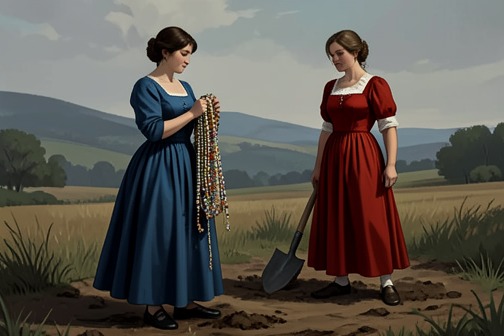
[Delphine](entity:character-recall-character-delphine-50abed839c4c) buries [Clarisse](entity:character-recall-character-clarisse-58e0a7741d25)’s beaded theatrical dress after recognizing that its distinctive beads may connect her friend to the suspicious sealing of a cellar door. The act is neither straightforward obedience nor a clean destruction of evidence: Delphine removes the garment from danger, but hides it in the ground rather than burning it, leaving Clarisse’s request and [Sheriff Hock](entity:character-recall-character-sheriff-hock-2743e6eeb4ba)’s investigation unresolved. A small exchange of friendship becomes a consequential choice about evidence, loyalty, and risk.
## Background and the dress
During an afternoon visit, Delphine gets directly to the reason she has come: she asks Clarisse what costume she wore when she played the lady in *The Lady and the Tiger*. Clarisse begins to describe the dress, and Delphine supplies the detail she needs: it was covered with red, pink, and peach iridescent tube beads. Clarisse remembers sewing a great many of them onto the garment and takes pride in the work, calling it practically a work of art.
The dress is not merely a keepsake of Clarisse’s performance. Delphine has heard that the cellar door at her own house was pasted shut with a solid substance containing beads like those on Clarisse’s costume. She therefore tells Clarisse to get rid of the garment. The correspondence does not establish who put the beads in the sealing material or what role Clarisse might have had; it makes the dress a troubling piece of possible evidence, not proof of guilt.
## Hock’s suspicion and Clarisse’s fear
Clarisse first reacts with exaggerated dismay at the thought of discarding something she worked so hard to make. The humor gives way when Delphine explains what she has heard about Sheriff Hock’s thinking. Clarisse opens her mouth, then presses her hands to her cheeks as pain and panic come over her. She recalls that Hock practically ripped the dress off her that night, and fears he is using the coincidence of the costume, the cellar, and the deaths of Ruthie and Doris against her.
Her fear is sharpened by the presence of a little girl among the dead. Clarisse cries in frustration, then tries to recover her professional composure: she insists Hock should leave her alone, says she must finish Mr. Pletherton by five, and notes that he is a difficult case. The shift from panic to workaday obligation does not settle the danger. Tired and drooping, she asks Delphine to retrieve the dress from her closet and throw it into the fire.
## Delphine’s decision
Delphine agrees in the conspiratorial intensity of the moment and leaves quickly. Once she reaches Clarisse’s house and opens the back door, however, she sees the risk in carrying out the request. If Sheriff Hock caught her taking the dress from Clarisse’s closet—or even near it—her presence could look incriminating. She also doubts that burning the garment would eliminate its significance: the beads might melt, but they might not disappear.
Inside Clarisse’s childishly messy room, Delphine thinks of their earlier sleepovers and the ordinary family dinners and easygoing home life she had treasured there. That remembered domestic ease contrasts with the present need to handle the dress as evidence. The thought does not answer what she should do, but the hollow feeling in her chest already tells her what the beads will look like: the same apricot, sweet pink, and red colors she remembers in the material pasted into the pantry floor.
## Burial beneath the irises
Delphine carries the dress away in a sack, then refuses to fulfill Clarisse’s instruction literally. Taking it home would leave the possible evidence in her possession, while burning it could fail to make the beads vanish. Instead, she borrows a shovel from the shed beside Clarisse’s house and spends about half an hour digging. To anyone watching, she can appear to be thinning the iris bed and taking crowded perennials home.
She digs a deep hole and stuffs the dress into it, then shakes the sack to make sure every bead is buried. She places iris roots and crowded daylilies in the bag to support the appearance of gardening, returns the shovel to its place, and walks home. The concealment removes the dress from Clarisse’s closet without destroying it; Delphine has chosen secrecy and temporary protection over either disclosure to Hock or the irreversible act of burning.
## Consequence and significance
The scene ends not with an arrest or an explanation of the cellar, but with Delphine back at the farm, preparing an outdoor meal. As potatoes roast in the embers and fish cooks over coals, ordinary care resumes around the secret she has just buried. The domestic calm does not resolve the danger; it sits beside it, as Delphine eats with Roy and Markus while the dress remains hidden beneath Clarisse’s flowers.
The burial also complicates the friendship at the center of the episode. Delphine responds to Clarisse’s fear and trusts her enough to take responsibility for the garment, but she does not obey the request to destroy it. Her choice protects Clarisse from the immediate exposure of the dress while preserving the very object that could become evidence against her. The buried beads thus hold together loyalty and suspicion: hidden from view, but not erased.
Event 19
Fidelis expels Tante and brings Delphine back
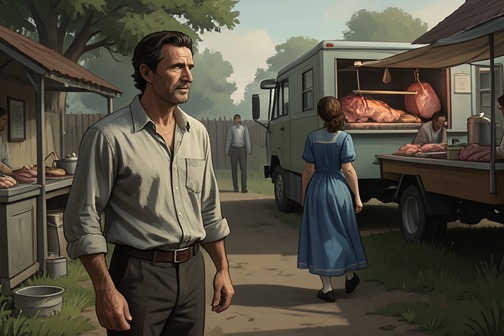
[Fidelis expels Tante and brings Delphine back](entity:event-recall-event-fidelis-expels-tante-an-e70576e294e1) to the Waldvogel household in a turning point shaped by both sacrifice and negotiation. By sending away his sister and asking [Delphine](entity:character-recall-character-delphine-50abed839c4c) to return, he chooses her over his family’s established authority; Delphine, in turn, agrees not as a dependent but as a worker who sets her own hours and responsibilities. Their agreement makes possible a renewed household built on [Eva](entity:character-recall-character-eva-a4f4507c5fab)’s lessons, Delphine’s practical care, and a new boundary between the couple.
## The Moment of Return
Delphine’s plans for Markus are interrupted when the meat-market truck pulls into the yard and [Fidelis](entity:character-recall-character-fidelis-c469e33ba84c) steps out. His appearance registers the cost of what has happened: his shirt is rumpled, his pants oddly shrunken, and he has no socks. The tiredness in his face is more striking than any explanation; his eyes look bruised beneath, his cheeks have hollowed, and the bones at his wrists and knuckles seem newly prominent. The man who had once carried himself with force appears deflated.
He remains outside rather than coming in for water. The hesitation makes clear that he has come to say something difficult, and he begins with an uncharacteristic plea. Delphine hears the aching quality of the word and lets it hang between them, aware that Fidelis is not someone who ordinarily asks anyone for anything. His manner does not erase the conflict that brought him there, but it announces that the decision he has made has left him diminished and exposed.
Fidelis tells her that he has instructed [Tante](entity:character-recall-character-tante-61557806d00c) to leave. Delphine understands at once that this is more than a household arrangement: he has chosen her over his own sister, at the price of making Tante a more implacable enemy. She anticipates that Tante will seek revenge and may turn the family against Fidelis. She also considers whether his sacrifice might become a claim on her, a reason to expect that she owes him something. Yet she sees weariness in his expression, not a demand for repayment.
Delphine makes him confirm that Tante will not return. When he inclines his head, she recognizes the finality of the separation, but she does not immediately accept his invitation. Her first answer is a warning that she may not do much better than Tante. The doubt belongs partly to the scale of the responsibility: returning means taking up the work of a family and business, not simply resuming a place beside Fidelis.
## The Work Eva Left Behind
Delphine weighs the return against the quieter life she has begun to imagine for herself. As a telephone operator, she could make connections, tell time, and give numbers, then come home at the same hour each day. The routine promises peace and probably better pay. For the first time in her life, her present world feels orderly and calm, and she has reason to hesitate before surrendering that independence.
But the Waldvogel household is not an unknown burden. Eva had taught Delphine how to keep the household running while managing the store: the shortcuts, the patience with details, and the small practical skills acquired through trial and error. Her training had included the boys’ habits, their diets, and the ordinary particulars that make care workable. Delphine remembers that Eva had been determined near the end to prepare her to take her place, focusing on lists, routines, and eccentricities for Delphine to note.
That inheritance is intimate rather than abstract. Delphine accepted Eva’s instruction because she loved her, and she now recognizes that Eva had given her a life’s worth of knowledge. Returning would put those lessons into practice, preserving the care Eva had built into the family’s everyday arrangements. Delphine wonders what Eva had told Fidelis and what he had promised, but she cannot bring herself to ask. Her decision is not presented as an answer to a fully explained agreement between the spouses; it follows from what she remembers, what she has learned, and what she is willing to undertake.
## Terms of the Agreement
Delphine accepts, but defines the shape of her return herself. She will arrive at eight each morning, work the busy hours, prepare lunch and dinner, and stay until six each evening. The schedule turns a broad appeal for help into a clear working arrangement, with a defined start, a defined end, and specific duties. Her firm, indifferent tone keeps the offer from sounding like surrender.
She waits for Fidelis to agree. When he nods, Delphine extends her hand to seal the arrangement. The handshake gives their reconciliation a practical form: instead of relying on gratitude, affection, or an unspoken obligation, they establish terms that Fidelis accepts. The scene’s decisive change is therefore reciprocal. Fidelis has made a costly choice to bring Delphine back; Delphine chooses to return, but retains the authority to say what that return requires of her.
## Household Care and the Wider Stakes
The immediate background to Fidelis’s visit is Delphine’s effort to prepare Markus for survival in Tante’s care. She and [Cyprian](entity:character-recall-character-cyprian-167e957eaf33) have been teaching the boy self-control through a morning routine behind the henhouse, where Delphine sends out two pitchers of lemonade and the two of them practice together. By the end of the week Markus is dry in the morning. Delphine intends to teach him further ways of coping with a raging Tante, but Fidelis arrives before she can begin that next stage.
The interruption ties Delphine’s private concern for Markus to Fidelis’s decision about the household as a whole. She has been planning around the possibility that the boy would have to return to his aunt; Fidelis’s action changes that prospect by removing Tante from the home and reopening Delphine’s role in the boys’ lives. Care here is shown as concrete preparation, routine, and labor, not simply affection. Delphine’s return joins that work to the store and the family’s domestic order.
## Significance
Fidelis’s choice reverses the household conflict by placing Delphine’s presence ahead of his sister’s authority, while exposing the cost of that reversal in the prospect of family hostility. Delphine’s agreement then prevents the reconciliation from becoming a one-sided act of rescue or a debt she must repay. She accepts a substantial responsibility, yet names its hours and work before she returns.
The episode also gives practical force to Eva’s earlier preparation of Delphine. Eva cannot resume her place in the household, but the knowledge she passed on survives in Delphine’s capacity to manage the boys, the meals, and the business. The return is thus both a personal choice between Fidelis and Delphine and a transfer of care: what Eva taught becomes the means by which the family can continue. The scene closes not with a declaration of affection but with a schedule and a handshake, making the new arrangement legible in the everyday terms on which it will depend.
Event 20
Delphine refuses Cyprian's marriage proposal
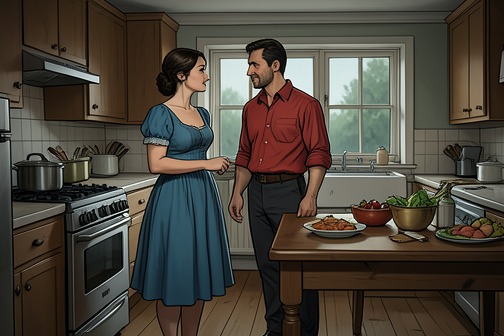
[Delphine refuses Cyprian's marriage proposal](entity:event-recall-event-delphine-refuses-cypria-750a83e08a2b) at a point when their shared life has acquired the routines and responsibilities of a family, yet their relationship has never settled into ordinary romance. The refusal is decisive not because it erases their love, but because it names the limits of what that love can become: [Cyprian](entity:character-recall-character-cyprian-167e957eaf33) wants a wife and children, while [Delphine](entity:character-recall-character-delphine-50abed839c4c) cannot return his feelings as a lover. Their bond continues to hold care, companionship, work, and a future together, but not the marriage he asks for.
## Background: Intimacy Without a Conventional Romance
Delphine and Cyprian have traveled and performed together, and their intimacy has included moments of hope and uncertainty about whether they might become lovers. When [Delphine discovers Cyprian with another man](entity:action-recall-action-delphine-discovers-cyp-6a404433e777), she imagines that bringing the truth into the open might allow them to become a couple. Instead, once they return to their room, they undress, lie under the covers, and hold hands in silence, exhausted and unable to speak. The scene establishes a pattern that will shape the later proposal: physical closeness and emotional attachment do not resolve the difference between them.
Cyprian eventually tells Delphine that his attraction to men is not simply a consequence of wartime experience. He had loved a man during the war and had long understood that his feelings for men were like those other men directed toward women. He asks Delphine to consider her own desire for men as a way of understanding his. She comes to feel a kinship with him that she describes as more female than male: she believes she can tell him what is in her heart and that he will understand it from having felt something similar himself. This recognition satisfies her, even as it confirms that they will not be lovers in the ordinary sense. They must also reckon with practical matters, including work and the expenses of their household.
## Building a Household and a Shared Life
The relationship persists through acts of everyday care. Delphine takes on work at the meat shop and grows into responsibility for its daily operation. She cleans the floor after closing, waxes it carefully, and plans the work around the next day's opening and her morning coffee with [Eva](entity:character-recall-character-eva-a4f4507c5fab). Later, she finds pleasure in selling the shop's goods and managing its work with help from the boys and [Franz](entity:character-recall-character-franz-a77eb1706f2e). These routines show how Delphine's place in the family is made through labor as well as affection; her bond with Cyprian exists within a wider web of responsibility rather than as an isolated romance.
That caregiving becomes especially clear in her efforts to help Markus. Delphine devises a practical training routine to help him stay dry in the mornings, giving him and Cyprian lemonade as they practice behind the henhouse. Within a week, Markus is dry. She sees this as only the beginning of what he needs to learn to survive, and she has plans for how to prepare him to face [Tante Maria Theresa](entity:character-recall-character-tante-maria-theresa-8426e73a369d). Her response is inventive and protective, a form of parent-like care that deepens the household she shares with Cyprian without turning their attachment into a conventional marriage.
The family also brings worry and grief. Delphine and Cyprian each privately imagine the possibility of a child after they have been intimate, but neither speaks openly about that hope. Cyprian wants children and pictures teaching a son or daughter, among other things, how to balance. Yet he avoids asking Delphine whether she is pregnant because the question would force them to confront the emotional complications of sex. Instead, he comforts her with stories about his brothers and their stubborn old horse, and prefers the simplicity of being loving and neutral. The unspoken wish persists alongside the closeness they can sustain.
## The Proposal and Delphine's Answer
As months pass, Cyprian understands that Delphine is not pregnant with his child. In the darkness, he asks her to marry him for real, offering a solid gold wedding band. His proposal gathers together desires that had previously remained unspoken: his wish for children, his need to stay with Delphine, and his hope that their shared life might take the form of marriage.
Delphine does not deliberate over whether she loves him as a husband; she thinks about how to tell him no. The narrative gives the answer its own brief, emphatic beat. She says, "No." The word's drawn-out vowel hangs between them, making the refusal feel both simple and consequential. It is not a rejection of Cyprian as a person or of the life they have built. Rather, it is the clearest boundary Delphine can place around a relationship in which affection and commitment are real, but romantic reciprocity is not.
## What the Refusal Clarifies
The refusal makes explicit a distinction the story has been developing: emotional intimacy, sexual possibility, caregiving, and marriage are not interchangeable. Delphine and Cyprian can be deeply attached, share the work of raising Markus, and remain important to one another without pretending that they can fulfill the same expectations as spouses. Cyprian's wish for a child belongs to a conventional family future; Delphine's answer prevents that future from being promised falsely.
The episode therefore gives their relationship a form of continuation rather than a romantic resolution. Delphine's later life includes marriage to [Fidelis](entity:character-recall-character-fidelis-c469e33ba84c), while Cyprian returns to her life after that marriage. When she sees him again, her heart jolts and she is glad to see him, but she also feels uneasy at the thought of Fidelis's jealousy. That later response confirms that the refusal did not make Cyprian insignificant or extinguish their bond. It established a limit within which attachment could endure, even as their lives took different courses.
Event 21
The chinchilla massacre and the burning of the wild dogs
[The chinchilla massacre and the burning of the wild dogs](entity:event-recall-event-the-chinchilla-massacre-30e06d47746c) is a turning point in which an attack on the boys’ animals becomes a shared family loss and prompts [Fidelis](entity:character-recall-character-fidelis-c469e33ba84c) to act against the pack. The animals had represented both a hoped-for source of money and an unusual legacy from [Eva](entity:character-recall-character-eva-a4f4507c5fab). Their destruction leaves Markus grieving, draws [Delphine](entity:character-recall-character-delphine-50abed839c4c) and Fidelis into the loss, and ends with Fidelis killing the dogs and burning what remains so that nothing is left behind.
## The boys’ project and its loss
Markus and his younger brothers had treated the chinchillas as a prospective business, repeatedly calculating what they might earn and how to divide the profits. They debated whether to pool the money for a larger purchase or split it among themselves, including the possibility of buying a bicycle for each boy. The animals, meanwhile, grew in baskets and makeshift nesting boxes. The contrast between the children’s plans and the chinchillas’ ordinary, unknowing lives makes the project more than an exercise in arithmetic: it is a future the boys have begun to imagine together.
One Friday night, after the family had eaten sheep’s offal, wild dogs entered through the back fence. [Schatzie](entity:character-recall-character-schatzie-a1882b50c5a0) barked at the front of the store, drawing Fidelis’s attention toward a possible intruder while the pack overturned the cages and killed the chinchillas. The dogs disappeared as quietly as they had come, leaving the cages scattered and the animals gone. The family discovered the scale of the loss the next morning.
Markus went first to Delphine, carrying a scrap of fur and struggling to contain his grief. Delphine and the other boys searched the yard and found the cages torn open, but no surviving chinchillas; the scrap Markus held was the sole remnant they could identify. The loss was financial, since the boys had hoped to make money, but Delphine also understood the animals as part of Eva’s legacy. Eva had begun the project, and the chinchillas had become a continuation of something she had made for the boys.
## Fidelis’s response
Fidelis surveyed the wreckage and grew angry. His response begins not with an immediate attack but with a quiet gesture toward his sons: he told them to be quiet and placed a hand on each of their shoulders, an unusual display of tenderness. He then went to the slaughterhouse, gathered discarded and spoiled meat, and carried it to the edge of the field. The bait turned the dogs’ earlier raid into a waiting game: rather than pursue them, Fidelis prepared for their return.
He collected two rifles and extra ammunition from the room where he kept his guns. He also brought a chair outside and set it beneath a tree, then returned to fetch three beers, bread, baloney, cheese, and apples. From the shade, with the meat scraps in sight, he settled in to watch. The boys and Delphine observed from the yard as the hours passed. The episode’s deliberate pause contrasts with the suddenness of the nighttime attack: Fidelis makes a patient vigil of his response, and his family must wait with him.
Delphine watched from the kitchen window and found herself excited by the possibility that the dogs would return, then felt guilty about that feeling as she noticed Schatzie nearby. She repeatedly checked for the pack. The boys waited outside, crouched on the stock-pen timbers, and later carried food to their father while eating their own lunch. As the afternoon wore on, the dogs did not appear; the wait itself became a test of attention and resolve.
## The killing and the fire
Late in the afternoon, after the boys had begun to doze in the shade of the grapevines, Delphine heard the first shot. Fidelis had waited until the dogs gathered and then shot at the pack. Delphine ran outside and climbed the stock-pen with the boys to watch. The dogs were killed, including the last one as it tried to escape across the field. After the final shot, Fidelis gestured to his sons and told them to gather the animals. They carried the dogs back and laid them together.
Delphine recognized one of the dead dogs as the large brown chow that had run wild on the Kozkas. She considered it best to dispose of the evidence and did not say anything. Fidelis brought out two tins of kerosene, poured fuel over the dogs, and added wood, fallen branches, and refuse. When the pile stood as high as his shoulders, he soaked its top as well, made a torch from rolled paper, and set the fire alight.
The family watched as the fire consumed the pile. The boys kept adding junk while the blaze continued into dusk, and the wood eventually collapsed into coals hot enough to burn green wood. By the time the fire had finished, even the dogs’ bones would be ash. Delphine and the boys watched with an intensity they did not understand; the destruction held their attention until it was late enough for Delphine to send them to bed. The episode closes not with a surviving trace of the pack, but with the remains reduced to nothing.
## Significance
The event joins two kinds of work associated with Fidelis. He is a butcher whose craft depends on care, precision, and the transformation of animal matter, and here he first gathers discarded meat as bait, then uses fire to destroy what he has killed. The response is not an extension of the family’s ordinary trade so much as a stark departure from its productive purpose: the meat scraps have no value as food, and the final burning leaves no usable remains.
The chinchillas’ death also exposes the emotional weight beneath the boys’ calculations. Their anticipated profits matter, but Delphine sees that the animals belonged to a project Eva had begun, so the attack threatens a connection to her as well as a possible future for the children. Fidelis’s quiet touch on each boy’s shoulder precedes his armed vigil; in that sequence, protection and grief are inseparable. The family’s final, sustained attention to the fire gives the loss a collective aftermath, even as the burning removes the physical evidence of what happened.
Event 22
Roy's arrest for stealing morphine
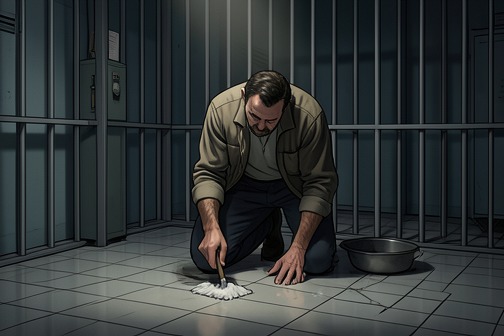
[Roy Watzka](entity:character-recall-character-roy-watzka-5624a52010d8)’s arrest for stealing morphine brings a past act back into the present as both a legal threat and a test of the fragile order Roy and [Delphine](entity:character-recall-character-delphine-50abed839c4c) have begun to build. [Sheriff Hock](entity:character-recall-character-sheriff-hock-2743e6eeb4ba) makes the arrest despite knowing that [Fidelis](entity:character-recall-character-fidelis-c469e33ba84c) had explained the theft and that Roy had been repaying the medicine. His visit to Delphine is not simply notification: he is watching for a reaction that might connect her to the unresolved deaths in Roy’s cellar. The episode’s sharpest reversal is inside the jail cell. A place Roy once endured in drunken indifference becomes, now that he is sober, a setting he tries to clean and make habitable.
## Background: An Old Crime and an Unclosed File
Sheriff Hock’s files contain mostly petty offenses, domestic disputes, and troubles too large for his authority, but the case surrounding Roy has resisted closure. Hock has long suspected that important information is missing. He cannot make himself certain of Roy’s guilt in the deaths beneath the house: Roy is often drunk, but Hock’s instinct has been that he is basically harmless and that the available account is incomplete. The arrest for morphine theft gives him a way to put pressure on the case without openly charging Roy over those deaths.
The morphine incident itself is not new. Fidelis went to Hock after the theft and explained the circumstances, and he had been paying Sal Birdy a little at a time for the medicine. Sal accepted the payments. Yet when Hock finally acts, he behaves as though the investigation has only just begun. The delay makes the arrest feel less like a straightforward response to a fresh discovery than an opportunity Hock has chosen to use.
Roy’s finances have also caught Hock’s attention. In earlier years Roy repeatedly came close to losing his farmstead to foreclosure, only to produce the loan payment at the last moment and then drink until the next installment came due. Hock had never learned where the money came from. Now, for the first time in many years, Roy has paid the bank on time. Hock attributes the change to Delphine’s return, a sign that her presence has altered the household’s practical life as well as its emotional one. But the improvement does not close the old case. To Hock, Roy’s new steadiness and the cellar deaths remain connected by unanswered questions rather than settled explanations.
## The Arrest and the Sober Prisoner
Hock arrests Roy on a brisk, golden afternoon, although the alleged theft happened earlier and Hock already knows about Fidelis’s explanation and Roy’s repayments. Roy goes quietly. He has occupied the same cell many times while drunk, then scarcely registering its stained walls, tattered blanket, or reeking piss bucket. This time he is sober, and the familiar confinement acquires a different meaning: he notices the dirt and acts on it.
Roy asks for pine-scented ammonia, a mop and bucket, water, a brush, and rags. He had used the ammonia to make the chicken house habitable, and now he wants to clean the cell. He pushes the old blanket through the bars and tries to pound bugs from the mattress. The details make his changed condition visible through action rather than declaration. The man who once slept through jail is now attentive to his surroundings, and he begins improving them before asking whether Delphine knows he has been arrested.
That omission matters to the scene. Roy’s first response is not to summon his daughter or demand reassurance but to make the cell more livable. His effort does not undo the arrest or restore his freedom; it shows how sobriety has changed his relation to discomfort and to the immediate work of surviving it. Hock, surprised by Roy’s fussiness, takes responsibility for informing Delphine himself—and prepares to spy on what she does after hearing the news.
## Hock’s Visit to the Meat Shop
When Hock enters [Waldvogel’s Meats](entity:organization-recall-organization-waldvogel-s-meat-83bbccd77f1a), Delphine senses at once that Roy is in trouble. Her expectation of a bad turn is sharpened by the presence of [Tante](entity:character-recall-character-tante-61557806d00c) nearby, speaking with Fidelis. Delphine hopes their conversation will keep them around the corner and prevent them from hearing, but the voices stop just as Hock begins. His announcement will therefore be overheard and, Delphine expects, repeated around town.
Hock presents himself as the bearer of grave news, his expression carrying what Delphine recognizes as theatrical solemnity. She experiences the exchange as something rehearsed, as though she already knows both what he will say and how she must answer. He tells her, “I’ve arrested your father.” Delphine stays calm, asks to see Roy, and asks how much bail will cost. Hock says the town judge, Roland Zumbrugge, will determine the amount, and that she is free to pay it. He adds that Roy is settling in well, a remark whose blandness sits uneasily beside the fact of the arrest.
Delphine answers sarcastically that Roy must feel at home, then abruptly insists that Hock knows he did not do it and that he is harmless. Her assumption reveals what she thinks Hock’s announcement means: she connects the arrest to the three dead in her father’s cellar. Hock notices. He has deliberately left room for her to expose what she knows, and he cautiously avoids confirming the connection. He responds that no one is entirely harmless when drunk and advises her to find a good lawyer. When she asks where she is supposed to get the money for one, his smile and watchful manner make his interest in her response more threatening than consoling.
## Delphine’s Alarm and the Wider Stakes
The exchange leaves Delphine thinking less about bail than about Hock’s reference to evidence. If the sheriff has enough to arrest Roy, she reasons, there must be a witness or a chain of circumstantial facts that can be presented to a judge. She cannot tell where this evidence came from or what it consists of. Her uncertainty turns the arrest into an immediate danger to the secrecy surrounding the cellar deaths, even though Hock has not openly accused Roy of them.
Delphine does not thank Hock automatically. She turns away and slaps her apron on the counter to alert Tante and Fidelis, who have been listening. As she passes Tante, she tells her to keep quiet. Fidelis has already followed Hock out, perhaps hoping to learn more. Delphine, meanwhile, leaves the shop and goes to find [Clarisse](entity:character-recall-character-clarisse-58e0a7741d25), driven by the question of what evidence Hock might have and by whom it could have been supplied.
The arrest thus works on two levels. It places Roy back in custody over a theft whose circumstances Hock already knows, while also allowing the sheriff to probe a different, unresolved mystery. For Delphine, the news threatens the calm she had begun to trust and risks making private suspicion public knowledge. For Roy, the cell marks a concrete change: he meets confinement sober, with a mop and ammonia instead of drunken oblivion. The old charge reopens the past, but the episode leaves its most dangerous question unresolved—what, exactly, Hock knows about the cellar.
Event 23
Eva Waldvogel's death and funeral

[Eva Waldvogel's death and funeral](entity:event-recall-event-eva-waldvogel-1a74552ffbef) mark the end of her prolonged illness and the beginning of an absence that reshapes her family. Her death is not a single passing moment: it unfolds through [Delphine](entity:character-recall-character-delphine-50abed839c4c)’s close care, [Fidelis](entity:character-recall-character-fidelis-c469e33ba84c)’s grief at the grave, and Markus’s determination to remember a mother whom the household otherwise seems to erase. The novel returns to the funeral through these distinct perspectives, making burial both a family ritual and an unresolved point of separation.
## Illness and Death
By the final week of her illness, [Eva](entity:character-recall-character-eva-a4f4507c5fab) had taken only sips of lukewarm water. Delphine tried to comb her hair, but Eva’s condition continued to worsen; morphine did not alter the fact that her body appeared caught between life and death. The account suspends ordinary time: days merge, and Eva’s dying becomes the ground and air of the sickroom. Delphine, whom Eva had taught to meet her gaze directly, experiences their locked eyes as an intense connection that draws her out of herself. Caregiving is therefore also a form of witness: Delphine attends to a friend whose failing body can no longer respond as it once did.
On the night Eva dies, Delphine wakes to knocking and understands that something has changed. She finds Eva moving in bed, and tries to catch her arms. In Delphine’s perception, Eva is running again, as if straining toward an unseen finish; the image recalls her earlier running against [Franz](entity:character-recall-character-franz-a77eb1706f2e). Eva then breathes deeply, stops moving, and dies. The scene gives the event a finality that the preceding illness had withheld: after a long period in which her body would neither fully live nor die, her breath does not return.
## The Funeral and Fidelis’s Grief
At the funeral, Fidelis and the boys each throw earth onto Eva’s coffin after it has been lowered into the grave. For Fidelis, that act becomes inseparable from the sense that a beautiful immensity has passed away beyond his reach. He stands so still that the mourners see him as rooted to the earth. Embarrassed by their view of him, he eventually makes himself step away, yet internally he remains at the graveside: he feels the earth drying in the cracks of his palms and understands himself as alive in a way Eva is no longer.
That memory also clarifies what Fidelis believes he has lost. His relationship with Eva had held a private intimacy and tenderness unlike the casual accounts of marriage he hears from other men. The funeral does not cancel that shared life; instead, the remembered closeness sharpens the contrast between their continuing bond in memory and the irreversible difference between the living and the dead. His stillness at the grave is a physical expression of grief, but it cannot keep him there forever.
## Markus and the Silence Afterward
Markus remembers his turn at the grave through the handful of earth he cannot bring himself to release. He freezes with his fist closed as he looks toward the flowers. Franz returns, opens Markus’s fingers, shakes the dirt onto the coffin, and leads him away without speaking. The small act completes the burial for Markus, but the silence accompanying it becomes part of the memory too.
After the funeral, Markus feels that the family’s silence about Eva deepens. Fidelis does not talk about her or refer to things she did, while her dresses, shoes, and coat seem to disappear from the house. To Markus, this is not simply the loss of a person’s belongings: it makes Eva seem almost as though she had never existed. Delphine is the exception because she continues to say Eva’s name. Markus, meanwhile, privately preserves words and images of his mother, choosing to keep her present in thought even when the household does not speak of her.
## A Continuing Presence
A year after Eva’s death, Markus finds comfort in digging into the earth at an abandoned construction site. As he makes a sheltered hollow, the work brings back the funeral: he remembers the clod of dirt in his hand and Franz having to open his fist. The memory connects his new refuge to the grave, but digging also gives him a place where he can cry without witnesses and where an anticipated feeling of happiness begins to return. The earth holds both the memory of burial and the possibility of shelter.
Eva’s influence reaches beyond the immediate family. Delphine recognizes Franz’s deep attachment to his mother when he carries her after the plane ride, and understands that his first love is profound. Later, Delphine visits Eva’s grave in [Argus](entity:location-recall-location-argus-09ff0273b5b1), where she has planted a small pine behind the headstone. She imagines its roots cradling Eva and sits beneath it to listen to the wind, picturing the sound traveling down to her friend. Delphine also reflects that she has continued the life and responsibilities Eva left behind. The recurring gestures of naming, remembering, and tending the grave offer a counterpoint to the household’s silence: Eva is dead, but remains part of the choices, care, and memories of the people who loved her.
## Narrative Significance
The funeral is presented not as a neat resolution to grief but as a scene whose meaning keeps unfolding. Fidelis’s grave-side stillness, Markus’s clenched hand, and Delphine’s later visits reveal different responses to the same loss: embodied mourning, private resistance to forgetting, and ongoing care. The novel’s return to the grave and to the objects and places associated with Eva makes absence active in the family’s life. Her death changes what they can share and say, while the survivors’ repeated acts of remembrance keep her from disappearing altogether.
Event 24
Roy steals morphine and is arrested
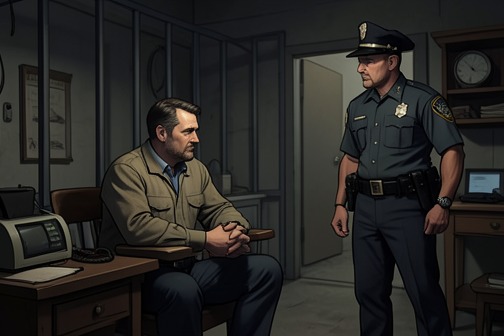
[Roy Watzka](entity:character-recall-character-roy-watzka-5624a52010d8)’s arrest for stealing morphine turns on a confession that is both incriminating and compassionate: he admits the theft, but explains that he did it because [Eva Waldvogel](entity:character-recall-character-eva-waldvogel-964135ffc394) needed the drug. The scene shifts [Delphine Watzka](entity:character-recall-character-delphine-watzka-261d39e0a742)’s fear from the prospect of a murder charge to relief at the limited, procedural nature of the arrest, while bringing [Fidelis Waldvogel](entity:character-recall-character-fidelis-waldvogel-8dc9c794e011)’s quiet support for her father into view.
## The Confession and Its Motive
Roy does not deny the theft when [Delphine](entity:character-recall-character-delphine-50abed839c4c) visits him. Asked about a lawyer, he responds that of course he committed it; everyone knows, he says, because they saw him, and he had to do it. His plain admission is startling to Delphine, who had tried to reassure him that he had done nothing and would soon be out. The conversation leaves little room for a mistaken-identity mystery: Roy is not contesting who took the morphine.
He then supplies the reason. Roy says [Fidelis](entity:character-recall-character-fidelis-c469e33ba84c) told [Albert Hock](entity:character-recall-character-albert-hock-d60248021c33) what happened immediately, and that [Eva](entity:character-recall-character-eva-a4f4507c5fab) had to have the drug. He insists he was going to get it for her because he cared for her: she had been good and kind to him, making him a thick sandwich and understanding his thirst. The details make the theft an act of attachment and gratitude, not a denial of responsibility. Roy accepts that he broke the law while framing his choice through the kindness he remembers from Eva.
## Delphine’s Fear and the Arrest
Roy’s mention of Eva abruptly changes Delphine’s understanding of the situation. She connects his confession to the stolen morphine and asks [Sheriff Hock](entity:character-recall-character-sheriff-hock-2743e6eeb4ba) why Roy is being charged only now. Her question is pointed: if the authorities knew what he had done, why did they not arrest him at once? For a moment before Roy explains, Delphine has to contain him, aware that Hock is listening for what he will say and what she will say in response.
Hock tells her that the drugstore owner, Sal Birdy, reported the theft to the state commission before Hock could inform him. Birdy regrets reporting it, Hock says, but the commission has now demanded a full investigation. The arrest is carried out to satisfy the official record, and Roy is to be released when the paperwork is finished. Hock calls it a formality and walks away slightly embarrassed. His explanation distinguishes the arrest from a new, escalating prosecution, although the commission’s investigation has made formal action unavoidable.
## Relief, Bail, and Its Consequence
Hock’s explanation releases Delphine from the frightening chain of possibilities she had imagined: a lawyer, a trial, a jury, a judge, and the implications of a murder charge. She tries to maintain an appropriately indignant tone, but inwardly wants to cover her face and breathe. The immediate change is not that Roy’s act is undone, but that Delphine can stop anticipating the worst outcome and wait for the paperwork to be completed.
Roy prolongs her visit by talking about his chickens, giving instructions about their individual temperaments and pairings. He identifies two black rosecombs that perch together and describes a pair of bantams as star-crossed. The homely subject contrasts with the arrest and shows him reluctant to end the conversation. Delphine stays with him for a while longer, listening rather than forcing the moment to close.
Afterward, Delphine tries to delay thanking Fidelis for paying her father’s bail by finding more work in the meat shop. She moves the meat from one display case to another, scrubs the first with vinegar and water, and carefully arranges the trays with green waxed-paper decorations. At last she stops, closes the sliding doors, and tells Fidelis directly that he paid Roy’s bail. Fidelis acknowledges it, wiping his hands on his apron. The gesture makes his practical support part of the aftermath: the arrest exposes Roy’s past decision to help Eva, while Fidelis’s bail payment helps Delphine face the present danger to her father.
Event 25
Three deaths in Roy's cellar
[Three deaths in Roy's cellar](entity:event-recall-event-roy-ac5dbb9119b6) are an unresolved tragedy that moves from hidden evidence to partial confession without yielding a complete account of what happened. The cellar’s sealed hatch makes the deaths a literal secret beneath the house; years later, Roy’s uncertain memory of shutting it implicates him while leaving the precise circumstances unclear. The event’s force lies in that gap between a possible act and a settled explanation, and in the way suspicion reshapes [Delphine](entity:character-recall-character-delphine-50abed839c4c)’s closest relationships.
## The Sealed Cellar
The cellar is concealed beneath a hatch in the floor, its entrance covered by a seal made from shattered jars of canned peaches, dog waste, and red beads set into peach juice. Delphine and [Cyprian](entity:character-recall-character-cyprian-167e957eaf33) labor to uncover the ring and pry up the hatch with a crowbar and can opener. The work takes them into darkness, requiring them to stop for a lantern before continuing. The seal’s jumble of domestic remnants and debris makes the concealed space seem at once ordinary and ominous, a private hiding place that has accumulated the traces of life above it.
When the hatch is finally opened, the smell overwhelms them. Delphine later remembers the door as if it had blasted away, though she knows that impression cannot be literal. She and Cyprian flee through the back door and collapse in the yard, confused about whether they actually lifted the hatch. The delayed, partial nature of the discovery sustains uncertainty: the cellar’s contents announce themselves through their effect before the scene can be clearly understood.
## Suspicion and [Clarisse](entity:character-recall-character-clarisse-58e0a7741d25)
The deaths become entangled with the investigation [Sheriff Hock](entity:character-recall-character-sheriff-hock-2743e6eeb4ba) conducts and with Clarisse’s precarious situation. Delphine asks who locked the dead people down there. Clarisse answers by making the question personal: Delphine, she suggests, needs to believe it was not Roy. Delphine nods, and Clarisse responds that if Delphine believes Roy did not do it, then he did not. Her embrace gives Delphine comfort, but it cannot establish what happened in the cellar.
Their closeness is set against the isolation they feel as women who do not fit easily into the town. Delphine thinks that people she might be as close to as Clarisse are repeatedly taken away, die, or withdraw, leaving the two of them as outsiders again. The cellar mystery therefore threatens more than a family secret: its uncertain blame presses on a friendship that Delphine experiences as rare and sustaining.
## Roy’s Account and the Unresolved Cause
Later, Roy speaks of the deaths while discussing Clarisse and Hock. He says that Hock had investigated the case and that people now suspected Clarisse of killing the dead as well. Roy’s account shifts between pity for Clarisse and speculation about the investigation, while Delphine senses awkwardness in his manner. She recognizes that the deaths, Hock’s inquiry, and Clarisse’s situation have become a single compound mystery, but she does not yet have an explanation.
Roy eventually recalls that [Ruthie Chavers](entity:character-recall-character-ruthie-chavers-a9822e0af522) was among those in the cellar with her father. He cannot remember exactly what happened, but admits that he may have shut the hatch. He remembers calling down to [Mr. Chavers](entity:character-recall-character-mr-chavers-5463dd69a3e6), telling him he could come up after he stopped singing over Roy at practice. The recollection supplies a possible cause and a motive rooted in resentment, but Roy’s own uncertainty prevents it from becoming a definitive account. Delphine answers by reminding him that he had been away on a three-week drinking binge; the disclosure leaves her facing the possibility that her father’s conduct contributed to the deaths.
## Consequences and Significance
The event’s aftermath is defined by incomplete knowledge. The hatch can be opened, the dead can be discovered, and Roy can recover a fragment of what he said, yet his memory does not clarify exactly what he did or when. His possible act of shutting the entrance gives the deaths a human cause without resolving responsibility into certainty.
The cellar also stands in contrast to the story’s other buried and enclosed spaces: Markus later becomes trapped when an earthen hill collapses around the room he has built, while Erich enters the fenced woods camp after capture and learns from the food there that [Germany](entity:location-recall-location-germany-2e3723c2f347) has lost the war. These distinct spaces are not the same event, but each makes confinement concrete. In Roy’s cellar, concealment turns into lasting uncertainty, and the hidden dead continue to shape the living through suspicion, grief, and Roy’s belated, incomplete confession.
Event 26
Markus is trapped and rescued after the mound collapses
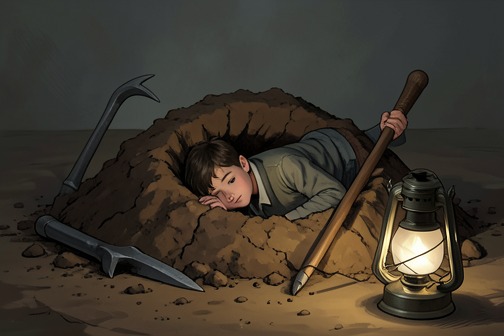
[Markus is trapped and rescued after the mound collapses](entity:event-recall-event-markus-760bb40b090e) in a sequence that turns a boys’ secret fort into a life-threatening enclosure. After Markus is buried beneath the hill, [Cyprian](entity:character-recall-character-cyprian-167e957eaf33) and [Fidelis](entity:character-recall-character-fidelis-c469e33ba84c) work their way into the unstable earth; Cyprian eventually reaches Markus, frees him carefully, and brings him out to [Delphine](entity:character-recall-character-delphine-50abed839c4c) and the waiting rescuers. Markus survives, but the collapse is followed by a broken arm and an illness that Delphine understands as a lingering effect of his time underground.
## The Fort and Its Collapse
A year after [Eva](entity:character-recall-character-eva-a4f4507c5fab)’s death, Markus became fascinated by digging and found an unfinished building site in the woods behind the butcher shop. Its basement had been excavated, leaving a large heap of earth beside it. The abandoned site offered both a place to explore and materials to salvage: Markus found an ax head with a broken handle in a derelict shed, then climbed the mound and began to imagine the earth as a place to enter and inhabit.
Markus and the other boys gradually burrowed into the hill, enlarging their underground room until they could all fit inside. Their construction was improvised, and the danger became greater after three days of cold November rain flooded the surrounding area. The tunnel’s upward angle had initially kept its interior deceptively dry, even as saturated earth above it grew much heavier. When the boys returned to repair the damage, Markus took a crowbar from Fidelis’s tools and used boards from the old shed to reinforce the passage. He valued the word “reinforce,” repeating it as he worked, but the room was supported only by a flimsy frame.
As daylight faded, Roman urged Markus to leave. Markus stayed behind to secure one more board. Outside, the other boys had gone back toward the shed when they sensed something shift and turned to see the hill sag. They did not immediately remember that Markus was still inside. The collapse left him wedged beneath buckled boards, unable to move but still breathing; in his exhausted state, he imagined himself held within a quiet darkness.
## The Rescue
Fidelis reacted at once, throwing himself toward the closed entrance and beginning to dig with desperate force. Cyprian stopped him, warning that a reckless attempt could bring down the remaining earth. He gave Fidelis a broken hoe, and the two men began widening the opening by hand. The boys carried the loosened soil away on a canvas while the men worked inward, making the passage large enough for their bodies to follow.
The [Argus](entity:location-recall-location-argus-09ff0273b5b1) singing club gathered outside with lanterns, but there was little the waiting men could do beyond help with the digging and keep watch. Fidelis called to Markus as he crawled ahead; Cyprian, familiar with battlefield cries, kept his attention on the work rather than surrendering to despair. The boards from the boys’ construction became guides and supports inside the tunnel. Eventually Fidelis reached Markus’s shoe and then felt along his body, discovering that the boy was alive but half buried in a small pocket held open by precariously placed boards.
Cyprian recognized that Fidelis’s size and strength could make the confined space more dangerous if he tried to pull Markus free. He persuaded Fidelis to back out, claiming, “I have done this before,” and assuring him that he was trained for the task. The claim was a deliberate lie, delivered calmly because Cyprian knew Fidelis would need a convincing reason to yield. Their earlier antagonism gave way to immediate loyalty: Fidelis accepted Cyprian’s direction and withdrew with him from the tunnel.
## Cyprian’s Method and Markus’s Return
Cyprian went back alone, managing his fear by concentrating on one breath at a time. In the confined darkness, he first feared that Markus was dead, then felt warmth at the boy’s lips. A small space beside Markus allowed him to move the earth aside in handfuls. Rather than attempt a forceful extraction, Cyprian worked incrementally, clearing one limb at a time, turning Markus, and folding him at the waist so he could pass through the narrow opening. When the boy came free, a supporting board gave way, but the tunnel held.
Because Markus was unconscious and Cyprian feared that he might move in pain, Cyprian tied his limbs with rope and left a loop that he could pull. He backed out feet first, drawing Markus with him. In the rain and lantern light, the rescuers saw Cyprian emerge with the boy. Markus briefly awoke outside the hill and saw Delphine first; she untied the ropes and gathered him into her arms. Fidelis, meanwhile, was so determined to return underground that the men had to restrain him when he tried to re-enter.
## Illness and Aftermath
Markus came out of the hill with a broken arm and soon fell into a feverish, sleepy illness. [Old Doctor Heech](entity:character-recall-character-old-doctor-heech-b91cce7d9731) recognized the complicated fracture, while Delphine called the broader condition “earth sickness.” She associated Markus’s withdrawn state with the ground that had enclosed him and with the place where his mother slept. His steady gaze initially unsettled her, but she came to see it as a sign that he needed time to recover and think rather than distraction.
Delphine cared for him through the illness, making him eat the heavy dumpling soup Eva had taught her to prepare for sick children and keeping him in the light. She watched him begin to resemble Fidelis in his comfort with silence, while seeming both newly changed and older than before. The rescue therefore ends not with an immediate return to ordinary life but with a period of recovery: Markus survives the collapse, yet carries its effects into the days that follow.
## Narrative Significance
The episode makes the hill both a refuge built by children and a perilous enclosure. The boys’ fort grows through secret work, salvaged boards, and Markus’s confidence in his own construction; the rain changes the weight of the earth, turning that refuge into a trap. The rescue reverses the direction of the boys’ digging: instead of making a room inside the mound, the adults and children must carefully open a way back out.
The ordeal also alters the relationship between Cyprian and Fidelis. At the entrance, Fidelis’s instinct is to act immediately, while Cyprian insists on caution; underground, that caution becomes the discipline that makes the rescue possible. Cyprian’s practiced control does not erase his fear, but gives him a way to keep working through it. Markus’s survival depends on patience, restraint, and trust among people who had entered the scene with different roles and prior tensions.
Event 27
Clarisse kills Sheriff Hock and flees Argus
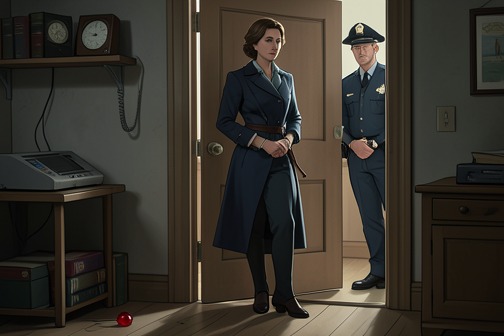
[Clarisse kills Sheriff Hock and flees Argus](entity:event-recall-event-clarisse-sheriff-hock-a-4819b04588f0) after his search of her home turns into an unwanted personal advance. The killing follows a confrontation over a red glass bead that Hock has found in the floorboards, and [Clarisse](entity:character-recall-character-clarisse-58e0a7741d25) escapes the town by train with money and luggage. Her disappearance leaves [Argus](entity:location-recall-location-argus-09ff0273b5b1) to absorb the murder into years of speculation, while her friend [Delphine](entity:character-recall-character-delphine-50abed839c4c) privately grieves both Clarisse’s absence and the secret connection between her and [Cyprian](entity:character-recall-character-cyprian-167e957eaf33).
## Search and confrontation
After persistent efforts to secure a warrant from Judge Zumbrugge, [Sheriff Hock](entity:character-recall-character-sheriff-hock-2743e6eeb4ba) searches Clarisse’s house for evidence. His meticulous approach contrasts with Clarisse’s untidy rooms: he examines the floorboards with a lamp and finds a red glass bead in a crack. The search carries the threat of criminal exposure, but Hock’s attention shifts from the evidence to Clarisse herself. He says that she must feel something for him, revealing that his pursuit is not simply official business.
Clarisse tells him to leave and warns him that she will hurt him if he stays. Hock dismisses the warning. He speaks of his steady employment and respectable habits, and argues that Clarisse’s work as an undertaker frightens other men away while he is willing to accept it. The gulf between his self-image as a suitable suitor and Clarisse’s refusal defines the encounter: what he presents as devotion is an insistence on access she has not offered.
## The killing
Hock produces the bead he found and calls it evidence belonging to the state. When Clarisse reaches for it, he withholds it, puts it in his shirt pocket, opens his arms, and lunges. Clarisse responds with the knife she has kept behind her back. The action reverses the balance of the search: Hock had arrived with a warrant and an evidentiary claim, but his decision to press his advance brings the encounter to a fatal end.
Afterward, Clarisse checks that Hock is dead and takes the bead from the floor, swallowing it. She makes no attempt to conceal the body in the house. She covers him, cleans the knife, and draws a suitcase from beneath her bed. Her practical actions sit beside an immediate emotional rupture: she breaks into sobs, then deliberately turns to bathing and making plans. The shift from shock to organization governs the next stage of her escape.
## Planning an escape
Clarisse plans to leave on the morning train after visiting the bank and preparing her luggage. [Christmas](entity:time-recall-time-christmas-a573265d0167) makes the timing complicated: the funeral business might bring emergencies, but the holiday also gives her a plausible reason to withdraw money, since people are making unusual or extravagant purchases. She expects to attend Midnight Mass as usual, sleep for a few hours, and depart in the morning. Her plan treats flight not as a sudden disappearance from all routine, but as something to fit around the ordinary obligations and habits of her life.
## Disappearance and aftermath
The town is shocked by the murder, and people search for explanations, but discussion eventually gives way to daily life. Hock’s body is removed from Clarisse’s house, wrapped and taken to the coroner in Fargo; the house is locked, and a deputy is appointed. In time, the violence becomes part of Argus’s local history, retold through talk and speculation rather than resolved by Clarisse’s capture.
Clarisse leaves openly, carrying a red hatbox and brown suitcase, and rides away on the train. She apparently gets off in [Minneapolis](entity:location-recall-location-16f7f12858d7), changes trains and names, and perhaps remakes her identity, but the account does not confirm where she goes. No one sees her again, and she is never captured.
## Delphine and the silence left behind
Delphine knows more than the rest of the town. She does not volunteer the details of her Christmas morning visit to Clarisse, and no one asks her about it. Fresh snowfall has hidden her tracks, while the presence of Cyprian’s car near Clarisse’s house goes unnoticed. Delphine’s silence helps keep the connections among the three out of public view; even [Fidelis](entity:character-recall-character-fidelis-c469e33ba84c) asks only whether Cyprian has left the singing club, and accepts Delphine’s evasive reply.
For Delphine, Clarisse’s disappearance remains bound to the murder and to the concealed connection between Clarisse and Cyprian. She repeatedly examines what she knows about her friend but cannot make the loss intelligible. She misses Clarisse as a bodily absence, and the loss makes work harder and loneliness more distracting. The town can turn the killing into a story; Delphine continues to live with the private, unresolved absence behind it.
Event 28
约翰内斯之死
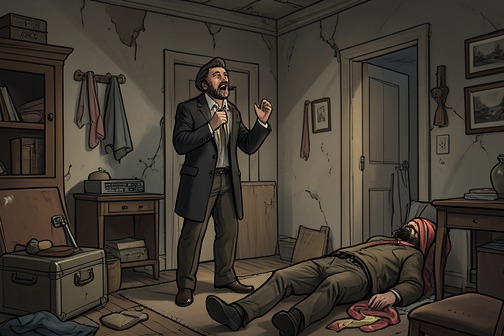
[Johannes](entity:character-recall-character-johannes-8bd33702cfc6)’s death is a defining loss in [Fidelis](entity:character-recall-character-fidelis-c469e33ba84c)’s wartime past: after Johannes has twice saved his life, Fidelis remains with his dying friend in a shell-damaged house during the war’s final days. He sings at Johannes’s request, then leaves without burying him. For years, the event survives not as an openly shared account but as part of the unspoken history linking the two men.
## Causes and Background
Johannes and Fidelis are comrades in [World War I](entity:event-recall-event-world-war-i-f6ecad7962bb). Johannes saves Fidelis twice: first by pulling him from a pile of dead after a bullet renders him unconscious, and later by shooting an advancing French soldier when Fidelis’s rifle jams. The exchanges establish their closeness through acts of survival, but the friendship is also marked by the larger violence that surrounds them.
Johannes’s final illness comes during the retreat in the war’s last days. He and Fidelis are in an elegant, ruined aristocratic house where wounded and dying soldiers have been left. Fidelis avoids the cellar, where the wounded are being smothered as they seek shelter, and stays upstairs with Johannes. The narrative does not settle on a single cause of death: it may be dysentery, a contaminated wound, or the exhaustion of the retreating men.
## What Happens
Fidelis remains with Johannes for two days and nights as shelling continues nearby. The shattered windows tremble between impacts; Fidelis recalls their broken glass as a faint, chime-like sound. The war’s noise forms the setting for an intimate final exchange rather than a rescue: Johannes asks his friend to sing to him.
Fidelis sings in the freezing room. After Johannes dies, he lays him out and wraps his face in the silk scarf his mother had given him for luck. He does not have the courage to stay and bury him. Instead, he continues walking through the retreat’s further chaos and deaths, eventually returning to his childhood home and family.
## Delayed Telling and Aftermath
The account reaches [Delphine](entity:character-recall-character-delphine-50abed839c4c) years later, when Fidelis tells it during a drive through the evening. He begins with Johannes because he sees a repetition between the earlier loss and the present: Delphine, like Johannes once was, may be able to help him and his sons. Telling the story offers Fidelis a possible way to make sense of the pattern, though it does not erase the grief attached to it.
The death had long remained largely outside conversation. Fidelis and [Cyprian](entity:character-recall-character-cyprian-167e957eaf33), who also shared the war, never discussed it directly, even though memories of the conflict repeatedly surfaced in their daily lives. A sound, picture, or word could interrupt either man; the other sensed the disturbance, and a joke or a drink often took the place of explanation. Their silence is not presented as forgetfulness: both men remember the war constantly, while rarely giving those memories words.
## Memory and Significance
Johannes’s death shapes the way Fidelis understands friendship, survival, and later responsibility. He had walked away from Johannes’s body without burying him, then returned to a home that held his family and [Eva](entity:character-recall-character-eva-a4f4507c5fab). In telling Delphine the story, he connects that earlier abandonment and loss to the possibility that someone else might now rescue his family. The account makes this connection explicit without treating the two situations as identical.
The story also places private grief beside public memory. In 1954, at a memorial unveiling in [Ludwigsruhe](entity:location-recall-location-ludwigsruhe-b984c1754f4d), surviving master butchers gather to sing for the victims of the bombing. Fidelis practices with the remaining survivors, and his voice joins the public commemoration. The ceremony does not specifically commemorate Johannes, but it echoes the song Fidelis once sang beside his dying friend: in both scenes, singing gives form to loss that ordinary speech cannot readily contain.
The narrative’s delayed disclosure makes Johannes’s death more than a battle episode. Its particulars emerge inside a story Fidelis has withheld, while the wider war persists in silences, involuntary memories, and ritual song. The account preserves the uncertainty of Johannes’s precise cause of death and Fidelis’s unresolved inability to bury him; it offers testimony, not a neat closure.
Event 29
费德利斯与伊娃的婚姻
[Fidelis Waldvogel](entity:character-recall-character-fidelis-waldvogel-8dc9c794e011) and [Eva Waldvogel](entity:character-recall-character-eva-waldvogel-964135ffc394)’s marriage began in the aftermath of war and loss, when [Fidelis](entity:character-recall-character-fidelis-c469e33ba84c) returned to [Germany](entity:location-recall-location-germany-2e3723c2f347) after [Johannes](entity:character-recall-character-johannes-8bd33702cfc6) died and [Eva](entity:character-recall-character-eva-a4f4507c5fab) was carrying Johannes’s child. Fidelis described the marriage to [Delphine](entity:character-recall-character-delphine-50abed839c4c) as a way to give the baby, [Franz](entity:character-recall-character-franz-a77eb1706f2e), a father, but the account also reveals an attraction between him and Eva that preceded their decision. The marriage thus holds both practical responsibility and unspoken love, a history that informs Delphine’s understanding of her own bond with Fidelis.
## Background and the decision to marry
Fidelis’s explanation of the marriage comes during a later drive with Delphine, as he recounts the events that led him back to his family. In the war’s final days, Johannes had twice saved Fidelis’s life. When Johannes was dying in a shattered house used as a refuge for the wounded, he asked Fidelis to sing to him. Fidelis stayed with him, sang, and afterward laid him out, wrapping his face in a silk scarf his mother had given him for luck. He could not remain to bury his friend; he walked on through the retreat and eventually returned to his childhood home, where his mother, father, sister, and Eva were.
There Fidelis told Eva that the father of her baby had died. He summarized their ensuing marriage as a simple arrangement: they married so that Franz would have a father. When Delphine restated that explanation, Fidelis agreed. The account makes the decision intelligible as an act of care for Eva and her child, formed in the wake of Johannes’s death and Fidelis’s return to Germany.
## Attraction beneath the practical explanation
Fidelis’s answer to Delphine was true but incomplete. He remembered that, in their first meeting, his body and Eva’s had expressed an answer before either of them understood it: he had seen her more naked than he ever would again, and the attraction between them had been immediate. Recalling this made his face harden, and he had to breathe deliberately against the emotional weight of the memory. He did not explain this fuller history to Delphine, who sat quietly beside him.
The contrast between the two explanations matters. The marriage was not presented only as a convenient arrangement for Franz, nor was its emotional foundation openly discussed at the time Delphine asked about it. Fidelis first offered the account he thought she needed to hear; his private recollection complicates it with desire and a bond that had begun before the marriage. The narrative preserves both layers rather than reducing the union to either duty or romance.
## Family legacy and Delphine’s response
The marriage’s consequences extend beyond the couple. Franz was raised as Fidelis’s son, and Fidelis’s return to his childhood home reunited him with Eva and the family from which the war had separated him. Much later, Delphine considered the arrangement as a possible model for her own future with Fidelis. After hearing how he had married Eva, she concluded that if she and Fidelis married, it might be the same situation all over again. Her response shows that she understands marriage not simply as a declaration of love, but as a choice bound up with care, family, and the circumstances in which people find themselves.
That history also sits within Delphine’s lasting relationship with Eva. After Eva’s death, Delphine remembered that meeting Eva had altered her ambitions and left her with Eva’s life to carry forward: she continued running the household and business. She imagined Eva between herself and Fidelis in the cemetery plot Fidelis had bought, a striking expression of how Eva remained central to the family even after her death. Delphine’s attachment to Eva is therefore not separate from the marriage’s history; it grows from the life and responsibilities the two women shared around Fidelis and Franz.
## Significance
The marriage joins a private emotional history to the practical work of making a family after wartime loss. Johannes’s death leads Fidelis back to Eva, and his stated reason for marrying her is to give Franz a father; the fuller memory reveals that an earlier attraction was also part of their story. In retrospect, this layered account becomes a point of comparison for Delphine as she considers marriage and her own place in the family. Eva’s continuing presence in Delphine’s memories and in the imagined arrangement of the graves shows that the marriage remains consequential not only as a relationship between its two partners, but as a foundation for the family Delphine helps sustain.
Event 30
Markus's near-burial
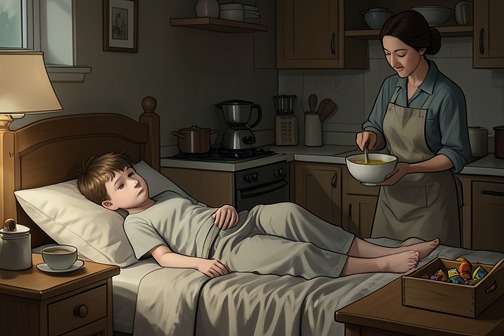
[Markus’s near-burial and rescue](entity:action-recall-action-markus-s-near-burial-a-8d44294f4af3) mark a decisive change in his life: the boy who had dug tunnels and charged into games emerges from his ordeal quieter, more studious, and increasingly shaped by reading and school. His recovery also deepens [Delphine](entity:character-recall-character-delphine-50abed839c4c)’s maternal care for him, a relationship made tangible when she brings him soup and discovers the childhood mementos he has kept close.
## The Ordeal and Its Immediate Aftermath
The evidence recalls Markus as having survived a near-burial in the earth. The ordeal is the hinge between two versions of him: Delphine remembers the energetic boy who dug tunnels, fought exuberant boyhood wars, crashed into trees with go-carts, and tumbled from sleds, then contrasts him with the quieter child who comes afterward. The account establishes survival and lasting change, though these passages do not recount the rescue itself in detail.
When Delphine visits him during his recovery, Markus is glad to be home but still unable to stand without falling over. He laughs about his weakness, while she helps him change into clean pajamas and remakes his bed. These small acts set recovery on an intimate, domestic scale: after the danger of being trapped in the earth, care means clean clothes, a prepared bed, and food he can manage for himself.
## Delphine’s Care and Markus’s Mementos
Delphine brings a pot of dumpling soup to Waldvogel’s, remembering that it was the food Markus had lived on after his near-burial. While tending his bed, she finds notes and a clicker tucked into the inexpensive pillow. The notes bear [Ruthie Chavers](entity:character-recall-character-ruthie-chavers-a9822e0af522)’s name; Delphine recognizes that Markus has kept them because he loved Ruthie with the intensity of a child, but she also understands that the objects are private and puts them back.
When Delphine offers to feed him, Markus insists on taking the spoon and bowl himself. He eats slowly and carefully, then drinks the remaining broth. The moment shifts their interaction from nursing him as helpless to watching him reclaim a measure of independence. For Delphine, the shared quiet around the meal feels almost sacramental; her attention to Markus is not merely practical but a form of sustained, chosen maternal attachment.
## A Changed Childhood
After his rescue, Markus’s energy seems to give way to a quieter mind and cooler temper. He becomes a reader, develops a strong aptitude for quiz bowls, and buys a record player. Music fills his room, while school brings mixed reports: some teachers praise him, and others describe him as argumentative and disruptive because of his criticisms and questions. His change is therefore not a simple conversion into an obedient child; the curiosity that supports his academic strengths also brings him into conflict with teachers.
Delphine’s care continues as he grows. She scolds him for losing mittens and knits replacements, tries strategies to address his thinness, helps him study, and celebrates his school awards. When he needs eyeglasses, she comforts him and makes him wear them, secretly hoping they will keep him from being accepted into the army. She suspects that he cheats on the vision tests and gets in anyway. The near-burial thus resonates beyond the immediate recovery: it stands at the beginning of a changed boyhood, while Delphine’s practical, sometimes anxious care accompanies Markus toward adulthood.
Event 31
Markus's illness prevents his trip to Germany
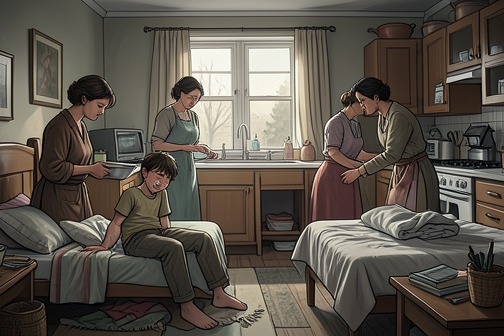
Markus’s illness prevents his trip to [Germany](entity:location-recall-location-germany-2e3723c2f347), changing a family departure into a return to [Argus](entity:location-recall-location-argus-09ff0273b5b1). On the morning the family was due to leave, he became so ill that [Delphine](entity:character-recall-character-delphine-50abed839c4c) refused to let him travel. His fever kept him in the [United States](entity:location-recall-location-5d55e9152db1) with Delphine and [Fidelis](entity:character-recall-character-fidelis-c469e33ba84c), while his twin brothers continued on without him. The episode is both a practical crisis and a reversal: the illness that appears to derail the journey gives Markus a reprieve from leaving, and his parents turn back toward home.
## The Planned Departure and Sudden Illness
The family was preparing to leave for Germany, with [Tante](entity:character-recall-character-tante-61557806d00c) and the twins set to travel and Markus expected to go with them. In the night before departure, Tante spoke in her sleep, repeating a line associated with the witch in the Hansel fairy tale. Delphine took the words as an alarming omen, but the decisive obstacle arrived with the morning: Markus woke with a high fever, glazed eyes, and a racing, unsteady pulse. His condition was serious enough that Fidelis went out before sunrise to find a pharmacy, asking Delphine to remain with the boy.
Delphine cared for Markus as the fever developed. When he became sick, she brought him a basin, cleaned it, and used cold water to wipe his face and limbs. Aspirin only made him rave. She feared that the illness might disappear as suddenly as it had begun, but it did not. When Tante considered selling Markus’s unused ticket rather than waste it, Delphine firmly said he could not leave; no one challenged her. His illness thus settled the immediate question of whether he could travel, while Delphine’s decision made clear that his safety took precedence over the ticket and the schedule.
## The Twins Leave Without Him
The illness divided the family at the point of departure. Tante said goodbye to Markus from the doorway, while Delphine embraced the twins, held their coats and hands, and smoothed their foreheads. The boys were excited by the adventure ahead and left with Tante. Their departure meant that Markus remained with Delphine and Fidelis, separated from his twin brothers as well as from the journey to Germany.
Markus’s fever also altered the emotional meaning of the separation. What had been arranged as a family move became a departure that left him behind, and the twins’ bright anticipation stood in contrast to Delphine’s intimate farewell. The episode does not resolve what the brothers’ separation will mean for their future; it establishes the immediate fact that Markus will not accompany them.
## The Return to Argus
Later that day, Fidelis carried the limp, feverish boy from the hotel to the car. Delphine followed with their luggage, and they laid blankets over Markus in the back seat. He repeatedly asked where they were going. Delphine answered that they were going back to Argus, going home. Markus looked at her with such joy that she briefly worried the fever had made him delirious, then checked him and thought the worst might have passed. His response makes the return more than a change of route: home is a reprieve he welcomes, even as his parents remain concerned about his health.
Fidelis drove north with Delphine directing him out of the city. They checked Markus’s fever several times and made sure he drank ginger beer. For much of the day, the adults kept to neutral conversation, noting how the fields resembled the Dakotas and then [Minnesota](entity:location-recall-location-minnesota-060c79134209), how large and well-kept the barns were, and whether threatening clouds would bring a storm. They took turns driving and rested in the passenger seat while Markus slept. As daylight faded, their effort to maintain safe conversation gave way to uncomfortable silence and suspense, leaving the return journey charged with what remained unresolved between them.
## Significance and Later Echoes
The narrative describes Markus’s illness as a triumph he had not consciously willed. In later years, he wondered whether some hidden part of him had foreseen what might have happened had he boarded the train to New York and then the ship to Germany. The text presents this as his retrospective question, not as proof that the fever was deliberate. That uncertainty gives the episode its psychological force: an involuntary bodily crisis becomes, in memory, a possible means of avoiding a future he could not yet choose openly.
The decision to return also shapes Delphine’s place in the family. Much later, beside [Eva](entity:character-recall-character-eva-a4f4507c5fab)’s grave, Delphine recalls that she kept running things and reflects on the loneliness left by losing her mother as a child. The novel places these reflections alongside the family’s choices and separations without claiming that Markus’s illness caused her later feelings. The episode’s significance lies more specifically in its reversal of the planned migration: Markus remains in [America](entity:location-recall-location-america-c751899c385c), the family journey turns back toward Argus, and the twins continue on without him.
Event 32
费德利斯与德尔芬的婚礼
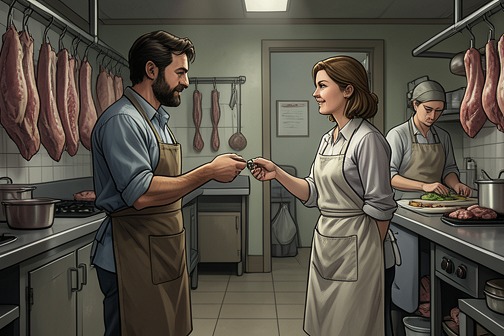
[Fidelis and Delphine’s marriage](entity:relation-recall-relation-fidelis-and-delphine-2d5a6f8b327c) formalizes a bond built through work, trust, and care, but it does not make their past disappear or resolve every relationship around them. Their wedding is deliberately modest: they sign a license with businesslike efficiency, hold no public celebration, and return to the responsibilities that already shape their lives. The marriage is less a clean romantic conclusion than a commitment made within a crowded, unfinished family history.
## Background and Shared Foundations
[Fidelis](entity:character-recall-character-fidelis-c469e33ba84c) had arrived in [America](entity:location-recall-location-america-c751899c385c) after an image of machine-sliced bread in [Ludwigsruhe](entity:location-recall-location-ludwigsruhe-b984c1754f4d) made the distant country tangible to him. The contrast with his family’s exacting approach to butchery was more than a difference in food: his father had taught him a craft in which the right ingredients, seasoning, preparation, and knife work mattered. In America, Fidelis found work with [Pete Kozka](entity:character-recall-character-pete-kozka-2ab3e66d7b8b) and nearby towns, including custom butchering at farms. His inherited skill at sausage-making helped the trade grow, and the standards he brought from home became part of the practical world in which [Delphine](entity:character-recall-character-delphine-50abed839c4c) would later work beside him.
Delphine’s place in that world was established through labor as much as affection. She handled the butcher shop’s routines and bookkeeping, and undertook the daily work of keeping its rooms orderly. One night’s plan to close the shop, clean and wax its linoleum, and return before opening to finish polishing it captures the care she gave the business: the work proceeded in exact stages, fitted around customers and her morning coffee with [Eva](entity:character-recall-character-eva-a4f4507c5fab). That combination of competence and attention made her a partner in the household’s functioning before the two married.
Their connection developed amid other intimate ties rather than in isolation. Delphine and [Cyprian](entity:character-recall-character-cyprian-167e957eaf33) had shared a close partnership, and after they acknowledged their feelings, they still could not readily turn that history into a settled life together. At one point they returned to a room, changed for bed, and held hands without speaking. Elsewhere, Cyprian explained his attraction to men by asking Delphine to consider her own answer to a corresponding question. The exchange made clear that their bond involved genuine understanding, while also establishing that desire and a workable shared future were not the same thing.
## Courtship and the Decision to Marry
The marriage emerged after a period of intense strain between Fidelis and Delphine. For months afterward, they seemed stunned by what had passed between them. Delphine reduced her courthouse hours and spent afternoons in the shop, partly to be near Fidelis. She resumed tending the kitchen and doing laundry for the boys, though not for Fidelis; since her departure, he had taken to ironing his own shirts with soldierly precision. Their closeness returned through shared space and practical routine, but the narrative presents it as cautious and unsettled, not as an effortless restoration.
They set their wedding date four months ahead. At first the wait seemed long to Delphine; later, it seemed so short that she considered postponing the marriage. Fidelis bought the license at the courthouse and showed her the paper casually. They signed their names with the brisk detachment of people completing official business. The contrast between that matter-of-fact act and their difficult emotional history gives the license particular force: their decision is definite, but neither treats marriage as a magic erasure of uncertainty.
The couple also remained effective collaborators. Delphine took up bookkeeping and ordering again, and began bringing religion into an office crowded with papers. One afternoon, she brought Fidelis into the kitchen while [Franz](entity:character-recall-character-franz-a77eb1706f2e) and Markus were eating and told him to announce the news. Before Fidelis could speak, Franz understood that the two were getting married. The scene places the decision within the household: the boys are not spectators to a private romance but part of the family life the marriage will continue.
## The Wedding and Household Consequences
The wedding itself is described through what it lacks: there are no guests, cake, or flowers. After marrying Fidelis, Delphine continued dividing her time between the butcher shop and her own house, where she nursed Roy. She kept part of her filing job and went on reading, trying to preserve as much of her previous routine as possible. Marriage therefore adds a bond without displacing her existing obligations. Her work, care for Roy, and habits of reading all persist alongside her new status as Fidelis’s wife.
The wedding also coincides with a change in the household’s future. Franz announces that he is enlisting in the air corps and will begin the required tests. His decision, delivered during the same kitchen conversation in which the marriage is disclosed, makes the family’s commitments feel provisional as well as binding: one relationship is being formalized while another member prepares to leave. Delphine and Fidelis’s union takes shape not outside change, but in the midst of it.
## Unfinished Attachments and Narrative Significance
The narrative does not frame the marriage as a resolution that closes every earlier story. Delphine recognizes that the past remains unfinished, filled with horrors, complexities, and incompletions that she wishes she could file away as neatly as courthouse papers. Then Cyprian returns. The timing underscores a central distinction in the event: choosing marriage with Fidelis does not erase Delphine’s former intimacy or simplify the emotional history she carries.
The marriage’s significance lies in its practical, chosen form. Fidelis and Delphine are already capable of working together quickly and respectfully; they have roles in a household shaped by children, illness, business, and departures. The spare ceremony makes no grand promise that these demands will vanish. Instead, their signed license and continued shared work establish a commitment that must coexist with care for others and with attachments that remain emotionally consequential. The wedding is thus both a beginning and a deliberately incomplete ending: a new marital bond, entered without spectacle, inside a life whose obligations and past remain present.
Event 33
弗朗茨加入美国陆军航空队
[Franz](entity:character-recall-character-franz-a77eb1706f2e)’s enlistment in the Army Air Corps marks the point at which his private fascination with flight becomes a declared military commitment. He understands the family conflict his choice may create: [Fidelis](entity:character-recall-character-fidelis-c469e33ba84c) would not want him to fight [Germany](entity:location-recall-location-germany-2e3723c2f347). Franz answers that concern by imagining himself as a fighter pilot who would face other pilots, not his father’s people, even as he announces that he is enlisting. His decision is therefore both an embrace of the life he has been building around airplanes and an attempt to separate that life from his father’s wartime loyalties.
## From the Shop to the Airfield
Franz’s interest in aviation predates his enlistment. When Fidelis let him out of the butcher shop, Franz went to work on airplanes at the airfield. The practical work of repairing engines initially seemed a diversion from his feelings for [Mazarine](entity:character-recall-character-mazarine-a23fb9b0754a), but it gradually offered a kind of relief in its own right. [Pouty Mannheim](entity:character-recall-character-pouty-mannheim-8a5ba7d1506f) began teaching him to fly in payment for his work, joining mechanical labor to the possibility of taking to the air.
Flight gave Franz a release he recognized from watching an airplane rise above the windbreak behind the house, but being in the cockpit made the experience more immediate and demanding. He learned to read the wind and the signs in the clouds, and on his eighth flight Pouty let him try the controls. Their lessons progressed from takeoffs and landings to stalls, spins, wingovers, and loops. When Pouty finally allowed Franz to fly solo, Franz tested himself with rolls, a loop, and a spin while keeping the town’s grain elevator in view. The experience left him at peace and convinced him that he might survive losing Mazarine if he could spend his life in the air.
## The Enlistment Announcement
Franz announces his enlistment during a family meal. After realizing that Fidelis and [Delphine](entity:character-recall-character-delphine-50abed839c4c) are to marry, he makes an announcement of his own: he is joining the air corps. The setting places his decision within a family changing through marriage and separation, but Franz presents it as his own next step rather than as a response to the wedding.
He anticipates Fidelis’s objection and states the distinction that makes the choice bearable to him. His father would not want him to go, Franz says, but he expects to fly a Spitfire and fight other pilots, not Germans. That assurance does not erase the tension: Franz is entering military service while his father’s identity and experience remain bound to Germany. It does show Franz trying to frame his enlistment as a commitment to aviation rather than hostility toward his father’s people.
## A Passion Becomes Military Service
The enlistment announcement follows a gradual progression from working on aircraft, through instruction and practice, to solo flight. Franz does not describe the air as an abstract ideal alone; the account emphasizes the acquired competence that makes flight possible, from controlling the plane to interpreting wind and clouds. His calm after the solo flight contrasts with the emotional uncertainty surrounding Mazarine, suggesting why aviation has become more than a pastime for him.
Later, Franz is assigned to the 439th Troop Carrier Group, whose emblem is an angry beaver. That assignment confirms his entry into military aviation, extending the choice he had announced at the table into an actual place in an air unit. The movement from airfield lessons to enlistment and then assignment gives the decision its consequence: flight, first learned as skilled work and personal release, becomes Franz’s wartime vocation.
Event 34
Cyprian and the Snake Man's Argus performance
[Cyprian and the Snake Man's Argus performance](entity:event-recall-event-e231be7665fd) brings [Cyprian](entity:character-recall-character-cyprian-167e957eaf33) back to town as a touring entertainer rather than a man looking for work. With [Vilhus Gast](entity:character-recall-character-vilhus-gast-24983fa19549), his partner in an eccentric act built around acrobatics and live reptiles, he transforms a school-gymnasium stage into a place where spectacle, danger, and deliberate absurdity command the audience’s attention. The performance becomes a triumph, and its afterlife makes [Delphine](entity:character-recall-character-delphine-50abed839c4c), who watched with Markus, an object of the town’s respectful curiosity.
## Cyprian Returns as a Performer
Cyprian tells Roy that he is in [Argus](entity:location-recall-location-argus-09ff0273b5b1) to play an engagement, not to seek a job. He is part of a lyceum series and now travels with the Snake Man, offering Roy pink cardboard tickets. The distinction matters to Delphine: Cyprian has not simply come back to his former circle or resumed the search for ordinary employment. He arrives with a touring act and a new professional partnership, news she says he could have written to tell her.
The act’s name initially leaves Delphine uncertain about the man who shares Cyprian’s work and travels. Cyprian explains that performing with another man did not produce the same effect as his earlier balancing work, though he and his partner devised other tricks. The partner owns a python that travels in a wheeled leather case, keeps an assortment of reptiles, and includes a spider in the show. The performer is Vilhus Gast; Mighty Tom is the spider, not Gast’s name. The distinction introduces the act’s characteristic play with appearances, as its most memorable performer is also presented as a false toupee.
Gast and Cyprian have made their partnership out of a shared sense of being outsiders. Gast knew little about Indians while growing up, and Cyprian had not known a Jewish person on the reservation. Gast nevertheless spoke of both peoples as being cast as wanderers at the edge of society, hounded and hunted. The two men decided to roam together and developed an act that they have performed steadily since. Their touring partnership is thus both a practical arrangement and a response to a kinship Gast identifies across different histories.
## The Gymnasium and the Audience
Delphine and Markus arrive early the following night and choose the first row of creaky wooden folding chairs. Delphine expects people to recognize Cyprian, notice his shaved head, and turn to look at her. Sitting at the back would leave her exposed to their curiosity; from the front row, she can turn her back on them and watch the show. Her decision establishes a quiet counterpoint to the public event: the room may inspect her, but she chooses where to direct her attention.
The curtains open on Cyprian and Gast barefoot in tight black gymnasium suits, each standing on a large red rubber ball. They pedal around one another, accelerate into a do-si-do, and leap into exchanged places to applause. Gast is close to Cyprian in size and build, but has indistinct features and wears a badly fitting toupee that shifts as they move. The balancing is more than a display of strength: the performers turn the possibility of losing control into the show’s central visual promise, repeatedly approaching a fall and recovering their poise.
Gast becomes still with his hands raised like a ballerina’s while Cyprian bounces with the ball caught between his feet. Cyprian springs upward, turns over in midair, and lands in a position to lock hands with Gast. They sway and nearly topple, then right themselves and balance. Soon Gast dances the ball back and forth across the stage, pretending to struggle to keep Cyprian aloft. Their bodies become the apparatus of the act: one-armed and one-legged balances make the audience watch the unstable arrangement, waiting to see whether it will collapse.
## The Spider and the Hitler Routine
The shifting toupee supplies the show’s grotesque reversal. As Gast pretends to struggle, the wig creeps from his head and reveals itself as a giant spider. It crawls up his arm, reaches Cyprian’s elbow, and settles on his bare skull as the two men continue to perform. Gast then releases a smaller, equally hairy spider from a box on a stand. Using a feather to coax it, he guides it up Cyprian’s throat and over his mouth, where it curls into a square black mustache. A gag about a performer’s bad hairpiece becomes a live-animal spectacle whose unsettling intimacy depends on the spider crossing onto Cyprian’s face.
For the next routine, Cyprian puts on a swallowtail coat and polished black boots but leaves his legs comically bare. The spiders remain on his head as he impersonates Hitler. Each time an offstage tuba sounds, his rear end jerks between the coat’s tails; the tuba punctures the rigid, hypnotic authority of the impersonation with a bodily joke. When Cyprian calls for the Nazi salute, the instrument answers with a squawk and his body twitches. The audience discovers that its own straight-armed salutes make the Hitler figure fart, and it joins in until the tuba’s sound becomes one long groan and Cyprian ricochets around the stage. The act turns an image of political command into an unruly mechanism of audience participation and ridicule.
## The Snake Dance and the Finale
The second act replaces the gymnasium’s red balls with an enormous leather valise balanced on four sawhorses. Cyprian and Gast appear in jeweled turbans and delicate transparent veils that billow around their legs and trail behind them. To tinny recorded music, they open the case and bring out a living, mottled python. They call their routine the Dance of Death and wind and unwind with the increasingly alert snake as it tries to coil them close. Their movement is impromptu and graceful, even peaceful, while the audience watches in the belief that the python may devour them.
The performers carry the snake down the center aisle so the audience can touch its dry, charged skin. Its small head, described as a wedge of muscle, and its bright, cold eyes unsettle the crowd; the spectators are relieved when the snake is returned to its case and the locks are fastened. Cyprian then calls for a butcher. [Pete Kozka](entity:character-recall-character-pete-kozka-2ab3e66d7b8b) tests the sharp handsaws the men produce and pronounces them keen and effective. The performers saw the python in the valise, its tail whipping through the unlatched end, then burn a fragrant substance, chant, make signs over a pot of school glue, and put the snake back together. The staged destruction and restoration extend the show’s governing uncertainty: apparent danger and bodily disorder are displayed, then folded back into performance.
The program continues with juggling lizards, a huge motionless iguana, and Mighty Tom presented in a large round candy jar so the audience can inspect the spider. Gast and Cyprian balance cups, plates, and their curly-toed shoes on their heads and noses, then perform more acrobatics. After the crowd calls for an encore, they return as twin Hitlers riding unicycles, saluting and breaking wind as they nearly topple. They juggle burning swastikas, then hatchets, cleavers, and knives, before switching to apples and biting them down to their cores. The succession of political parody, animal display, balancing, danger, and slapstick makes them an enormous hit.
## Aftermath and Significance
Cyprian and the Snake Man leave Argus, but the performance continues to circulate in the town’s conversation. For weeks, Markus talks of nothing else. People stop Delphine in the street and treat her with shy admiration, as though knowing or having access to a great artist has lent her a reflected distinction. They address her respectfully and ask for the show’s secrets, including whether the python has eaten anyone and whether the spider beneath Cyprian’s nose has ever made him sneeze. The questions turn the act’s manufactured peril into local legend, while Delphine’s first-row choice gives way to a new public role: she becomes the person expected to know what happened behind the spectacle.
The event joins the show’s comic irreverence to its technical dependence on balance. The performers repeatedly make bodies, animals, and objects seem close to slipping beyond control, only to recover, redirect, or theatrically restore them. Its humor can be grotesque, particularly in the farting Hitler routine and the apparent sawing apart of the python, but the audience’s response is not passive: it supplies the salutes that trigger the tuba gag and reaches out to touch the snake. The performance therefore makes spectators part of the unstable spectacle it stages, while the weeks of talk afterward show how completely a touring act can alter the standing of the people who witnessed it.
Event 35
查弗斯一家在酒窖中遇难
The Chavers family’s deaths in [Roy Watzka](entity:character-recall-character-roy-watzka-5624a52010d8)’s cellar are a buried family tragedy that reaches beyond the deaths themselves: Roy’s delayed confession exposes his responsibility, the dead haunt his later life, and [Delphine](entity:character-recall-character-delphine-50abed839c4c) inherits the burden of hearing what he had concealed. The account does not establish every detail of how the family died, but it identifies the fatal circumstances Roy remembers and the guilt that follows him. In the novel, their absence becomes a persistent presence, joining a private catastrophe to Delphine’s earlier history of loss and Roy’s fear of dying with the truth still unspoken.
## Background and Circumstances
The cellar disaster occurred while Roy was drinking heavily. He recalls telling [Mr. Chavers](entity:character-recall-character-mr-chavers-5463dd69a3e6) to go below for ginger beer and to look for liquor, taking candles so he could read the French labels. Roy says he did not know that Mrs. Chavers and their child had gone down with him. He imagines that Mr. Chavers might have been looking for the king’s wine, but that possibility is speculation within Roy’s confession, not a fact independently confirmed by the narrative.
Roy remembers calling down to Mr. Chavers, who had a habit of singing over him during singing-club practice. He says he might have shut the hatch, then recalls telling him he could come back up after he stopped singing over him. The admission leaves an important uncertainty: Roy cannot say with confidence that he closed the hatch, but recognizes that he may have done so. His words turn an everyday rivalry over singing into part of the remembered chain of events preceding the family’s deaths.
## The Delayed Confession
The truth surfaces when Roy is ill and Delphine is at his side. He first returns to the familiar subject of the Chavers haunting him, saying that the dead have never stopped knocking and that he had not even known the whole family was down there. Delphine has heard his self-pitying laments before and responds that he was too drunk to know what he was doing. Roy then departs from the old refrain: he says he could have justified Porky, and begins to explain what happened in the cellar.
His account is fractured by uncertainty and shame. Roy describes sending Mr. Chavers to fetch the drinks, wonders aloud whether he shut the hatch, and recalls the taunt he shouted down to him. When Delphine points out that Roy had been away on a long drinking binge, Roy corrects her estimate: it was longer than three weeks. He says he returned to the cellar for liquor, found the family there, and remained drunk until Delphine and [Cyprian](entity:character-recall-character-cyprian-167e957eaf33) came back. The confession establishes when he discovered them and how long he avoided sobriety, while leaving the exact mechanics of their deaths unresolved.
Delphine’s response is immediate and severe. She shakes Roy lightly as he speaks, then releases him when his body goes limp. The realization that his absence lasted longer than she thought unsettles her; after he finishes, he turns away and pulls the blanket over his head. Delphine leaves the house and sits outside rather than remain beside him. In that moment, she imagines selling the house, leaving the butcher shop and [Fidelis](entity:character-recall-character-fidelis-c469e33ba84c), and starting over in [Chicago](entity:location-recall-location-73935e623d95). Her imagined escape shows the confession’s consequence not as a solved mystery but as a rupture: what Roy reveals changes how she sees her father and the life she has been living.
## The Dead and Their Afterlife
Roy’s drinking and avoidance are linked to the cellar deaths. He stays away from home in part to keep Delphine from discovering his relapse and in part to avoid the dead Chavers, whose presence, as the narrative presents it, recedes when he avoids the place where they died. On the days he manages to sober up, he returns home, cooks substantial breakfasts, washes his clothes, and scrubs the floors. His unusually regular domestic work disguises his drinking and helps keep Delphine unaware for a long time. She uncovers the truth only after returning from Chicago and beginning to look for work.
The family’s haunting is not confined to Roy. Delphine, alone in her room, acknowledges that something of the Chavers’ desperation remains below, though not their bones. Half asleep, she tries to explain that she did not know and would not have allowed what happened, and asks them to leave. Her words suggest that the deaths have become part of the household’s emotional and imaginative life, even though she was not present in the cellar incident. The dead remain not as an explained supernatural mechanism, but as an unresolved claim on the living.
The haunting also enters the prison camp where [Erich Waldvogel](entity:character-recall-character-erich-waldvogel-fd1eb77f637e) is held. The prisoners sing together to relieve the tedium, and the songs enter their dreams; at night, their sleeping voices mingle with the sounds of the woods. Erich is awake to these sounds and carries his own troubled longing for [Ludwigsruhe](entity:location-recall-location-ludwigsruhe-b984c1754f4d) and his family. The Chavers are part of the book’s wider pattern of the past pressing upon people in the present, though their deaths remain specifically bound to Roy’s responsibility and Delphine’s knowledge.
## Delphine’s Wider Inheritance of Loss
Roy’s confession unfolds alongside his account of the violence that shaped Delphine’s mother, [Minnie](entity:character-recall-character-minnie-7a217c066ad6). He tells Delphine about the Lakota people who sought shelter during the winter after the defeat of their community, including Minnie’s father and the dying leader [Big Foot](entity:character-recall-character-big-foot-634341c6d25b). In Roy’s telling, Minnie is a child amid the massacre at [Wounded Knee](entity:location-recall-location-wounded-knee-69c51d4210d7): her father is killed, and she escapes on foot through the snow, following other people’s tracks until she reaches a mission. Roy presents this remembered history as the reason Minnie could not be tamed by him; it is a story of childhood violence and survival that he says he has told no one else.
The narrative thus places Roy’s responsibility for [the Chavers family](entity:character-recall-character-chavers-0531deb01d3c) beside a different history of deaths and survival, without equating them. Minnie’s trauma is inherited by Delphine through family history, while the Chavers’ deaths reach her through Roy’s confession and her own later experience of their haunting. Delphine also connects her strength and loneliness to the loss of her mother. At [Eva](entity:character-recall-character-eva-a4f4507c5fab)’s grave, she recognizes that childhood bereavement made her strong but left her damaged and searching; she still misses her mother even as an adult. The cellar tragedy joins this larger landscape of grief, but does not erase the distinct causes or histories of those losses.
## Consequences and Significance
The Chavers family’s deaths continue to shape Roy’s relationship with alcohol. After his relapse, he fills what he describes as an emptiness with drink, conceals his whereabouts from Delphine, and alternates intoxication with brief periods of apparent domestic sobriety. His confession clarifies that the cellar is not simply the setting of an old accident: it is the place where he found the family after a prolonged binge, and the place he avoids as the dead return to his thoughts. The account connects secrecy, drinking, and haunting without resolving Roy’s uncertainty about the hatch.
For Delphine, the disclosure intensifies a life already marked by care for others and accumulated losses. She has lived with the Chavers’ remembered presence without knowing what Roy had done or feared he had done. After learning the truth, she imagines leaving the butcher shop and the people around her; later, however, she continues to run the household and business. Her eventual reflections beside Eva’s grave show that the impulse to flee has not simply canceled her attachments. Instead, the confession belongs to a continuing history in which grief, responsibility, and care coexist.
The event’s significance lies partly in the gap between what Roy knows and what he can prove. He remembers the errand, the singing rivalry, the possible closing of the hatch, and finding the family after his binge; he cannot provide a complete, certain account of the deaths. The narrative preserves that incompleteness. It makes the confession an act of belated disclosure, not a definitive reconstruction, and lets the Chavers remain present through Roy’s guilt, Delphine’s uneasy address to the dead, and the family history of loss that surrounds them.
Event 36
罗伊·瓦茨卡之死
[Roy Watzka](entity:character-recall-character-roy-watzka-5624a52010d8)’s death closes his long decline and forces [Delphine](entity:character-recall-character-delphine-50abed839c4c) to face a love that had survived years of anger, disappointment, and anticipated loss. He dies seated before photographs of [Minnie](entity:character-recall-character-minnie-7a217c066ad6), the mother Delphine barely knew; at his funeral, grief becomes a public occasion, but the private consequence is Delphine’s recognition that life is finite and that affection should be spoken while there is still time.
## Decline and Death
After [Doctor Heech](entity:character-recall-character-doctor-heech-d8e1cfca98fe) prescribed extended rest to ease Roy’s liver problems and prevent his cough from developing into pneumonia, Roy spent much of the day in bed near the stove. At first, he and Delphine treated his hours asleep as evidence of recovery. Delphine gradually understood that his sleep was not restoring him: he ate little, grew weaker and quieter, and seemed to her to be preparing for death. She feared he would die while she was at work, so she checked his face when she returned home and again in the morning.
As he weakened, Roy asked for photographs of Minnie and placed them on a shelf by the flour and spice counter where he could see them from bed. Delphine had long wanted him to tell her about her mother, but he gave her little information despite the intensity of his grief. Minnie had no gravestone for Delphine to visit, and Roy would not say where she was buried or explain why there was no marker. He said only that Minnie was the only person left who could tell the story.
The county visiting nurse found Roy dead, sitting upright and staring at Minnie’s indistinct photographs. She checked for a heartbeat, recorded the time and her observations, then closed his eyes and laid him down before contacting Delphine. The nurse’s record included Roy’s fixed expression, which she understood as part of the striking story of his devotion. The photographs had been placed within his view during his decline; in death, they remained before him, making his final posture a last, silent orientation toward the woman he had mourned.
## Minnie’s Story and Roy’s Grief
Before his death, Roy began to tell Delphine the story of what had happened to Minnie when she was eight. He framed it as a painful account he had told no one else, and spoke while physically weakened, sitting up with pillows behind him and drinking water Delphine had mixed with ginger. His disclosure helps explain why Minnie’s memory had such a powerful hold on him, even though he had kept the details from his daughter.
Roy described Minnie as a child among Minneconjou Lakotas fleeing with women, children, and a few exhausted warriors. Their dying leader, [Big Foot](entity:character-recall-character-big-foot-634341c6d25b), was being transported in a wagon; the group sought shelter and hoped to survive through the Ghost Dance, which promised that the dead might return. Roy placed them in a Christian community at [Christmas](entity:time-recall-time-christmas-a573265d0167), where they sought food and mercy. The story’s focus is not only on the massacre but on the people’s vulnerability before it: they were hungry, cold, displaced, and looking for protection.
Roy recounted how the group surrendered its guns and camped where soldiers directed them. Minnie’s father shared their last bannock with a woman nursing a baby; in return, the woman shared a small gingerbread figure she had received at church. The next morning, she prepared a drink from a root, melting snow over a small fire and offering the tea to Minnie. A shot sounded as Minnie drank. Her father was killed as he ran from the tent, and soldiers opened fire on the camp, including the white flag of surrender. The woman who had shared her food was killed while nursing her baby.
Minnie briefly returned to her father and received his last words before walking away through the violence. She witnessed further killings and the stripping of a dead girl’s clothing, then escaped down a ravine and across a fence. Her lighter appearance and farmer’s clothes may have helped her avoid notice, though Roy presented these only as possible explanations. Following the tracks of other fleeing people through the snow, she eventually reached a mission run by a priest named Jutz. Roy stopped there, saying he could tell no more. His account leaves the details of Minnie’s later life largely unfilled, even as it makes the source of her childhood trauma unmistakable.
## Funeral and Delphine’s Response
Roy’s funeral was well attended. The wives of bankers and landowners came, and flowers filled the church. Photographs were placed face down in his coffin, over his heart, as he had instructed. Afterward, mourners gathered for dinner in the church hall, which had served as a gymnasium the night before. The formal service and communal meal turned Roy’s death into a public event, but the photographs and Delphine’s response kept its emotional center within the family.
At the dinner, Delphine found the sympathy overwhelming and left the hall with [Mazarine Shimek](entity:character-recall-character-mazarine-shimek-8ebff8554fac). When [Mazarine](entity:character-recall-character-mazarine-a23fb9b0754a) told her she was sorry, Delphine answered that she was sorry too. Her response does not resolve her feelings: she was tired and angry at the waste of Roy’s life and at the waste of her affection, yet his death had awakened the desperate love she had felt for him as a child. She had spent years preparing to lose him and had sometimes looked forward to the end of his frustrations. Still, grief arrived as a force she could not explain away as fear of loneliness, exhaustion, or relief. She called it existential and used the word to steady herself.
Delphine turned that recognition into a practical appeal to Mazarine. She urged her to write to [Franz](entity:character-recall-character-franz-a77eb1706f2e), telling him that he loved her and she loved him, and asking why she should not tell him. Roy’s death thus changes the direction of Delphine’s attention: rather than leave affection unspoken, she presses the younger woman to act before the opportunity is gone. The lesson comes not from an uncomplicated example of love, but from Delphine’s memory of a father whose devotion and failures had been inseparable.
## Aftermath and Significance
Roy’s death does not erase the damage Delphine associates with his life, nor the bond that made his loss painful. It brings both into sharper focus: she mourns the time and care she feels were wasted, but discovers that the child’s love for him remains. The contrast between that private turmoil and the orderly funeral gathering prevents the event from becoming a simple public celebration of devotion.
The photographs of Minnie link Roy’s death to the story he had withheld and finally began to tell. His fixation on them, his refusal to provide basic information about her burial, and his admission that only Minnie could tell the tale make grief both a form of attachment and a barrier to knowledge. Delphine inherits the consequences of that silence without gaining a complete account of her mother’s life. Roy’s final disclosure supplies a history of Minnie’s childhood survival, but he stops before answering everything Delphine had wanted to know.
The aftermath also broadens beyond Roy’s immediate family. Later, Delphine imagines that her own place in a cemetery plot might be between Roy and [Eva](entity:character-recall-character-eva-a4f4507c5fab), with Roy beside her for eternity. At the same time, she recognizes that losing her mother in childhood has left her with a lasting loneliness and a sense of being damaged and searching. Roy’s death therefore sits within a longer history of bereavement: it recalls the maternal absence that shaped Delphine, while prompting her to speak directly to Mazarine about love, mortality, and the cost of waiting.
Event 37
埃米尔阵亡
[Emil Waldvogel](entity:character-recall-character-emil-waldvogel-576c6df82508)’s death in World War II is sudden and formative: a mine kills him early in the war, before his uniform has seen combat, and separates him from his twin brother, Erich, with whom he had expected to serve. The small piece of honey candy his grandmother placed in his pocket, hoping it would protect him as it had his father, makes the loss both personal and a quiet measure of how little family hope can shield the young from war.
## Background and Plans
[Emil and Erich](entity:character-recall-character-emil-erich-6a0deafb311d) were students at the [Adolf Hitler Schule](entity:organization-recall-organization-adolf-hitler-sch-6b1e838e0592). As the army urgently sought reinforcements, it took their entire class, including teachers and platoon leaders. At the selection camp, both twins were praised and identified as officer material. They had planned to join the [Hitler Youth](entity:organization-recall-organization-df2a93a0d7dc) Division of the Waffen-SS and remain together throughout the war.
That shared future ended almost as soon as Emil entered combat. He did not have to lie about his age to be taken into the army; the need for reinforcements had made the whole class eligible. The speed of his death contrasts with the scale of the plans made for him and Erich, and with the military training that had cast them as future officers.
## The Mine and Emil’s Death
Emil stepped on a mine in a sheep pasture early in the war. He died before he landed, without surviving to experience the long campaign his twin would endure. His uniform was destroyed before it had been stained or dirtied, an image that emphasizes how little of a soldier’s expected wartime life he actually lived.
The narrative fixes the moment through two objects carried close to him: a picture of [Tante](entity:character-recall-character-tante-61557806d00c), soaked in blood, and a piece of honey candy cooling in his mouth. His grandmother had insisted he bring the candy. Remembering that his father had survived the Great War on honey, she hoped it might similarly protect her grandson. The candy’s ordinary, familial purpose cannot alter the outcome, but it preserves the family’s attempt to carry care into a war that takes Emil almost immediately.
## Erich After the Loss
Erich continues fighting after his twin’s death, but the narrative describes him as already partly absent from himself. He had vowed to fight to the death and maintained his outward expression, yet the conditions of combat overwhelm the ideals and loyalties that had shaped him. After four days and nights without sleep, he is captured; Emil’s death stands behind the captivity as the first rupture in the twins’ plan to remain side by side.
As a prisoner in [Minnesota](entity:location-recall-location-minnesota-060c79134209), Erich longs for [Ludwigsruhe](entity:location-recall-location-ludwigsruhe-b984c1754f4d) and remembers his grandfather and the sausages he and Emil used to steal and share in bed. He thinks of his brother with a kind of numbness, having shut away thoughts of his family. The memory of the shared childhood survives in concrete fragments, even as grief and his formation into a thoroughly [German identity](entity:concept-recall-concept-15e59a338a64) keep him from openly reclaiming his American upbringing or family ties.
## Memory and Significance
Emil’s death is presented not as a battle sequence but as a compressed family memory: a mine, a ruined uniform, Tante’s photograph, and the grandmother’s protective candy. That contrast between military preparation and the small objects of home gives the loss its particular force. The planned future of the twins is cut short before it can begin, while Erich must carry on alone.
The novel’s later memories of war widen the meaning of Emil’s fate without making it interchangeable with other deaths. Erich’s imprisonment, his longing for Ludwigsruhe, and his recollections of his brother show how the loss persists within family memory. At a 1954 memorial unveiling in Ludwigsruhe, the war dead are described as having returned to the earth; the gathering of surviving master butchers to sing places private grief within a public act of remembrance, though Emil’s particular death remains anchored in the intimate story of the candy his grandmother sent with him.
Event 38
埃里希被美军俘虏
[Erich Waldvogel](entity:character-recall-character-erich-waldvogel-fd1eb77f637e)’s capture by American forces exposes the fracture between the country of his birth and the [German identity](entity:concept-recall-concept-15e59a338a64) he has been taught to defend. Taken after his twin brother Emil’s death and days of combat, Erich is first treated as a hostile young Nazi soldier; facing an American rifle, he suddenly reveals that he was born in [North Dakota](entity:location-recall-location-north-dakota-c4ccad70b1c1) and that his father still lives there. The disclosure interrupts the threat, but Erich’s own shouted admission that he does not know whether he is American or Nazi captures the deeper uncertainty the capture leaves unresolved.
## The capture and its immediate danger
Erich has been fighting after his class from the [Adolf Hitler Schule](entity:organization-recall-organization-adolf-hitler-sch-6b1e838e0592) was drawn into military service as [Germany](entity:location-recall-location-germany-2e3723c2f347) urgently sought reinforcements. He and Emil had expected to serve together, and both had been marked out as potential officers. [Emil died](entity:event-recall-event-9f686d1646a8) early after stepping on a mine. Erich continued in combat, but the intensity of the fighting overwhelmed the vows and ideals that had seemed to define him. When American soldiers captured him, he had gone four days and nights without sleep.
The danger did not end with his surrender. After Erich made a vague attempt to seize a soldier’s rifle, he was struck down. The soldiers discussed him and the other young German prisoners as threats, and one raised his weapon as if about to fire. The scene turns on a stark reversal: the captured boy, first reduced to an enemy category, speaks in English to plead for his life. His appeal is not a calculated declaration of allegiance; it comes out under pressure.
## North Dakota and the divided identity
Erich tells the soldiers that he was born in North Dakota and that his father still lives there. He explains that he had been sent to Germany before the war. Those facts unsettle the Americans’ assumption that he is simply a foreign Nazi combatant, while making the boundary between his two affiliations impossible to avoid. In the immediate confrontation, his American origin helps distinguish him from the image the soldiers have formed of the enemy.
But Erich cannot turn that origin into a settled answer about who he is. When challenged to say whether he is a Nazi or an American, he replies that he does not know. The confused, startlingly comic bluntness of the response makes the soldiers laugh and leaves his remaining classmates wondering whether he has shown unexpected brilliance or lost his mind under pressure. Their reaction does not erase the seriousness of the moment: his childhood birthplace and his present loyalties have collided in the sentence he cannot make consistent.
## From battlefield to prisoner
The capture also marks the end of Erich’s immediate place in the battlefield world that had shaped him. The narrative links his shock at surrender to the loss of Emil, with whom he had imagined spending the war shoulder to shoulder. Even after capture, Erich’s relationship to his American past remains guarded. He understands English, but keeps that knowledge hidden among prisoners who regard collaboration with the Americans as punishable disloyalty.
The prisoners are transported north under guard and eventually arrive at a camp in the woods. There, Erich is issued work clothes and basic supplies, and he is set to forestry work. His capture thus leads not to an immediate return to his father or to a reconciliation of identities, but to confinement and a new routine among other German prisoners. The contrast between his American birth and his guarded conduct continues beyond the moment when the rifle is lowered.
## Loyalty, memory, and the limits of rescue
The episode belongs to a larger pattern of war memory in which the past is rarely absent, even when it remains unspoken. Earlier, [Fidelis Waldvogel](entity:character-recall-character-fidelis-waldvogel-8dc9c794e011) and [Cyprian Lazarre](entity:character-recall-character-cyprian-lazarre-f36f15cc38dd) are shown carrying their shared war experience in silence; ordinary conversation can be interrupted by images and recollections neither man chooses to share. Erich’s capture offers a younger generation’s version of that division: combat has damaged the beliefs he carried into battle, but it has not yet given him a safe way to articulate what remains.
At the prisoner camp, the danger of revealing his American upbringing is reinforced by rumors that prisoners who become too friendly with Americans may disappear. Erich continues to perform withdrawal and silence, while inwardly remaining divided between his childhood in the [United States](entity:location-recall-location-5d55e9152db1) and the German allegiance formed during his adolescence. His capture therefore changes his immediate circumstances without resolving the question he blurts out at gunpoint. The scene’s significance lies in that unfinished contradiction: survival is secured for the moment, but belonging remains unsettled.
Event 39
埃里希被关押在明尼苏达战俘营
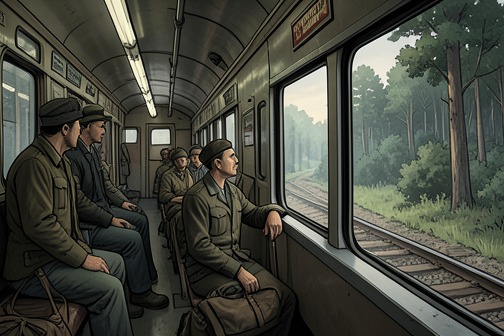
Erich’s internment in a [Minnesota](entity:location-recall-location-minnesota-060c79134209) prisoner-of-war camp is both a consequence of his capture and a turning point in the family’s wartime separation. Transported north with other German prisoners, he arrives in a camp where ordinary provisions and forestry work unsettle his expectations of [America](entity:location-recall-location-america-c751899c385c). Yet the relative security of the camp does not resolve his divided loyalties: he conceals his English, fears fellow prisoners’ suspicion, and tries to shut out his family and childhood. His singing becomes the trace by which his family eventually finds him.
## Transport and Arrival
After his surrender, Erich travels by stripped-down train car with about two hundred other prisoners. He understands English perfectly but hides that fact, maintaining silence because fervent Nazis among the prisoners have threatened those who collaborate with the Americans. He is also absorbed by the view from the train. The men had been promised a landscape devastated by bombing, blackened crops, and abandoned farms; instead, the train crosses a country that appears untouched and full of life. The prisoners are awed and bewildered, while Erich’s thoughts fill with childhood memories and despair.
The train continues north into pine forest. Prisoners from southwestern [Germany](entity:location-recall-location-germany-2e3723c2f347) recognize something familiar in the fir stands, but the journey soon turns into a guarded march: at a small station, their hands are linked by a chain, and they walk for miles along a muddy road through early-summer blackflies. One guard questions the need to keep them chained, asking where they could go; an officer declines to release them, though without conviction. The exchange briefly exposes the tension between formal captivity and the guards’ awareness that escape is unlikely.
The camp stands deep in the woods, enclosed by pine logs, wire, and coils of barbed wire. Despite these defenses, the setting does not seem especially forbidding to the prisoners. Erich enters with an unexpected lightness of feeling, then receives a blue work outfit marked PW, an overcoat, shoes, four pairs of socks, underclothes, a wool shirt, a raincoat, two blankets, and basic toiletries. His involuntary satisfaction at the supplies surprises him. He considers whether the fresh air is affecting his judgment, or whether the prospect of demanding, mindless forestry work answers a bodily need.
## Work, Food, and the End of the War
The camp’s meals deepen the contradiction between captivity and provision. Erich recognizes a familiar flavor in baked beans seasoned with molasses, mustard, and smoked pork, and the food brings [Delphine](entity:character-recall-character-delphine-50abed839c4c) to mind. He eats slowly despite his hunger, caught between reverence and shame. The other men receive fatback, creamed corn, baked potatoes, cornbread with syrup, and even a small portion of lard. Some pocket their potatoes; others eat quickly, as if the meal might disappear. The hall is silent except for the sounds of eating. The abundance, and the effort required to bring it to such a remote camp, makes the prisoners understand that Germany has lost the war.
The prisoners work in the forest with crosscut saws, smaller saws for branches, chain drags, trucks, and two mules named Max and Moritz. A supervising soldier who speaks some German also censors a small newspaper the prisoners print on a hand-operated press. These details place Erich’s captivity within an organized routine of labor, limited communication, and surveillance, rather than a brief episode of transport alone.
That routine creates space for a change in Erich’s voice. The Waldvogel boys had once seemed not to have inherited their father’s singing voice, but Erich’s voice developed in adolescence. In camp, he hums to pass the time and is surprised by the rich sound that emerges. He begins to sing; other prisoners join him, trade song lyrics, and turn singing into a nightly event that breaks the monotony. Music gives the men a shared activity, but it also carries their emotions into their dreams. The songs do not erase captivity or fear; they give those experiences a form that can be repeated together.
## Silence, Memory, and German Identity
At night, Erich remains wakeful in the bunkhouse, listening to the men and to the pines and owls outside. The singing reaches him alongside homesickness. He longs to return to [Ludwigsruhe](entity:location-recall-location-ludwigsruhe-b984c1754f4d) and wonders whether he will see his beloved grandfather again or eat the sausages he once stole to share with Emil in bed. Thoughts of his brother, however, come to him with detachment. Erich deliberately numbs himself and avoids thoughts of his family, as if emotional distance were necessary to survive the camp.
His guardedness is sharpened by rumors that prisoners who grow too friendly with Americans may be killed and their bodies scattered in the woods. No one can confirm the stories, but older prisoners use them to frighten those whose loyalty to Germany seems insufficient. Erich has already learned to conceal both his English and the advantages of his American upbringing. Under years of indoctrination, he has become, in his deepest sense, thoroughly German—or what he understands Germanness to mean: purity, loyalty unto death, and hatred of weakness. The camp does not simply hold a captured soldier; it holds a young man trying to preserve an imposed identity by suppressing the family and childhood that preceded it.
## Discovery and Reunion
The family learns that Erich may be in a northern prisoner-of-war camp through an American soldier whom Markus meets. The soldier recognizes Markus’s surname and recalls a prisoner with a similar name, adding that the man hardly ever speaks but sings. That small distinction links the silent Waldvogel to the musical presence described in the camp. When Markus recounts the encounter, [Fidelis](entity:character-recall-character-fidelis-c469e33ba84c) puts down his beer, hides his face in his hands, and sits without speaking. The news converts a distant possibility into a specific lead.
Markus has secured permission to visit and tells his family he will leave the following day. The discovery shows how Erich’s concealment has made him difficult to identify, while his singing has made him recognizable. His captivity is therefore shaped by a telling contrast: speech could expose him to danger, but song—shared nightly with other prisoners—ultimately carries word of him back to his family.
## Narrative Significance
The camp sequence sets the prisoners’ expectations against the material reality they encounter. German reports have prepared them to see a ruined America; the forest, supplies, work, and meals instead reveal a functioning and comparatively abundant country. The prisoners’ realization of defeat comes not through a battlefield report but through the ordinary fact of being fed well in a remote camp. That reversal makes material care part of the story’s account of how war becomes legible to its participants.
Erich’s internment also brings the novel’s recurring concerns with war memory, family separation, and song into a single place. His memories of Ludwigsruhe and Emil persist even as he tries to suppress them, while nightly singing becomes a communal practice that coexists with fear and enforced silence. Later, the report that a Waldvogel prisoner sings gives the family a way to find him. The camp thus marks both the depth of Erich’s estrangement and the imperfect route by which his family’s knowledge reaches him again.
Event 40
费德利斯与马库斯探访埃里希
[Fidelis](entity:character-recall-character-fidelis-c469e33ba84c) and [Markus Waldvogel](entity:character-recall-character-markus-waldvogel-6127bcb6464c)’s visit to Erich at a [Minnesota](entity:location-recall-location-minnesota-060c79134209) prisoner-of-war camp turns a possible family reunion into a painful encounter with the distance war has created. They find Erich, but he refuses to turn toward them or answer their calls. The visit reveals that his estrangement is not simply a consequence of captivity: Erich has come to understand himself through an adopted, fiercely [German identity](entity:concept-recall-concept-15e59a338a64), while Fidelis and Markus still regard him as their son and brother. They leave without him, but Fidelis insists that the attempt is not over.
## A Name in a Prison Camp
Markus brings the news home after a fellow serviceman recognizes his surname. The man had served as a guard at a camp “way up north” and remembered a prisoner with a similar Waldvogel name and a resemblance to Markus. He could not give the prisoner’s first name, but added that the man rarely spoke and was known for singing. The clues are enough to make Erich a possibility, not a certainty.
Markus has worked to secure permission to visit and tells Fidelis he is leaving the next day. Fidelis immediately says he will go too, asking whether they can get the prisoner released and calling him a boy. Markus knows release is unlikely; the clearance will allow them to visit, not to bring the prisoner home. Even so, he presents the permission as a meaningful achievement, the result of effort and favors pulled. Their shared decision establishes the visit as an act of family persistence in the face of official limits.
## The Journey and Recognition
The two drive from [North Dakota](entity:location-recall-location-north-dakota-c4ccad70b1c1) into Minnesota, following a narrow, damaged road north and then east through increasingly wooded country. A former guard has sketched a map, but Markus understands the area from its state-forest boundary and the railway running alongside the highway. They reach the camp late in the afternoon and present their papers at its barbed-wire-and-log entrance. When the guard learns that the prisoner may have been born in [America](entity:location-recall-location-america-c751899c385c), he reacts with surprise and interest, then tells them to wait while the men are out burning slash.
Fidelis and Markus wait beside the car, eating chocolate and trying not to speculate aloud about whether the prisoner is Erich. When the work crew returns, recognition is immediate. Erich is still strong and broad-chested, with the same brown hair touched by gold. He wears a rumpled uniform jacket, blue prisoner clothing, and faded dungarees. He sees his father and brother, but the shock in his eyes gives way to a rigid refusal to engage. The American guards keep the visitors back as Erich passes; they call his name and ask anxious questions, while he faces forward, puts his hands in his pockets, and does not turn.
## A Reunion Refused
Erich’s response carries both recognition and rejection. His hands shake when his family calls to him, but he locks his features and keeps walking. The contrast is stark: his body registers the encounter even as his trained self-control prevents him from acknowledging it. Fidelis, caught between relief at finding his son and distress at seeing him withdraw, calls out an old threat he had used when Erich was a child, then gives a forceful family oath. Other prisoners pause, and some seem to recognize the oath as something like their own fathers’ language. Erich does not look back.
In his thoughts, Erich interprets the visit as a sentimental mistake. He sees Fidelis as old and diminished, and regards his father’s threat as powerless beside his own military training. The memories of his childhood authority—his father’s strictness, strength, and occasional gentleness—no longer bind him as they once did. He also knows something his visitors do not: Emil is dead, killed by one of their land mines. When the family calls Emil’s name, Erich does not reveal the news. His silence thus conceals a second rupture, the loss of the brother who had been his closest companion.
## Identity and the Meaning of Home
Erich’s refusal grows out of an identity that captivity has not weakened. Earlier in the camp, the prisoners’ plentiful food and the friendly conduct of nearby townspeople make the reality of [Germany](entity:location-recall-location-germany-2e3723c2f347)’s defeat difficult to ignore. Erich, however, has hardened himself against such evidence. He fears that an American-born background or excessive friendliness with American guards could expose him to danger among prisoners, where rumors circulate that men accused of fraternizing disappear. The rumors are unverified, but they help make concealment and loyalty feel necessary to him.
Erich’s deeper allegiance is to the Germany he believes he has become part of. His years of formation have replaced the childhood he left behind with a severe ideal of purity, belief, loyalty unto death, and contempt for weakness. His imagined homeland is not only a family or a birthplace: it is a boundary on a map, a song, a piece of forest, and a street. That attachment is bound up with grief for Emil and the war’s continuing pressure. As Erich walks back through the prison gates, he understands his family’s appeal as a claim from a past identity he has rejected.
## After the Visit
Fidelis and Markus drive away without speaking much. The route south through Minnesota’s pine and mixed woodland gives them time to absorb what they have seen, but neither can easily begin the conversation. At a bar, Fidelis’s hands betray his distress: he nearly knocks over his glass and once misses it when reaching for his drink. Over beer and whiskey, the silence begins to loosen. Fidelis imagines that Erich may have thought he had lost his mind on seeing them and proposes writing to prepare him for another visit. He insists that they will return and that his son’s stubbornness can be answered with persistence. Their joking plan to kidnap him briefly restores their shared resolve, although Markus also notices that his father is drunk and unsteady.
The scene closes not with reconciliation but with a decision to keep trying. The family has found Erich, yet discovery does not undo the political and emotional distance between them. Fidelis’s determination and Markus’s practical work have opened a path to the camp, but Erich’s guarded identity keeps it from becoming a way home. The visit makes that conflict visible in a sequence of small acts: the papers that secure entry, the names called across a guarded space, Erich’s hands hidden in his pockets, and the father and son who leave already planning a return.
Event 41
Markus's military service and reassignment
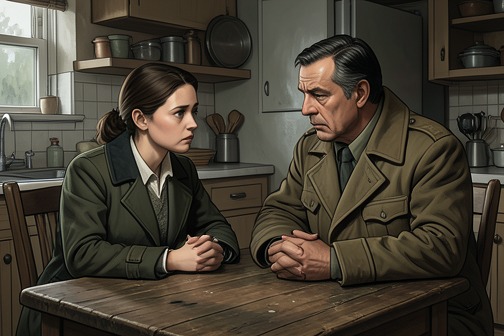
Markus’s military service and reassignment mark a turn from [Delphine](entity:character-recall-character-delphine-50abed839c4c)’s fear of losing the son she has raised to a quieter, more complicated encounter with wartime death. She cannot keep him from enlisting, and he initially leaves for Fort Snelling expecting that he will probably remain in the [United States](entity:location-recall-location-5d55e9152db1). His later desk assignment spares him from the front, but not from the consequences of combat: he is tasked with composing condolence letters for families whose sons have died.
## Delphine’s warning
When Markus tells Delphine that he is going into the Army, she is prepared to speak with him. She asks him to sit at the kitchen table, though she knows he is unlikely to listen or believe her. Her appeal is grounded in the reality of war rather than its public image: men are killed through mistakes as well as deliberate attacks, and the cheerful assurances aimed at soldiers’ families obscure the danger.
Delphine is angered by the contrast between that danger and the advertisements she finds in a magazine. One pitches toothpaste as a useful gift for men at the front; another suggests that chewing gum can ease loneliness and improve observation. To her, such marketing makes destruction into a way to sell ordinary products. Her distress is as much about the public’s evasions as about Markus’s personal risk.
Markus answers gently, putting his hands on her shoulders and trying to reassure her. He says he will be careful and thinks it unlikely that he will be sent overseas. He also distinguishes his prospects from [Franz](entity:character-recall-character-franz-a77eb1706f2e)’s, since Franz had gone into service as a trained pilot. Delphine can appreciate the kindness in Markus’s attempt to comfort her without mistaking it for certainty. She sends him out on his last night at home, and he chooses a walk and a newspaper rather than a night on the town.
## Departure and the household left behind
On the following day, Markus leaves by bus for Fort Snelling. Delphine bakes late into the night, reads novels from the town library, and eats some of the cookies she has made for his first package before baking another batch. These domestic preparations do not dispel her anxiety. After she finally sleeps, she dreams of the dead associated with the cellar, including [Ruthie Chavers](entity:character-recall-character-ruthie-chavers-a9822e0af522), whose appearance brings an earlier family tragedy into the moment of Markus’s departure.
The departure also recalls Markus’s childhood attachment to the toy soldiers and armies left on display in his room. He had kept his brothers’ playthings in place after learning that they were not coming home, as if maintaining their miniature battlefield could preserve a route back to the family. On the night before leaving, he again adjusts the figures and their positions. The objects give his military departure a private connection to the absent brothers, even as the real war threatens to repeat the losses their toys had long represented.
## Reassignment and Delphine’s relief
Delphine later receives a letter saying Markus has failed the vision test and will probably do desk work at OCS for the duration. She is elated, experiencing the news as a reprieve for the family, and at last begins to sleep. The reassignment changes the immediate shape of her fear: rather than imagining Markus in combat, she can take comfort in his likely service away from the front.
Markus writes far more often than Franz does. His work involves writing letters, although Delphine does not understand what he means by this until he returns home. When he is back with his parents, he appears neat and well groomed, but tired. He sits with [Fidelis](entity:character-recall-character-fidelis-c469e33ba84c) over beer, and their halting conversation makes clear how much they rely on Delphine to bridge the silence between them.
## The work of writing for the dead
Asked what his letters concern, Markus explains that he writes to the parents of dead servicemen. Officers give him lists of names; he has never known the men whose lives and deaths he must describe. He calls the task an art of creative fiction and admits that he hates it. His assignment is physically distant from combat, yet it places him within the machinery by which the Army communicates loss to families.
The letters sharpen the contrast between Delphine’s earlier fears and the reality of Markus’s service. He has not been sent into the thick of battle, but the dead are not distant abstractions: their names arrive in lists, and his task is to supply words about lives he never witnessed. The episode gives his desk work a double character—safety for Markus, and an intimate, uneasy responsibility for representing strangers to their bereaved parents.
## A name recognized
After describing his work, Markus tells Fidelis and Delphine why he has come home with something else on his mind. A fellow serviceman from Illinois, transferred from a camp far north, recognizes the Waldvogel surname. He recalls a prisoner of war there with a similar appearance and a name beginning with Wald-, though he does not know the man’s first name. Markus’s account opens a possible connection between his own military experience and a German captive, turning an incidental conversation into a thread that leads toward the family’s wartime past.
Event 42
弗朗茨与马扎琳重逢
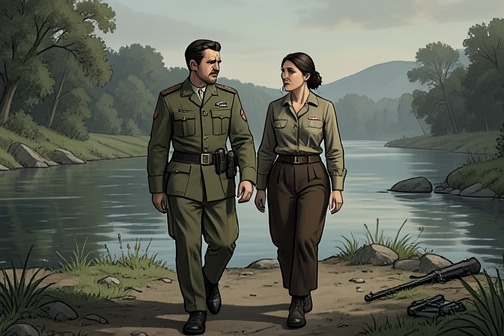
[Franz](entity:character-recall-character-franz-a77eb1706f2e) and [Mazarine](entity:character-recall-character-mazarine-a23fb9b0754a)’s reunion is the moment their earlier attachment becomes a renewed adult relationship, and when Franz begins to disclose the war experiences he has kept largely unspoken. Beside the river in spring, Mazarine asks what has happened to him, and her steady attention helps him speak of aircraft losses, dead companions, and a frightening escape from a second crash. Their closeness offers comfort, but it does not erase what he remembers; the scene makes intimacy a form of listening to trauma rather than a simple return to the past.
## Background and Separation
Franz and Mazarine meet again after years apart and after Franz has served as an airman in the war. Their earlier connection has not been resolved by the passage of time. He tells her that he thought about her constantly, and she makes clear that his letters did not tell her what had really happened to him. The reunion therefore turns on a gap between the person she remembers and the person who has returned, carrying experiences she cannot know unless he chooses to share them.
Franz arrives wearing clothes borrowed from his father and the heavy [Christmas](entity:time-recall-time-christmas-a573265d0167) coat he had received from [Germany](entity:location-recall-location-germany-2e3723c2f347) long ago. Mazarine wraps herself in an old brown wool coat. Sitting near one another on the riverbank, they are close enough for their hands to touch, yet neither reaches across the distance at first. Their restraint gives physical form to the uncertainty between them: affection is present, but familiarity alone cannot bridge the years or the unspoken knowledge Franz has brought back.
## The Conversation Beside the River
Franz opens the conversation by saying they should talk, but admits that he does not know where to begin. He feels strange and dislocated after returning from the war, as though he were a ghost among the living. Mazarine does not ask him to perform an apology for their earlier history. When he says he wronged her, she dismisses the need to revisit that old injury, telling him it no longer matters. Her attention is directed instead toward what happened to him and what remains unknown between them.
She tells him that he has been through things and asks him to explain them. Without that knowledge, she says, she cannot know where their relationship can go. Franz first answers by describing his present assignment: he flies a C-47 transport plane, dropping paratroopers or towing gliders, evacuating wounded people, and delivering supplies. Mazarine understands that this practical account does not reach the heart of what she is asking. The conversation has to move beyond his duties and toward the experiences he has struggled to tell.
## Speaking of Combat and Survival
Mazarine recognizes how strongly the memories affect Franz. He is cold and shaking, ashamed of his hands, and struggling to control an urge to flee into the river. She kisses him, hoping to interrupt the fear that has taken hold of him. The gesture does not make the memories disappear, but Franz begins to speak immediately afterward, saying that he was shot down and that his engine failed on another occasion.
He recalls the deaths of fellow airmen. Schumacher parachuted onto a black reef off Corsica, while Tom Simms’s parachute was torn apart by flak and failed when he tried to use it. Franz recounts the latter’s final movements without claiming to know what Simms experienced. The account shifts the conversation from generalized wartime absence to particular losses Franz witnessed, making clear that his distress is tied not only to his own danger but also to the deaths of people beside him.
Franz also describes the second crash’s aftermath: he saw flashes of light but heard no gunfire and understood that he had lost his hearing. His legs gave way, and he says he might not have been able to free himself from his harness without something he finds difficult to explain. In the remembered fall, he hears his mother, [Eva](entity:character-recall-character-eva-a4f4507c5fab), counting in German as she did when he was little. He reaches out and feels her presence, then holds her as she counts first on his fingers and then on her own until his parachute opens. He tells Mazarine only that it was part of the design, leaving the experience partly veiled even as he reveals its central image of maternal reassurance.
## Renewed Intimacy and Aftermath
Mazarine warms Franz’s hand inside her coat sleeve. After he has spoken, she kisses him again and folds him beside her, wrapping him in the coat as they rest against a large exposed tree root. Franz relaxes while she holds and strokes his hair. The scene’s movement is from restraint to disclosure and then to physical care: Mazarine cannot undo the danger he has survived, but she can receive his account without demanding that he make it neat or complete.
Their relationship is visible to [Delphine](entity:character-recall-character-delphine-50abed839c4c) in the days that follow. Franz and Mazarine move toward one another in ordinary rooms, laughing too quickly and becoming awkward in small gestures; they are still too shy to hold hands in front of their parents. When Mazarine visits Delphine the day after Franz leaves, the two women work side by side and can scarcely speak about him. They struggle to sleep and take days even to say his name. The reunion thus does not end in an uncomplicated resolution: it restores their intimacy while renewing the pain of separation and leaving the war’s consequences present between them.
## Narrative Significance
The scene places a private relationship beside the broader pattern of wartime silence in the novel. [Fidelis Waldvogel](entity:character-recall-character-fidelis-waldvogel-8dc9c794e011) and [Cyprian Lazarre](entity:character-recall-character-cyprian-lazarre-f36f15cc38dd) never speak openly of the war they shared, although its memories return in fragments and pauses. Franz’s conversation with Mazarine offers a different possibility: the past begins to enter speech when someone asks to know it and remains close as he struggles to answer. His account is still partial—he withholds the experience of Eva’s presence until he describes it indirectly—but even this incomplete disclosure changes the terms of the reunion.
Mazarine’s questions make shared knowledge a condition of moving forward, while her quiet touch and embrace provide a form of support that words alone cannot. The riverbank meeting does not present love as a cure for combat trauma. Instead, it shows renewed attachment creating a setting in which Franz can begin to tell what he has carried, and in which Mazarine can respond to the returned man rather than only to the memory of the boy who left.
Event 43
Atomic bombing of Japan and news of the war's end
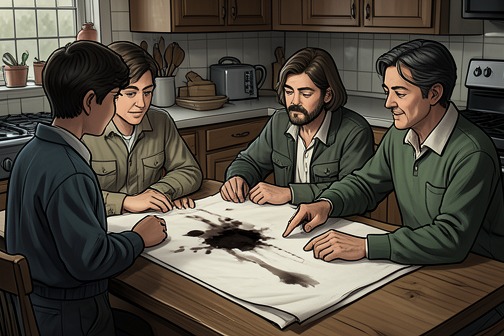
The news of the atomic bombing of Japan reaches [Delphine](entity:character-recall-character-delphine-50abed839c4c)’s household through a customer who heard it on the radio, then through the evening edition from Fargo. As the family reads the paper around the kitchen table, the weapon’s unprecedented destructive power sits beside stories of household inventions and private violence. [Fidelis](entity:character-recall-character-fidelis-c469e33ba84c) asks Delphine to read everything, then asks her to return to the bomb coverage; when she reports the scale of its force, [Mazarine](entity:character-recall-character-mazarine-a23fb9b0754a) tells her to stop. Fidelis quietly declares that the war is over. The announcement brings an end to the conflict, but not a simple release: the scene holds relief and horror together, and sets public history against the ordinary lives continuing around the table.
## The News Reaches the Kitchen
Delphine first hears the report from a customer who has picked it up from the radio that morning. By night, a Fargo paper carries the headline “ATOM BOMB HITS NIPS,” and the family spreads it across the kitchen table. The story is thus received in stages—by broadcast, then in print—and becomes something the household reads together rather than a distant headline passing unexamined through the town.
The newspaper’s front page places several kinds of news side by side. Its headlines describe the bomb’s extraordinary blast, the possibility of harnessing the sun’s power, and the claim that German secrets may have contributed to scientific knowledge. Nearby are reports about a combination washer, potato peeler, and dishwasher, a quadruple amputee using artificial limbs, and a husband who kills his wife and himself. The arrangement makes no neat distinction between world-historical change and familiar domestic or local concerns: the same page asks its readers to face both a new weapon and the continuing hazards of ordinary life.
## Reading the Bomb’s Power
Fidelis leans forward and directs Delphine to read everything on the page. The report describes the atomic bomb as an achievement of science and as the harnessing of a basic power of the universe; it also says that the explosive charge is physically small despite its multiplied potency. Delphine then turns to the neighboring item about the projected household appliance, and Mazarine, carrying her baby in a new mother’s rocking sway, contrasts the claim of universal power with the still-unfinished potato peeler. Her response gives the scene a sharp, domestic irony: technological mastery on a world scale does not mean that the work of daily life has been perfected.
Fidelis soon asks Delphine to return to the bomb story. She reads that a single bomb equals 1,228 pounds of TNT for every man, woman, and child living in Fargo. The comparison makes the weapon’s force immediate through the population of a familiar nearby city, rather than leaving it as an abstract scientific measure. Mazarine stops the reading. The request and refusal mark the limit of what the family can absorb at once: they have sought the facts, but the figures do not make the news easier to bear.
## The End of the War, Not an Easy Ending
Fidelis says, very softly, that the war is over. The emotional force of his voice startles the others. The declaration gives the announcement its decisive consequence for the household: the global conflict has reached an end, and the family recognizes that fact together. Yet the quietness of his delivery and the others’ absorbed silence prevent the moment from becoming uncomplicated celebration. The end is a truth to take in, not a resolution that erases what the war has done.
After Delphine puts down the paper, she, Fidelis, and Mazarine sit listening. Around them, the refrigerator hums, water drips into the sink strainer, a fly strikes the screen, and sparrows call in the grape arbor. These details keep the scene in the kitchen while Delphine tries to understand what the news means. Ordinary sounds seem to her like signs of a larger pattern, but her response swings between horror and relief. She leaves the others and works in the garden, pulling weeds until the physical task occupies her mind. There she finds a bone among the roots and remembers the deaths gathered in the ground: those hidden by the dog, those buried by [Eva](entity:character-recall-character-eva-a4f4507c5fab), and the small lives that ended without human intention. Her thoughts place the bomb within a much wider cycle of death and life, without making one kind of death equivalent to another.
## War’s Afterlife in Family Memory
The scene’s tension is sharpened by the family’s earlier histories. Fidelis and [Cyprian](entity:character-recall-character-cyprian-167e957eaf33) had shared the First World War but never discussed it directly; its memories surfaced instead as pauses, private struggles, jokes, or drinks. That pattern of silence helps explain why the war’s end at the table is spoken softly and followed by listening rather than a full account of what each person feels. The newspaper reports an ending; it cannot provide a complete reckoning with the experience that came before it.
The family is also living with the consequences of the war in Europe. Years earlier, Delphine had followed reports of the [1934](entity:time-recall-time-1934-5ecb2ca4e039) purge and later developments in [Germany](entity:location-recall-location-germany-2e3723c2f347), while Fidelis and [Tante](entity:character-recall-character-tante-61557806d00c) spoke more readily of national strength, prosperity, and their family’s increased holdings. At a later point, Delphine privately fears what the family’s wartime service may have meant for innocent people, especially Jews. These surrounding concerns give the 1945 announcement a moral as well as military dimension: the end of the war does not settle the questions raised by what people did, believed, endured, or failed to acknowledge.
The subsequent story continues to test what “the war is over” can mean. At the German prisoner-of-war camp, Erich sings with other prisoners, but his nights remain shaped by dreams, longing for [Ludwigsruhe](entity:location-recall-location-ludwigsruhe-b984c1754f4d), and a [German identity](entity:concept-recall-concept-15e59a338a64) remade through an oath of purity, loyalty, and hatred of weakness. In 1954, when the master butchers gather at the monument to those killed in the bombing of Ludwigsruhe, their singing takes place amid the town’s efforts to commemorate destruction and rebuild ordinary life. The 1945 kitchen scene therefore stands at a threshold, not outside history: a family hears that the fighting has ended while the dead, the survivors, and the meanings of wartime allegiance remain present.
## Narrative Significance
The news scene makes a newspaper’s juxtaposition into part of its form. The atomic bomb, the unfinished household machine, and a local murder occupy neighboring columns, and the family’s reading moves between them. That movement does not lessen the bomb’s importance; it shows how unprecedented events enter daily life through the same paper that reports familiar needs and private tragedy. Mazarine’s question about the potato peeler and her plea to stop reading the bomb figures register two different limits: the gap between scientific power and domestic convenience, and the human difficulty of taking in destruction described in numerical terms.
Delphine’s garden work carries the scene from public report to private reflection. Her discovery of a bone among the weeds connects the present to earlier deaths and to the continuing cycles of decay and growth, while her mixed response of horror and relief refuses a single emotional verdict. The war’s formal ending is real, but the scene shows that its meanings persist in family silence, unresolved responsibility, memory, and the ordinary work of living after the news has been read.
Event 44
弗朗茨遭遇地勤钢缆事故
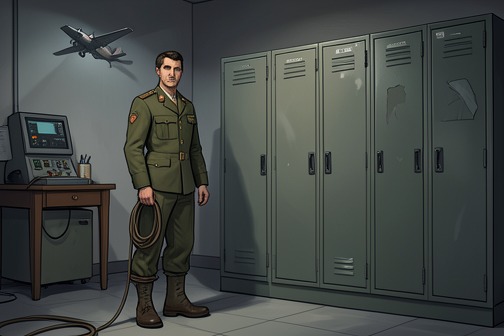
[Franz](entity:character-recall-character-franz-a77eb1706f2e)’s ground-crew cable accident is the abrupt, unheroic death that overturns his childhood fantasy of dying in aerial combat. A forgotten cable catches him beside a supply locker as a plane lifts off, converting an ordinary mistake into a fatal blow; the later hospital visit by [Mazarine](entity:character-recall-character-mazarine-a23fb9b0754a) reveals the intimate aftermath of that loss.
## The Death Franz Imagined
As a boy, Franz pictured death as a dramatic ending in a Spitfire: after a thrilling battle, he would be shot down by a Focke-Wulf 190, his favorite enemy aircraft. In his imagined finale, he would shoot the German plane down as well, and the two pilots would salute each other while spiraling earthward in flames. The vision gave death the shape of a contest, complete with an adversary and mutual recognition.
That imagined heroism persisted through the boredom, terror, and daily tedium of real war. Its contrast with the accident is the event’s defining reversal: Franz does not die in the climactic battle he had pictured, but through poor timing, a hungover mechanic, and a snapped cable. The reality is not a duel but a ground-crew error, with no time for spectacle or understanding.
## The Cable Strike
Franz is walking toward a supply locker, described as a large metal closet, when a plane takes off behind him. A member of the ground crew has failed to unhook a heavy steel cable. As the aircraft rises, the cable trails behind it; the other men duck and scatter. Franz happens to be in its path.
The narration makes the accident hinge on an almost imperceptible difference in timing. Had Franz walked slightly faster—or slightly slower—he would have escaped the cable’s reach. Instead, it lashes out like a bullwhip and catches the side of his head. The blow is described as a neat tap, like a finger brushing his temple, an oddly slight contact with a lethal consequence.
His hand continues opening the locker door, but the rest of him cannot step through. Franz remains looking at the scarred steel frame, without a thought or even a moment of surprise. The stillness of that image replaces his imagined fiery descent: the door remains before him, and he has no awareness of what has happened.
## Mazarine at the Hospital
The later hospital scene follows Mazarine as she arrives to see Franz in New York state. She has always hated the smell of hospitals, and the lobby’s cigarette smoke and overpowering rubbing alcohol intensify her distress. When a nurse comes, Mazarine stands too quickly, holding her baby while juggling the diaper bag; her purse spills, revealing a lipstick, a train ticket, a small wallet, and ration coupons caught in a comb. Her hands, knees, and heart shake in turn as she tries to hold herself together.
[Delphine](entity:character-recall-character-delphine-50abed839c4c) has accompanied Mazarine across the country by train to help with the baby. At the double doors of Franz’s ward, however, she steps aside and stays in the hallway. She takes the baby from Mazarine and tells her to see Franz first, promising to come in later. Her practical gesture gives Mazarine room to face the visit alone while ensuring the infant is cared for.
Mazarine follows a nurse into the ward, passing men in beds, some screened by curtains and others watching her. She realizes she has been holding her breath, then gasps and takes in too much air. The ward’s odors—healing flesh, urine, sweat, and resignation beneath the disinfectant—make the cost of survival tangible. Yet Mazarine understands that these men are the rescued, the ones likely to live. When the nurse stops at a bed and opens its curtain, Mazarine is allowed into Franz’s makeshift room. The passage establishes the visit and its stakes without resolving Franz’s condition in this scene.
## Significance
The accident strips away the nobility Franz had assigned to his death. His childhood fantasy depended on combat, reciprocal skill, and a final salute; the actual event depends on an unsecured cable and a difference of seconds. The contrast places the danger of war not only in battles but also in the ordinary, fallible machinery around them.
The narrative’s movement from the instant of impact to Mazarine’s strained arrival shifts attention from Franz’s imagined heroism to those left to meet the consequences. The cable’s light, almost delicate touch and the harsh realities of the ward stand against each other: one instant ends in incomprehension; the aftermath unfolds through travel, fear, care for a baby, and the effort to enter a curtained bed space. The event’s force lies in that mismatch between the grand death Franz expected and the accidental vulnerability the war delivers.
Event 45
Wounded Knee Massacre
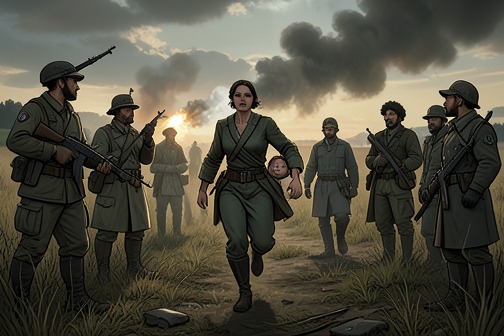
The [Wounded Knee Massacre](entity:event-recall-event-wounded-knee-massacre-a4a96d1578b2) is the historical violence that defines [Minnie](entity:character-recall-character-minnie-7a217c066ad6)’s childhood and reverberates through the lives of [Step-and-a-Half](entity:character-recall-character-step-and-a-half-676d0500a451), [Delphine](entity:character-recall-character-delphine-50abed839c4c), and Roy. The novel presents it through layered recollection rather than as a detached historical episode: Minnie’s escape, her father’s final message, a fragment of a [Ghost shirt](entity:object-recall-object-ghost-shirt-64fafc517156), and the songs that survive the dead all show how the massacre remains active in memory long after the violence itself has passed.
## Background and Roy’s Account
Roy recounts the massacre to Delphine as the story of what happened to her mother when she was eight. He describes a group of starving and freezing Minneconjou Lakotas fleeing after the defeat of their people, with their leader, [Big Foot](entity:character-recall-character-big-foot-634341c6d25b), gravely ill. They seek protection from the army, surrender their guns, and make camp where they are directed. Roy stresses their vulnerability: they have little food, and Minnie’s father shares their last piece of bannock with a woman and her baby.
The scene of temporary shelter is followed by the opening of gunfire. Roy tells how Minnie’s father is killed and how Minnie escapes with the woman who had shared food with her. The account culminates in Minnie’s flight from the camp and her solitary journey through snow, following the tracks of other fleeing people until she reaches a mission. Roy identifies the episode as something recorded in history books but argues that its full human cost is seldom acknowledged or believed.
## Minnie’s Escape and the Afterlife of Memory
Minnie’s survival does not mean that she leaves the massacre behind. The novel later describes her as unable to remain still for long: walking gives her distance from memories of the violence, while open space and the indifferent weather offer relief from human cruelty. Her father’s last words, telling her to go home and say that it is over, persist in her memory alongside the scene of his death. The command to carry news away from the massacre becomes inseparable from the burden of carrying the experience itself.
The massacre’s effects are also conveyed through what Minnie cannot fully remember. Her later movement across the land is described as an effort to outdistance both remembered and unremembered experiences. The account therefore treats trauma not as a closed recollection but as something that returns through habits, routes, and the conditions under which a survivor can endure the present.
## The Ghost Shirt and Song
Step-and-a-Half preserves a scrap of the Ghost shirt associated with the massacre. The fragment, made of yellowed muslin with faded decoration, is sewn into her quilt. She understands the shirt not as evidence that its wearers were foolish or deluded, but as a source of comfort through connection with the dead. In her understanding, the cloth allows the wearer to draw near to the dead through their songs.
Songs link the massacre’s victims to the living without resolving the violence. Step-and-a-Half remembers both soldiers’ songs and a mother’s lullaby, and later hears voices carried across [Argus](entity:location-recall-location-argus-09ff0273b5b1) in a passage that joins songs of different peoples and traditions. The recurring idea that the dead are only a song away gives the scrap of cloth a role beyond remembrance: it embodies a continuing relationship with those killed, while acknowledging that the past cannot simply be put away.
## Family History and Historical Memory
The massacre reaches Delphine through Roy’s telling, which makes family intimacy a channel for a history that might otherwise remain remote. Elsewhere, the novel places this history beside other forms of remembered violence and silence. [Fidelis](entity:character-recall-character-fidelis-c469e33ba84c) and [Cyprian](entity:character-recall-character-cyprian-167e957eaf33) never speak openly about their shared war, though its memories repeatedly surface between them; later, Fidelis tells Delphine the story of [Johannes](entity:character-recall-character-johannes-8bd33702cfc6) and the losses that shaped his life. These parallel narratives do not equate distinct events, but show how the book represents violence as something carried through silence, delayed telling, and inherited knowledge.
The novel also connects Minnie’s story to the differing ways history is preserved. Roy says the massacre can be found in history books, yet insists that its suffering is often not fully told or credited. The novel’s own account moves between Roy’s speech, Minnie’s remembered experience, Step-and-a-Half’s keepsake, and the later songs that travel through town. Together, these forms give the massacre a continuing presence in the family’s lives while resisting the idea that a public record alone exhausts what happened.
## Significance
The Wounded Knee Massacre is not only the origin of Minnie’s flight; it shapes the habits of survival that follow. Walking becomes a means of living with memories that cannot be escaped entirely, while the Ghost shirt and songs preserve connection with the dead. By carrying the event across generations through testimony, objects, and recurring music, the novel makes remembrance a fragile practice: the past remains close, even when its survivors cannot tell all of it at once.
Event 46
Bombing of Ludwigsruhe
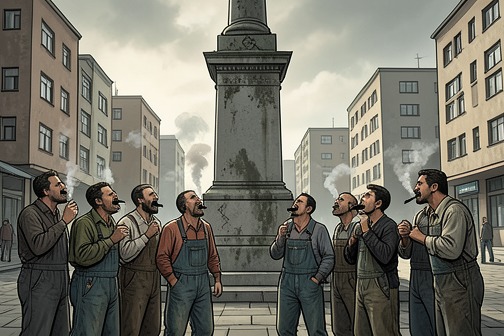
The [Bombing of Ludwigsruhe](entity:event-recall-event-ludwigsruhe-b6add02dd88e) is present in the novel less as a narrated account of the attack than as its aftermath: a memorial ceremony, the survivors who sing there, and [Delphine](entity:character-recall-character-delphine-50abed839c4c)’s vision of smoke and ash rising from their mouths. The bombing has destroyed lives and left a town to remember them; decades later, ritual and song cannot make that history harmless or fully resolved.
## Memorial and survivors
The monument to the victims of the bombing is unveiled in 1954. Master butchers travel from nearby villages and more distant towns to sing at the ceremony. [Fidelis](entity:character-recall-character-fidelis-c469e33ba84c) has spent the month of the visit practicing with the few surviving men. The account gives no description of the bombing itself, its date, or its military circumstances; instead, it places the reader among those who have outlived the war and gathered to mark its dead.
Delphine attends with [Tante](entity:character-recall-character-tante-61557806d00c), Fidelis’s relatives, and Erich and his new bride. The visit to [Ludwigsruhe](entity:location-recall-location-ludwigsruhe-b984c1754f4d) had been planned as a long-delayed honeymoon, but Fidelis has mysterious pains, an enlarged liver, and a threatened heart. While he rehearses, Delphine walks through the cemeteries and the town’s streets of blocky Marshall Plan shops and apartment houses. The setting joins remembrance to the visible work of postwar life: the monument is about to be unveiled amid a town rebuilt and changed, while the survivors assemble to sing.
## The song and the vision
As the butchers move to the podium, their voices swell into a dense wall of melody. Delphine first hears a low sound beneath the speeches, then watches the men sing. Her attention slips from the music to their mouths opening and closing together; her mother’s indistinct photograph appears in her mind, alongside thoughts of burning, marching, and deeds she finds difficult to comprehend. The lovely sound of her husband’s voice in German air exists beside, rather than beyond, that remembered violence.
When the statue of the burned is uncovered in the sunlight, Delphine sees smoke and ash pouring from the singers’ mouths. In her disoriented perception, their hearts smolder, their guts burn, and their lungs act as hot bellows. The men continue singing; the crowd does not point or cry out. After the performance, the dark plumes disappear, leaving only the shadows cast in the garden. Delphine joins the applause and registers the impossible spectacle as ordinary. The vision makes the ceremony’s reassuring public surface unstable: the singers’ bodies seem to give visible form to the destruction their music and the monument commemorate.
## Memory beyond the ceremony
The episode sets public commemoration against the persistence of private and collective memories that are not easily spoken. Elsewhere, Fidelis and [Cyprian](entity:character-recall-character-cyprian-167e957eaf33) never discuss their shared war, though each carries memories that recur in images, sounds, or words; the silence between them functions as a recognition of what the other has endured. In Ludwigsruhe, by contrast, survivors stand together in an organized performance. Their singing gives the gathering a shared form, but Delphine’s vision suggests that participation does not erase what remains unassimilated.
The novel also places this memorial scene within a wider reckoning with war and historical remembrance. Delphine has followed reports of political terror and attacks on Jews, while Fidelis and Tante dwell on [Germany](entity:location-recall-location-germany-2e3723c2f347)’s strength and prosperity; the contrast exposes how accounts of recovery can coexist with neglected violence. The monument names the bombing’s victims, yet the ceremony cannot contain all the history Delphine senses around it. Her experience leaves remembrance unresolved: the men sing, the audience applauds, and the dark residue vanishes from sight, but the dead and the damage remain present in the act of remembering.
Event 47
Delphine is rescued from the privy
[Delphine is rescued from the privy](entity:event-recall-event-delphine-5620f59b77b0) through the quick, practical intervention of [Step-and-a-Half](entity:character-recall-character-step-and-a-half-676d0500a451), who finds her abandoned as a newborn in the Shimeks’ outdoor toilet and carries her to safety. The episode turns on a narrow margin between death and survival: Step-and-a-Half’s decision to investigate a cry, and then to take the infant with her, gives [Delphine](entity:character-recall-character-delphine-50abed839c4c) a life and begins the unconventional caregiving bond that shapes her childhood.
## Discovery in the Night
The rescue is recounted as a memory from more than forty years earlier. On a bitter October night, after [Argus](entity:location-recall-location-argus-09ff0273b5b1) had grown quiet, Step-and-a-Half walked past the Shimeks’ property. She usually treated it as a place to scavenge discarded bones, hairballs, and stained newspapers, and would ordinarily have kept moving. Instead, a groan from the closed outhouse stopped her. She waited as it sounded several more times, each cry more urgent, until she became certain someone inside needed help.
Before Step-and-a-Half could open the door, [Mrs. Shimek](entity:character-recall-character-mrs-shimek-61c3953a03a2) emerged and staggered toward her darkened house. The apparent end of the disturbance did not settle the matter: one more cry came from inside the privy. Step-and-a-Half entered and found the floor and seat soiled with blood. The outhouse had not been moved to a newly dug winter pit, as was customary in autumn. That circumstance left the infant within reach. Step-and-a-Half strained down through the opening and caught the baby by the heel.
## Rescue and First Care
Step-and-a-Half freed the newborn and severed the umbilical cord with her teeth. She cleared the baby’s mouth, breathed air toward her face, and tucked her against her own body beneath the layers of clothing she wore. The infant had drawn her afterbirth up with her along the cord; she had also cried only once before her mouth sank below the level of the waste. The scene makes survival depend on small, immediate acts rather than on any assurance that the child would be safe.
Step-and-a-Half carried the baby to the temporary shelter she used as a den: a barn and then the home of [Roy Watzka](entity:character-recall-character-roy-watzka-5624a52010d8), a bachelor farmer on the edge of Argus. She had stayed there for a few weeks. Roy had fallen in love with her and proposed marriage, imagining a settled life with a milk cow, a ring, a wagon, a horse, chickens, and even a hand organ. His condition was that she give up wandering. Step-and-a-Half knew she would bring the baby to him, but the rescue did not mean she accepted his plan to settle down.
By the time they reached Roy’s sturdy house of boards and tarpaper, the baby was alive and desperately hungry. Step-and-a-Half ordered Roy to stoke the fire and milk his goat, whose milk she thought suitable for the child. He was startled to see that she had brought a baby, but he quickly fetched milk. While he was gone, she boiled water and prepared to clean and feed the infant. She twisted a rag into a teat, dipped it repeatedly in the milk, washed the baby, clipped a clothespin onto the short remnant of the cord, and wrapped her in a ripped flannel pillowcase.
Roy asked to hold the baby. Though he first struggled to find a comfortable way to support her, he settled with her in a rocking chair whose joints needed repair. The rescue had become shared care: Step-and-a-Half handled the urgent work of keeping the newborn warm and fed, while Roy took the child into his arms. The episode does not describe a formal adoption; it shows the practical beginning of Delphine’s life in Roy’s care.
## Memory and Lasting Significance
The adult Step-and-a-Half later regards the discovery as the find that defined her life, shaped her wanderings, and gave her actions an enduring direction. The memory remained vivid more than four decades afterward, along with the consequences she had watched unfold. As she saw Delphine grow up, she repeatedly thought of how narrowly the girl had escaped a terrible fate: the distance between danger and survival was, in her recollection, as small as the infant’s brief descent in the pit.
The event’s importance is both immediate and lasting. Step-and-a-Half’s choice changes the newborn’s circumstances from abandonment to care, while Roy’s participation turns a solitary rescue into the start of a household bond. Their relationship with Delphine begins outside the usual expectations of biological parenthood and settled domestic life: the wandering woman who saved her and the farmer who agreed to help raise her become the people who receive the child. The later account presents Delphine’s survival not as an assured destiny but as the consequence of attention, persistence, and a decision made in the dark.
Event 48
Franz's death
[Franz](entity:character-recall-character-franz-a77eb1706f2e)’s death is recalled as a devastating family loss that [Fidelis](entity:character-recall-character-fidelis-c469e33ba84c) could neither assimilate nor acknowledge as a limit on his own strength. The news reached him first through a telegram about Franz’s injury and then a letter about Emil’s death; when Franz came home only to die in bewildered anger, Fidelis experienced the loss as something that took part of himself with it. Years later, that grief returns while Fidelis waits at the New York customs gate, where the story joins bereavement to the failing heart he refuses to recognize.
## The News and the Loss
Fidelis receives word of Franz’s injury by telegram. A later letter brings news of Emil’s death, and Fidelis responds by tearing up the papers and roaring. The passage does not conflate the brothers’ fates: Franz survives his injury long enough to come home, while Emil’s death is reported by letter. Together, the messages accumulate as blows that Fidelis cannot contain in speech or ritual; his immediate response is physical destruction of the news itself.
Franz’s return does not restore what the injury has taken. He fades from life at home, dying in bewildered anger. Fidelis understands the loss not as an event safely confined to his son’s body but as an intimate rupture: part of him, too, goes out raging with Franz. The image makes grief a kind of shared diminishment, while preserving the difference between the dying son’s bewilderment and the father’s furious refusal.
## Grief in the Customs Hall
The recollection surfaces as Fidelis steps from the USS Bremen into the milling New York crowd. He is exhausted, sleeping for twelve or fourteen hours at a stretch and napping in the afternoons, but he does not know that his heart has been failing for ten years. The narration retrospectively connects the disease’s first intimations to the moment his son marched past him in a [Minnesota](entity:location-recall-location-minnesota-060c79134209) wood, choosing a gated prison house rather than his father. It then gathers the telegram about Franz’s injury and the letter about Emil into the same account of the heart’s weakening.
At the customs gate, Fidelis waits behind [Delphine](entity:character-recall-character-delphine-50abed839c4c), moving slowly toward the officer’s booth. A Turkish cigarette bought in [Germany](entity:location-recall-location-germany-2e3723c2f347), tight and aching lungs, dizziness, and a heavy coat from [Ludwigsruhe](entity:location-recall-location-ludwigsruhe-b984c1754f4d) make his present bodily strain tangible. As he braces himself to keep standing, the line recalls an earlier passage through customs and brings back the image of his father at the copper sausage kettle, lifting links through steam with calm, disciplined strength. The remembered father’s physical command stands against Fidelis’s unsteady body; the present and the past collide while the old family image of strength offers no protection against illness or grief.
## Refusal and Narrative Significance
For Fidelis, weakness is an alien lie because he was born into an understanding of himself as strong. He ignores his body and despises its needs, keeping his old habits as though they might restore his power. The account of Franz’s death therefore belongs to a larger pattern of losses that Fidelis experiences bodily but resists naming: grief is described through a heart that seems to shred, weaken, and fail, even as he denies that his body is ill.
The scene does not present Franz’s death as a complete, self-contained episode. It arrives through retrospective compression inside Fidelis’s wait at the New York customs gate, where family history, remembered crossings, and present physical collapse press together. Franz’s death matters both as a particular bereavement and as part of the sequence of shocks that the narration links to Fidelis’s failing heart; its return reveals the cost of a strength that cannot admit vulnerability.
Event 49
Fidelis collapses at the New York customs gate
[Fidelis collapses at the New York customs gate](entity:event-recall-event-fidelis-0571b7931d48) while returning to the [United States](entity:location-recall-location-5d55e9152db1) with [Delphine](entity:character-recall-character-delphine-50abed839c4c), bringing his concealed heart failure into the open. The event turns an arrival into a final bodily reckoning: the butcher who has spent a lifetime carrying out death’s work can no longer command his own body.
## Background and Causes
[Fidelis](entity:character-recall-character-fidelis-c469e33ba84c) steps from the USS Bremen into the New York crowd already burdened by exhaustion that has worsened throughout the ocean crossing. He has been sleeping for long stretches and napping in the afternoons, but does not understand the change in his strength. His heart, however, has been failing for years. The narrative connects its decline to accumulated grief: his son’s rejection of him in [Minnesota](entity:location-recall-location-minnesota-060c79134209), the telegram about [Franz](entity:character-recall-character-franz-a77eb1706f2e)’s injury, the news of Emil’s death, and Franz’s subsequent death at home.
Fidelis cannot accept weakness as part of himself. Having understood his life through physical strength and disciplined work, he ignores his body’s demands and keeps to his old habits. At the customs gate, despite tight, aching lungs, he lights a cigarette bought in [Germany](entity:location-recall-location-germany-2e3723c2f347) and continues slowly behind Delphine toward the officer’s booth. His heavy coat and growing dizziness make the strain of the moment concrete, but he persists in standing.
## The Collapse
As Fidelis waits, the present folds into the memory of his earlier arrival in the same line. That recollection brings his father into view at the sausage kettle, lifting links through the steam with calm, practiced discipline. Past and present converge in the customs hall: Fidelis remembers the scene while his own body falters, and the narrative describes the days of his life as if they have been swept together into a single, suffocating deck.
His cigarette slips from his numb fingers and bounces, still lit, off his shoe. He finds himself looking down at the linoleum, its distant polished tiles seeming to hold fragments of a familiar song. In an apparent attempt to rise, he imagines himself moving forward, then realizes he has not moved at all. The mismatch between intention and action makes the collapse a loss of bodily command before it becomes unmistakable to those around him.
Fidelis recognizes the change through the terms of his trade. Every week, he had been present on the day animals were slaughtered; now, he understands, it is his turn to face death. He wonders who will do for him what he had done for them. He falls flat, and someone turns him onto his side and takes his hand.
## Delphine and the Ending
Delphine’s face enters Fidelis’s wavering view as she bends over him. He recognizes the familiar movement of her mouth and knows what she is saying, but cannot answer: his mouth will not open, and his hands will not move. The heart failure that had advanced unacknowledged now stops his body from obeying him. His eyes widen in anguish; Delphine’s face blurs, the light dims, and the singing he had heard ceases.
The scene ends at the point of this shutdown, with Delphine beside Fidelis and his ability to respond gone. It does not merely reveal the illness he had refused to recognize. By setting his final loss of control against his lifelong work as a butcher, the collapse reverses his accustomed position: the man who carried out death’s chores is now the one who cannot act for himself.